Navigating the New Era of GLP-1 Medications in the Health and Fitness Coaching Industry

When semaglutide, marketed as Ozempic, first gained widespread traction in 2017, the fitness industry viewed the pharmacological intervention as a distant, theoretical disruption. For years, health and nutrition coaches largely operated in a landscape defined by lifestyle-driven weight management. However, by 2026, the paradigm has shifted significantly. With over 10 percent of the United States adult population currently prescribed glucagon-like peptide-1 (GLP-1) receptor agonists, these medications have moved from niche medical treatments to a mainstream public health phenomenon. This evolution has forced a professional reckoning within the coaching sector: the question is no longer whether GLP-1s will impact the industry, but how professionals can best support an increasingly medicated clientele.
The Historical Trajectory of GLP-1 Adoption
The rise of GLP-1 agonists—including semaglutide and tirzepatide—represents one of the most rapid shifts in modern metabolic healthcare. Initially approved for type 2 diabetes management, these drugs demonstrated profound weight-loss effects, leading to a surge in off-label and on-label prescriptions for weight management. Between 2017 and 2026, the medical community moved toward viewing obesity as a chronic, biological condition requiring long-term intervention rather than a purely behavioral failure. As access expanded, the stigma surrounding these medications began to dissipate, and the demographic of users broadened from those with severe comorbidities to a wider swath of the general population. For coaches, this meant a sudden influx of clients whose physiological hunger cues and metabolic responses were being chemically altered.
Redefining the Coaching Value Proposition
The initial anxiety among fitness professionals—that these drugs would render personal training and nutrition coaching obsolete—has largely been replaced by a more nuanced understanding of the "support world." Industry leaders now emphasize that while medication can influence hunger and metabolic rate, it cannot build lean muscle mass, optimize macronutrient distribution, or instill the behavioral resilience required for long-term health maintenance.
The current consensus among expert coaches is that the market is not simply "people on GLP-1s," but "people on GLP-1s who desire specialized support." This distinction is critical for business viability. Coaches who attempt to impose rigid, legacy-style protocols on medicated clients often face resistance, as these individuals face unique challenges such as suppressed appetite, fatigue, and the psychological hurdle of reconciling pharmacological weight loss with personal identity.
A Typology of the GLP-1 Client Journey
Recognizing that readiness for coaching is fluid, industry experts have identified seven distinct profiles that typically emerge throughout the medication journey. Each requires a different strategic approach to ensure safety and long-term success.

- The Honeymooner: This individual is in the initial phase of treatment, experiencing success with minimal side effects. Their motivation for traditional coaching is often low. The professional approach here is to build rapport, celebrate the progress, and establish a "standing invitation" for support as the novelty of the drug wears off or as the need for body composition optimization becomes apparent.
- The Ambivalent Candidate: Before starting medication, many individuals experience a period of paralysis, grappling with the ethics of medical intervention. Coaches provide value here by helping clients explore their hesitations through objective frameworks, such as the "4 Crazy Questions" exercise, which contrasts the risks of action versus inaction without prescribing medical decisions.
- The Ready-to-Quitter: Due to common side effects like nausea and exhaustion, many users contemplate stopping treatment. Coaches serve as vital liaisons, helping clients normalize their experiences, encouraging collaboration with medical providers regarding dosage adjustments, and suggesting manageable nutritional experiments to mitigate discomfort.
- The Muscle-Loss Risk: Perhaps the most critical group, these clients see scale weight drop but often fail to prioritize protein intake or resistance training. Data suggests that up to 40 percent of weight lost during rapid pharmacological intervention can be lean mass. Coaches play a proactive role here by mandating baseline assessments like DEXA scans and implementing resistance training protocols to preserve muscle integrity.
- The Under-Fueler: In some cases, the medication suppresses appetite to a degree that caloric intake falls to dangerous levels. Coaches are responsible for identifying these patterns through food tracking and encouraging the adoption of a structured, meal-based approach to ensure adequate nutrient density.
- The Graduate: As individuals transition off the medication, they face the significant risk of weight regain. Success for this group relies on the strength of habits formed during the treatment period. Coaches focus on tempering expectations and ensuring that the behavioral "ruts" of healthy living are deep enough to sustain the client once the chemical appetite suppression is removed.
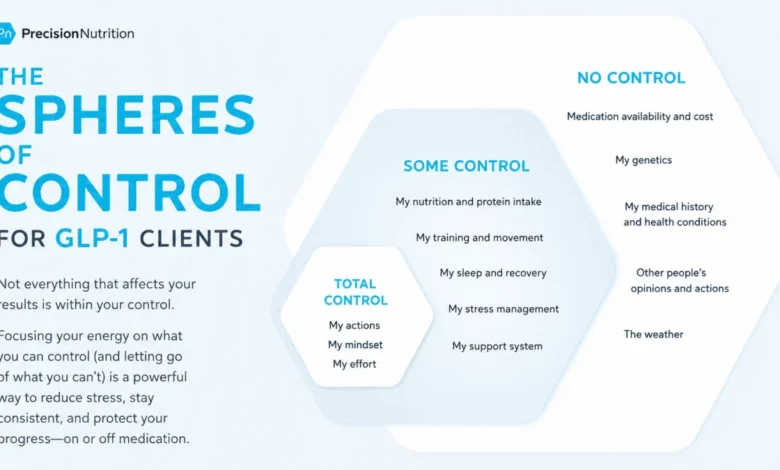
- The Priced-Out: External economic factors, such as insurance policy changes, often force individuals to discontinue medication abruptly. This transition is emotionally fraught. Coaches help these clients transition from a state of frustration to one of agency, focusing on the "spheres of control"—prioritizing the habits they can maintain, such as sleep, protein intake, and consistent exercise, to mitigate the impact of losing medical support.
Data, Risks, and the Professional Scope of Practice
The integration of GLP-1s into fitness coaching necessitates a strict adherence to the professional scope of practice. Coaches are not authorized to adjust dosages or diagnose medical issues. However, they are uniquely positioned to gather objective data that doctors often miss. By documenting energy levels, workout performance, and food intake, coaches provide a feedback loop that informs the client’s broader healthcare team.
Statistical data supports the importance of this hybrid approach. Research indicates that users who pair pharmacological intervention with structured lifestyle habits are four times more likely to maintain a 10 percent or greater weight reduction after cessation of the drug compared to those who rely on the medication alone.
Broader Implications for the Future of Wellness
The medicalization of weight loss is unlikely to retreat. As pharmaceutical companies explore the next generation of multi-agonist treatments, the role of the coach will continue to evolve into that of a "health navigator." This role requires an interdisciplinary mindset, blending traditional exercise science with a deep understanding of endocrinology and clinical psychology.
The long-term goal for the coaching industry is to move beyond the binary debate of "drug vs. no drug." Instead, the focus is shifting toward an "identity-based" model of health. When a client identifies not just as a person who lost weight, but as someone who consistently engages in resistance training and prioritizes protein intake, they are significantly better equipped to maintain their health outcomes in any environment—whether they are on medication, tapering off, or living without pharmaceutical assistance.
Conclusion: The "Oregon Trail" of Habit Formation
Ultimately, the most effective coaching strategy for the GLP-1 era is built on the concept of sustainable neural pathways. By using the period of medication-assisted weight loss to build consistent, indestructible habits, coaches create a safety net for their clients. Like the deep, lasting ruts left by wagons on the Oregon Trail, the behavioral habits established during the treatment phase serve as a guide long after the external assistance of the drug has been removed. This commitment to long-term behavioral architecture is the primary value that professional coaches offer in a world increasingly influenced by pharmaceutical intervention. As the industry moves toward specialized certifications and deeper scientific literacy, the goal remains unchanged: to empower the individual to take ownership of their health, regardless of the tools they use to get there.