Colombian President Denies Rejecting U.S. Joint Anti-Drug Operations Plan

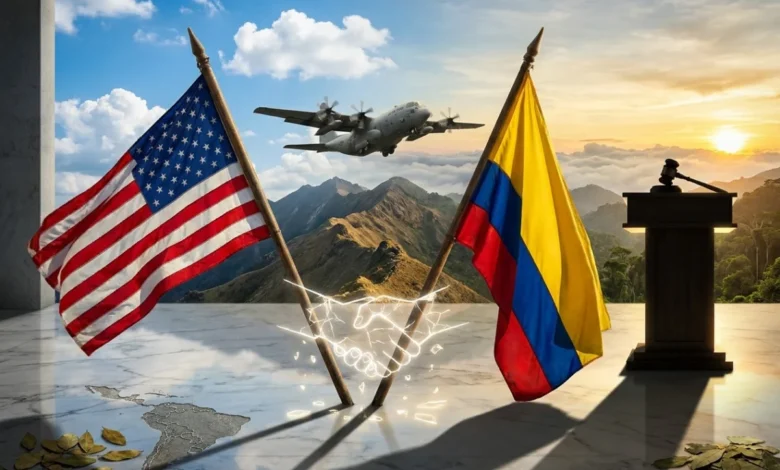
Colombian President Abelardo De La Espriella issued a definitive denial on Thursday regarding reports that his administration had rejected a high-level proposal from the United States for joint military operations against drug cartels. The statement, released via the social platform X, sought to quell mounting speculation that the traditionally robust security partnership between Bogotá and Washington was fracturing under the weight of the Trump administration’s aggressive regional anti-narcotics agenda.
The controversy erupted following a report by The New York Times, which cited unnamed U.S. officials claiming that President De La Espriella had rebuffed a specific plan involving the deployment of U.S. military assets to combat entrenched criminal organizations within Colombian borders. The report suggested that the rejection represented a significant diplomatic setback for the White House, which has prioritized the dismantling of Latin American trafficking networks through increased military pressure and direct intervention.
Clarifying the Diplomatic Stance
President De La Espriella’s official rebuttal emphasized that no such rejection has occurred. In his statement, he underscored that security, intelligence, and anti-drug cooperation between Colombia and the United States remain not only intact but are undergoing a process of consistent strengthening.
"We continue to work hand-in-hand with our American allies," the statement read, effectively countering the narrative of a diplomatic rift. While the President did not disclose the specific contents of ongoing diplomatic communications, he characterized the bilateral relationship as solid, pointing to an ongoing, multi-layered exchange of intelligence that serves as the backbone of the two nations’ collaborative efforts against transnational criminal syndicates.
Despite the President’s denial, the incident has highlighted the delicate balance Bogotá must strike between operational necessity and domestic sovereignty. The ambiguity surrounding the "rejected plan" likely stems from the complex legal landscape that governs foreign military presence in Colombia.
The Legal and Legislative Hurdle
At the heart of the confusion lies the constitutional requirement for legislative oversight. Under Colombian law, the entry and stationing of foreign military personnel on national soil require explicit authorization from the legislature. The country’s Constitutional Court has historically served as a rigorous check on executive power, ensuring that any foreign military involvement adheres strictly to the mandates of the nation’s sovereignty.
Political analysts in Bogotá have suggested that the perceived "rejection" may have been a pragmatic acknowledgment of current congressional realities rather than a lack of political will. Reports from local media, including Colombia One, indicated that the administration may have signaled to Washington that any request for joint operations would face insurmountable hurdles in a polarized legislature. By framing the discussion as a matter of parliamentary feasibility, the administration may have been attempting to manage expectations without officially shuttering the door to U.S. assistance.
This scenario mirrors similar tensions seen elsewhere in the hemisphere. Earlier this year, the Mexican government explicitly requested written assurances from the U.S. government that American military aircraft would not enter Mexican sovereign airspace, illustrating a broader regional anxiety regarding the expansion of U.S. military maneuvers under the banner of the war on drugs.
Historical Context and Regional Security Strategy
The current friction takes place against a backdrop of intensified U.S. regional policy. Since the start of his term, President Donald Trump has pursued a strategy of designating major drug trafficking organizations as foreign terrorist organizations (FTOs). In December 2025, this policy manifested in the formal designation of the Clan del Golfo—one of Colombia’s most powerful criminal entities—as an FTO.
This designation provides the U.S. with broader legal authorities to apply military pressure, freeze assets, and facilitate intelligence-sharing with local partners. However, it also raises the stakes for the Colombian government, which must navigate the resulting increase in violence and the domestic perception of foreign influence.
The relationship between the two nations has historically been cyclical, characterized by periods of intense cooperation punctuated by moments of acute public friction. Observers often point to the 1997 crisis, during which Washington de-certified Colombia as a reliable partner in the war on drugs following a campaign-finance scandal. That event led to a freezing of military aid and a temporary suspension of intelligence sharing, demonstrating how quickly the partnership can become fragile when domestic political interests collide with international security imperatives.
Current Operational Cooperation
While the debate over joint military operations continues, evidence of deep-seated tactical cooperation remains visible. Defense officials have confirmed that the U.S. continues to provide significant military, technological, and intelligence support to the Colombian security forces.
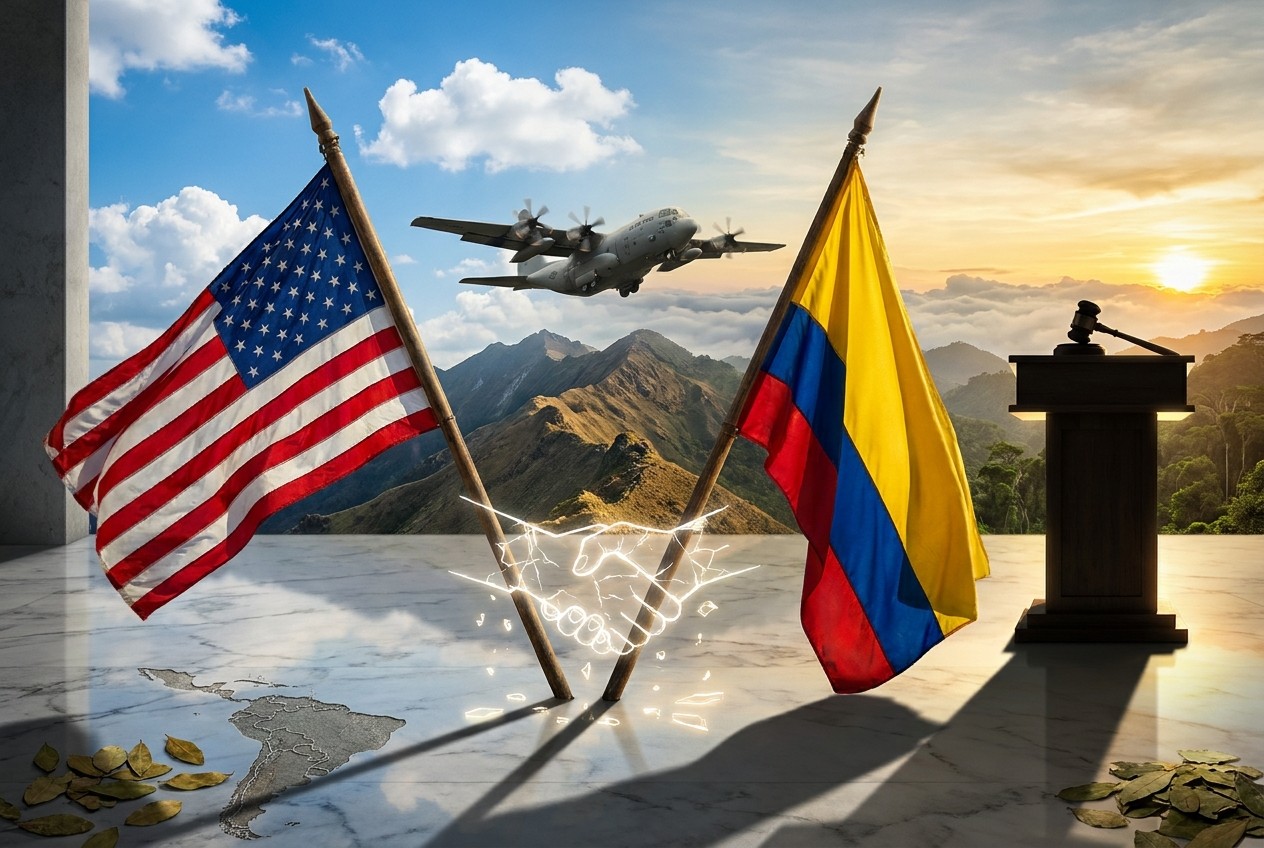
A clear indicator of this ongoing collaboration is the upcoming visit of U.S. War Secretary Pete Hegseth to Bogotá. The visit, which is intended to facilitate the delivery of a Hercules C-130 transport aircraft, serves as a high-profile demonstration of the logistical and material support the U.S. provides to bolster the Colombian military’s operational capacity. By focusing on technological and hardware support rather than the deployment of U.S. troops, the Colombian government aims to strengthen its internal capabilities while minimizing the political optics of foreign intervention.
Implications for the War on Drugs
The ambiguity surrounding the reported rejection reflects the difficulty of maintaining a unified front in a changing regional security landscape. Analysts note that the current U.S. strategy involves a push for more direct action, which often clashes with the nuanced realities of local law enforcement and military strategy.
Skeptics of the current approach argue that U.S. officials have frequently claimed partner-nation consent for operations that host governments later disavowed or characterized differently. This pattern can erode public trust and complicate the ability of local leaders to justify security measures to their own citizens.
For the administration in Bogotá, the priority remains the degradation of criminal infrastructure, particularly the production and distribution networks of cocaine that fund violence and corruption. The challenge for President De La Espriella is to secure the necessary U.S. resources without ceding the perception of command and control to foreign entities.
Moving Forward: The Path to Resolution
As of late Thursday, the White House had not released a formal response to the President’s denial, nor has it made the text of the alleged proposal public. The lack of a transparent, official document has allowed the rumor mill to persist, creating a vacuum that is being filled by speculation from various political factions.
The next phase of this diplomatic interaction will likely involve quiet, high-level negotiations designed to align the U.S. military’s strategic goals with Colombia’s legislative and sovereignty constraints. If a formal plan for joint operations is eventually presented to the Colombian Congress, it will undergo a public and legal vetting process that will provide clarity on the limits of this security partnership.
For now, the status quo remains: the United States and Colombia remain closely aligned on their ultimate goals, even as they navigate the complexities of how best to achieve them. The incident serves as a reminder that in the volatile arena of international security, the optics of sovereignty are just as vital as the effectiveness of the tactical operations being conducted. With the regional security environment remaining highly unstable, the ability of Washington and Bogotá to resolve these procedural disagreements will be a critical factor in the success of their collective fight against the cartels.