The True Cost of Optimal Health: Navigating the Intersection of Longevity Science and Lifestyle Sustainability

The contemporary pursuit of longevity has evolved from a niche medical interest into a multi-billion-dollar global industry, characterized by a proliferation of "biohacking" protocols, supplement regimens, and ultra-specific lifestyle interventions. As interest in "healthspan"—the number of years lived in good health—rises, individuals are increasingly inundated with conflicting advice from social media influencers, wellness gurus, and emerging longevity startups. However, a critical question remains for the general public: at what point do the marginal gains of these advanced optimization strategies begin to incur a disproportionate cost in terms of time, financial resources, and overall life satisfaction?
The Rise of the Longevity Economy
The past decade has seen a paradigm shift in how aging is perceived. Longevity is no longer viewed as a biological inevitability but as a condition that can be managed or even reversed through rigorous intervention. This shift has been propelled by advancements in cellular biology, the study of senolytics, and a growing body of research on mitochondrial health.
According to data from market research firm Global Market Insights, the global longevity and anti-aging market was valued at approximately $70 billion in 2023 and is projected to grow at a compound annual growth rate (CAGR) of over 6% through 2030. This financial surge has attracted significant venture capital, leading to the development of sophisticated diagnostic tools, including continuous glucose monitors (CGMs), wearable biometric trackers, and direct-to-consumer genetic testing services. While these tools provide unprecedented insights into physiological data, they also create a "burden of optimization," where the sheer volume of data can induce psychological stress rather than physical improvement.
A Chronology of Health Optimization
The trajectory of the health optimization movement can be traced through several distinct phases:
- The Early 2000s: The Fitness Foundation. This period focused primarily on basic dietary adherence and standard gym-based strength training. The primary goal was disease prevention and weight management.
- The 2010s: The Data Revolution. The introduction of consumer-grade wearables, such as Fitbits and Apple Watches, transformed health management. Individuals began tracking heart rate variability (HRV), sleep cycles, and daily caloric expenditure with granular detail.
- 2020–Present: The Era of "Biohacking." Following the global pandemic, there was a heightened focus on immune health and biological age. High-profile figures and influencers popularized protocols involving cold plunges, sauna therapy, intermittent fasting, and heavy supplementation, often without rigorous longitudinal clinical evidence supporting their long-term efficacy for the average person.
The Trade-offs of Advanced Protocols
While the allure of "living to 115" is powerful, researchers are increasingly concerned about the opportunity cost of these extreme protocols. A 2024 analysis published in the Journal of Lifestyle Medicine suggests that adherence to highly restrictive, time-intensive health regimens can lead to "orthorexia-like" tendencies—an obsession with healthy eating and health optimization that ironically damages mental well-being.
The financial cost of "optimal" health is similarly significant. A comprehensive assessment of a "longevity-focused" lifestyle, including premium organic groceries, specialized supplements (such as NMN or resveratrol), private diagnostic blood panels, and memberships to specialized recovery facilities, can easily exceed $10,000 to $20,000 annually. For the vast majority of the population, these costs are prohibitive, raising questions about health equity and the accessibility of longevity science.
Analyzing the "Big Rocks" vs. "Fine-Tuning"
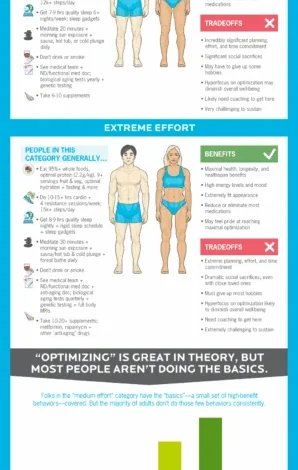
Public health experts and longevity researchers often emphasize the "Big Rocks" principle—a management concept applied to health. The "Big Rocks" represent the fundamental habits that provide 80% of the health outcomes: consistent physical activity, high-quality sleep, a diet rich in whole foods, stress management, and social connectivity.

"Fine-tuning," by contrast, involves the advanced, costly, and time-consuming protocols favored by social media influencers. While these interventions may offer marginal benefits for specific individuals with underlying health conditions, they are often marketed as essential for the general population. Data indicates that the pursuit of these minor gains often leads to burnout, causing individuals to abandon even the "Big Rocks" that provide the most significant protection against chronic disease.
Perspectives from the Coaching Community
The professional health coaching industry has responded to this trend by emphasizing sustainability over perfection. Organizations such as Precision Nutrition have begun advocating for a "low-floor, high-ceiling" approach, where the focus remains on building foundational habits that are easy to maintain even during life’s inevitable disruptions.
"The goal of health optimization should be to improve the quality of your life, not to make your life revolve around your health," says a representative from a leading nutrition education firm. "When the protocol becomes the primary source of stress in a client’s life, we have moved past optimization into something that is potentially detrimental."
Implications for Public Health and Longevity
The broader implications of the current "optimization" culture are significant. As health information becomes democratized, the line between evidence-based medicine and marketing-driven wellness becomes increasingly blurred. Public health officials worry that the focus on expensive, individualized interventions detracts from the systemic changes necessary to improve population-wide health, such as improvements in air quality, access to affordable, nutritious food, and safe spaces for physical activity.
Furthermore, there is a lack of long-term data regarding the impact of poly-supplementation and extreme biohacking practices. While short-term markers like improved fasting glucose or cholesterol levels are positive, the long-term interaction between these interventions and human physiology remains largely unmapped.
Toward a Balanced Framework
For individuals looking to improve their healthspan, the consensus among experts is clear: start with the foundations and treat "advanced" protocols with skepticism. A balanced approach involves:
- Prioritizing Foundations: Consistency in exercise, sleep, and nutrition remains the gold standard for longevity.
- Clinical Oversight: Any intervention involving exogenous substances or extreme dietary changes should be conducted under the supervision of a licensed medical professional, not based on anecdotes from social media.
- Measuring What Matters: Focus on functional markers—such as grip strength, VO2 max, and blood pressure—rather than obsessing over daily biometric data fluctuations.
- Sustainability Check: If a health habit cannot be maintained for a decade or more, it is likely not a sustainable longevity strategy.
Conclusion: The True Value of Health
The quest for longevity is a natural human endeavor, but it should not come at the cost of the life one is trying to extend. As the industry continues to grow, the ability to discern between high-impact, science-backed lifestyle changes and expensive, unsustainable trends will be the most valuable tool for the modern health-seeker.
By shifting the focus from "optimizing" every second of the day to building a sustainable, enjoyable, and healthy life, individuals can achieve the longevity they desire without the unnecessary burden of modern wellness culture. The most effective longevity intervention is not the one that promises the longest life, but the one that ensures the years added are ones worth living. For those seeking to deepen their understanding of these strategies, engaging with evidence-based resources and professional coaching remains the most reliable path forward. As with all health decisions, knowledge, consistency, and expert guidance remain the foundational pillars of a healthy and long life.