The Path to 2027: Andrew Jacked Implements Rigorous Hypertrophy Training to Defend His Arnold Classic Title

The landscape of professional bodybuilding is currently defined by a high-stakes transition toward the 2027 Arnold Classic, an event that serves as the centerpiece of the sport’s competitive calendar. Following a historic 2026 season, Nigerian-French bodybuilder Chinedu Andrew Obiekea, known globally as “Andrew Jacked,” has begun an intensive training regimen aimed at refining his physique to maintain his standing against an increasingly elite field of competitors. With the sport’s most prestigious titles on the line, Jacked’s recent disclosure of his specialized back and biceps training protocol provides a granular look at the technical requirements of modern professional bodybuilding.
The 2026 Breakthrough: A Historic Financial and Competitive Milestone
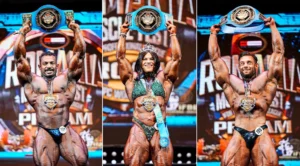
The 2026 competitive season established Andrew Jacked as a dominant force in the International Federation of Bodybuilding and Fitness (IFBB) Pro League. His trajectory reached a zenith in Columbus, Ohio, where he secured the Arnold Classic title. The victory was not merely symbolic; it carried a record-breaking purse of $750,000, representing the largest single prize in the history of the sport.
This momentum proved sustainable. Only days after his victory in the United States, Jacked traveled to the United Kingdom to compete in the Arnold Classic UK. He secured a second victory, adding $250,000 to his 2026 earnings. This consecutive win cemented his status as a primary contender for every major title in the professional circuit. However, the competitive climate remains volatile. With former Mr. Olympia winners such as Nick Walker and Hadi Choopan, alongside perennial threats like Samson Dauda, actively adjusting their conditioning to overtake the champion, the margin for error has narrowed significantly. Jacked’s current focus on hypertrophy—specifically targeting the posterior chain—is a strategic response to the scrutiny of the judging panel, which continues to demand greater detail and thickness in the latissimus dorsi and trapezius regions.
Technical Analysis of the Training Protocol
The training methodology shared by Jacked prioritizes mechanical tension and time-under-tension, essential components for the hypertrophy required at the professional level. His current back routine is structured to address both breadth and thickness, utilizing a blend of unilateral and bilateral movements.
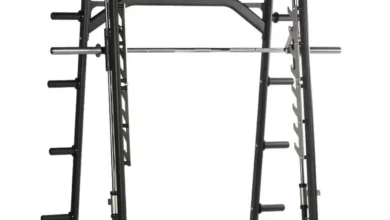
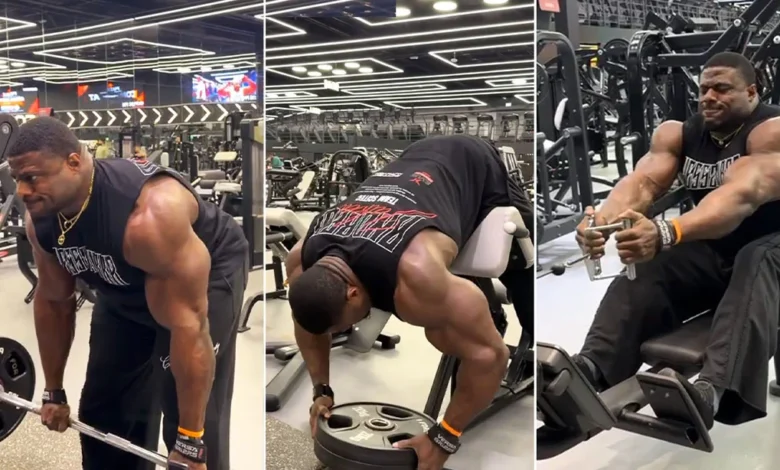
The session typically commences with an unconventional approach to the bent-over row. Rather than utilizing free weights, Jacked utilizes the chest support of a T-bar row machine as a structural anchor. By gripping the machine frame with one hand while rowing with the other, he isolates the working latissimus dorsi and teres major. This method minimizes the involvement of the lower back stabilizers during the initiation of the movement, allowing for a more deliberate focus on the middle and lower trapezius. This approach is consistent with contemporary sports science, which suggests that isolating muscles through machine-guided paths can enhance the activation of target muscle fibers by reducing the stabilization demands placed on the nervous system.
Following the unilateral work, the regimen transitions to the traditional standing barbell bent-over row. This remains a cornerstone of back development, utilizing a pronated grip to engage the entirety of the upper back, including the rhomboids and rear deltoids. The primary objective here is to build density in the spinal erectors and the mid-back, areas that often dictate the "fullness" of a competitor’s physique when viewed from the rear.
The Importance of Posterior Chain Development
A critical component of Jacked’s preparation is the integration of 45-degree back extensions. In the context of professional bodybuilding, the posterior chain—comprising the glutes, hamstrings, and erector spinae—is vital for overall stage presence and postural integrity. By incorporating weight plates into his back extensions, Jacked applies progressive overload to these muscle groups.
Physiologically, this exercise serves a dual purpose. First, it promotes lumbar stability, which is essential for a bodybuilder who must maintain an upright, aesthetic posture under the fatigue of a lengthy posing routine. Second, it enhances hip mobility, which can indirectly improve the performance of other movements, such as the deadlift or squat, by ensuring the pelvis is correctly positioned during the lift. For elite competitors, longevity is a primary concern; strengthening the lower back through controlled extensions reduces the risk of chronic injury, a common hurdle for athletes carrying significant muscle mass.
Complementary Biceps Hypertrophy
The conclusion of the back routine features a focused session on the biceps. While the biceps are secondary movers in most back exercises, Jacked utilizes preacher curls to isolate the muscle group to the point of exhaustion. This specific selection is deliberate; by the end of a high-intensity back session, the biceps are already partially fatigued, allowing for a shorter, more intense isolation phase that prioritizes metabolic stress—a key driver of muscle growth.
The standard volume for this routine—ranging from two to three sets per exercise with 8 to 12 repetitions—is consistent with hypertrophy-focused programs. This rep range is widely regarded in sports physiology as the optimal window for maximizing muscle fiber recruitment while maintaining enough intensity to trigger cellular signaling for growth.
Competitive Implications and Broader Context
The rise of competitors like Nick Walker, who recently claimed the Mr. Olympia title, underscores the shift in the sport’s aesthetic standards. The current era favors a combination of extreme mass and extreme conditioning, often referred to as “grainy” detail. For Jacked, the challenge lies in maintaining his signature aesthetics—often described as the “Mona Lisa of bodybuilding” for his structural balance—while increasing his overall volume to match the density of athletes like Walker and Dauda.
The implications for the 2027 Arnold Classic are significant. Observers in the industry suggest that the judges are placing an increasing premium on back detail. Historically, many bodybuilders have succeeded by prioritizing front-facing poses, but the current field is forcing a re-evaluation of the posterior perspective. Jacked’s public commitment to this specific training routine is, in many ways, an act of transparency that invites scrutiny, demonstrating a confidence that his preparations will result in a superior physique on the day of the show.
Industry Outlook
The financial incentives in professional bodybuilding have evolved alongside the training standards. With total purses exceeding $1 million for top-tier events, the professionalization of the athletes is at an all-time high. Athletes are now employing more sophisticated recovery protocols, nutritional monitoring, and biomechanical analysis than in any previous decade.
Andrew Jacked’s approach represents the modern archetype of the professional bodybuilder: an athlete who combines raw physical capacity with a methodical, data-driven approach to training. As he prepares for the 2027 season, his training will likely continue to evolve. Whether he can sustain the level of conditioning required to hold off the challengers remains to be seen, but his commitment to the fundamentals of back development suggests that he is not taking his current status for granted.
In the coming months, the industry will look for signs of how these training adjustments translate to the stage. As the bodybuilding community awaits the 2027 Arnold Classic, the competition promises to be a defining moment in the sport’s history, setting the stage for what many expect to be the most rigorous display of physical excellence to date. The convergence of elite talent, record-breaking financial rewards, and the constant evolution of training techniques ensures that the path to the 2027 title will be one of the most closely watched narratives in the professional sporting world.