Sciatica pain down your leg: This boring position often helps more than stretching

When an individual experiences the sharp, radiating pain of sciatica—a condition characterized by discomfort originating in the lower back and traveling through the buttock and down the leg—the immediate, intuitive reaction is often to stretch. From the perspective of traditional fitness, stretching tight muscles feels like a logical remedy. However, emerging insights from physical therapy suggest that the standard approach of deep hamstring or gluteal stretching may be counterproductive, potentially exacerbating nerve irritation. Instead, clinicians are increasingly advocating for static, low-impact positions that promote spinal extension to alleviate the pressure on the sciatic nerve.
Understanding the complexity of the sciatic nerve is the first step in addressing the condition. As the largest single nerve in the human body, the sciatic nerve originates from the lumbar and sacral levels of the spine, extending through the pelvis and down the posterior aspect of each leg. When this nerve becomes inflamed—often due to a herniated disc, spinal stenosis, or muscle tightness—it sends distress signals that manifest as shooting pain, numbness, or tingling.
The Physiology of Nerve Irritation
Unlike muscle tissue, which responds well to the mechanical tension of a stretch, nerves are highly sensitive to elongation. When the sciatic nerve is already compressed or inflamed, pulling on the muscles that surround it creates a "tugging" effect on the neural tissue. This mechanical stress can heighten the inflammatory response, causing the nerve to send more intense pain signals to the brain.
Data from the American Physical Therapy Association indicates that sciatica affects approximately 40% of the population at some point in their lives. The prevalence often correlates with sedentary lifestyles, as prolonged sitting creates a chronic forward-flexed posture. This posture places constant pressure on the intervertebral discs and the nerve roots, effectively "pinching" the pathway of the sciatic nerve over time.
Chronology of Symptoms and Clinical Intervention
The development of sciatica is rarely an overnight event. It typically follows a predictable progression:
- Initial Phase: Patients often report localized stiffness in the lower back or sacroiliac region. This is frequently dismissed as simple muscle fatigue.
- Peripheralization: As the inflammation persists, symptoms begin to travel. The pain moves from the back to the buttock, and eventually down the thigh.
- Neurological Involvement: In advanced cases, patients may experience paresthesia (tingling) or objective muscle weakness, signaling that the nerve is no longer just irritated but potentially compromised.
Medical professionals emphasize that early intervention is critical. If a patient can shift their postural habits before the onset of significant neurological deficits, the prognosis for recovery through non-invasive means is high.
The Clinical Efficacy of Extension Therapy
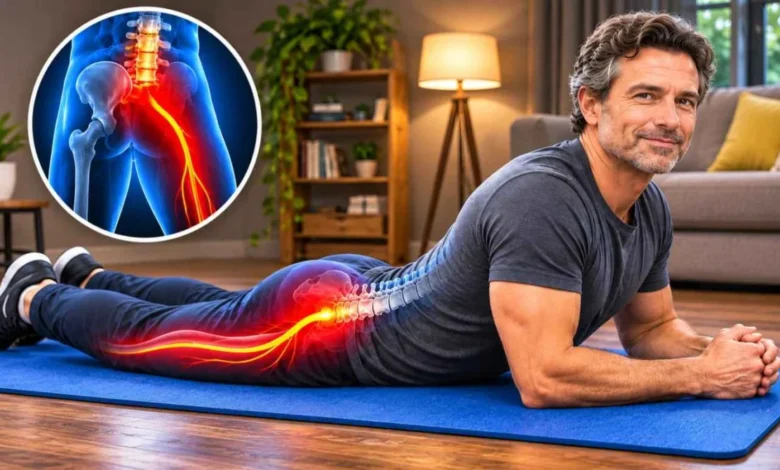
The "boring" position referenced by experts is known clinically as prone lying with spinal extension. By lying flat on the stomach and propping the upper body up on the elbows, a patient initiates a gentle extension of the lumbar spine. This movement is designed to shift the internal pressure away from the nerve root.
According to Dr. Josh, a specialist in physical therapy, this position serves two purposes. First, it provides a "de-loading" mechanism for the lumbar discs. Second, it encourages the phenomenon of "centralization"—a clinical term used to describe the migration of pain from the extremities back toward the spine. If a patient performs an exercise and feels their calf pain diminish while their lower back discomfort increases slightly, they are successfully centralizing the symptoms, which is considered a positive prognostic indicator.

Step-by-Step Implementation: From Prone to Press-Up
For patients seeking to integrate these movements, physical therapists recommend a gradual progression. The initial step, as noted, involves the "prone-on-elbows" position. Patients should aim to hold this for two to three minutes, ensuring that their breathing remains rhythmic and the muscles of the lower back remain relaxed rather than contracted.
Once the patient can maintain this position without a flare-up of leg pain, they may advance to the "press-up" maneuver. This involves placing the hands under the shoulders while prone and pushing the torso upward, keeping the pelvis anchored firmly to the surface. By maintaining a fixed pelvis, the extension is isolated to the lumbar spine, which is where the sciatic nerve root is typically irritated. A standard protocol includes 10 to 15 repetitions, performed three times daily.
The Role of Postural Ergonomics
While physical therapy exercises address the symptoms, addressing the root cause requires a review of daily habits. The "sitting-to-standing" ratio is a primary factor in modern sciatica cases. The human spine is optimized for movement; remaining in a flexed, seated position for hours at a time prevents the discs from hydrating properly and keeps the nerve pathway under constant compression.
Public health initiatives now encourage "micro-breaks" in the workplace. Experts suggest that for every 30 minutes of sitting, an individual should stand or walk for at least two minutes. For those who drive long distances, the use of a lumbar support roll can help maintain the natural curvature of the spine, preventing the slump that often precedes a sciatica flare-up.
Identifying When to Seek Medical Attention
While conservative management is successful for the vast majority of cases, it is vital for patients to recognize "red flags" that require immediate medical evaluation. These symptoms suggest nerve damage or compression that could become permanent if not treated by a surgeon or specialist:
- Cauda Equina Syndrome Indicators: The loss of bladder or bowel control is a medical emergency that necessitates immediate surgery to prevent permanent paralysis.
- Progressive Weakness: If a patient experiences "foot drop" (the inability to lift the front part of the foot) or a sudden decrease in strength in the leg, this indicates a high level of nerve compromise.
- Systemic Symptoms: Back pain accompanied by a fever can indicate an infection or underlying inflammatory disease that cannot be treated with exercise.
- Post-Traumatic Pain: If the sciatica began immediately following a high-impact fall or motor vehicle accident, diagnostic imaging such as an MRI or CT scan is required to rule out fractures.
Analysis of Modern Treatment Trends
The medical community has shifted away from a "rest-only" approach to sciatica. Decades ago, patients were often prescribed weeks of bed rest. Modern research has debunked this, showing that absolute bed rest can actually weaken the core musculature, leading to further instability in the spine. Today, the standard of care involves a "movement-based" approach, where the patient is encouraged to find "pain-free" windows of movement.
Furthermore, the integration of technology has allowed for better patient outcomes. Wearable devices that track posture and remind individuals to stand are becoming common tools in the prevention of chronic back pain. These tools, paired with the specific extension exercises discussed, provide a comprehensive framework for managing sciatica in a modern environment.
Conclusion: The Importance of Consistency
Recovery from sciatica is rarely instantaneous. It requires a disciplined approach to both exercise and daily postural habits. While the prospect of lying on the floor to perform repetitive motions may seem tedious, the consistency of these sessions is what facilitates the calming of the inflamed nerve.
Patients are reminded that medical advice should always be individualized. Because the causes of sciatica are diverse—ranging from disc herniations to piriformis syndrome—an exercise that benefits one patient might be ineffective for another. If symptoms persist beyond four to six weeks, or if they significantly impede the ability to perform daily tasks, a consultation with a primary care physician or a licensed physical therapist remains the most prudent course of action. By understanding the anatomy of the nerve and respecting the signals the body provides during exercise, patients can transition from a state of acute pain to one of functional recovery.