Revisiting the Roots of Practice: The Timeless Mechanics and Philosophy of Bharadvajasana From the 1982 Yoga Journal Archives

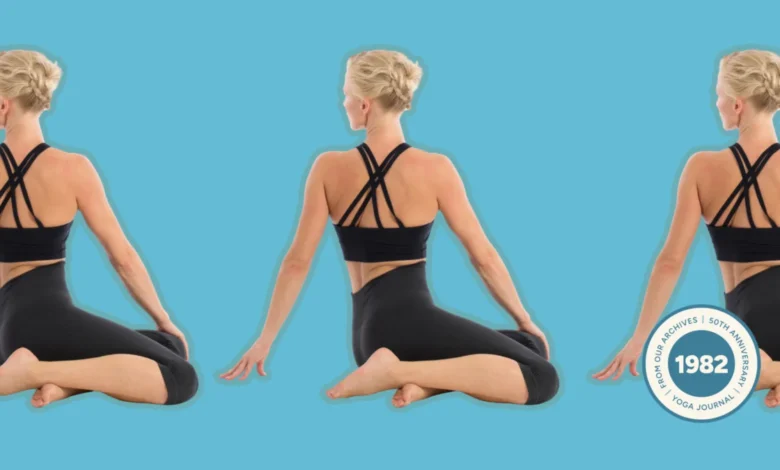
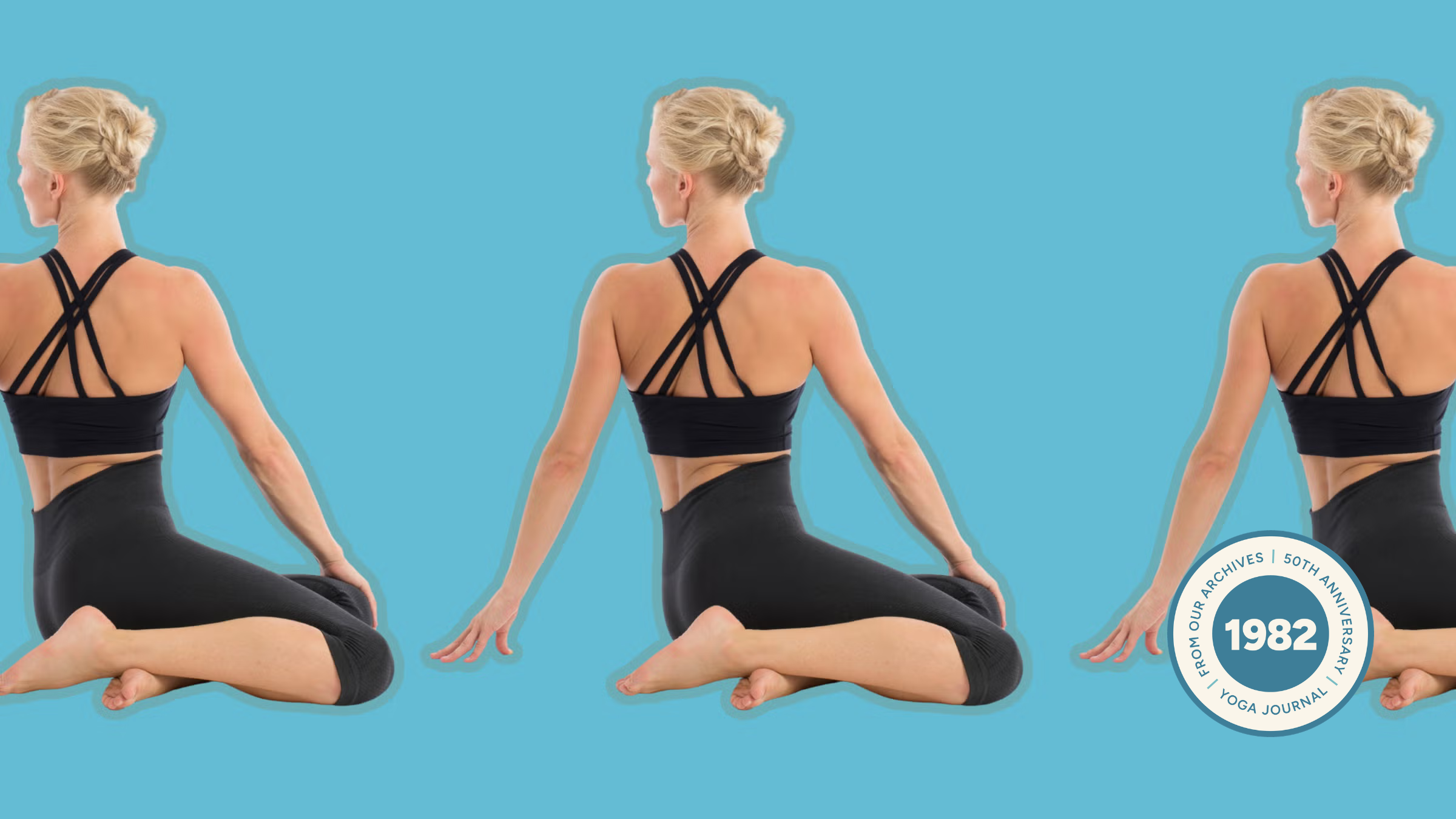
The enduring relevance of traditional yoga postures continues to shape modern somatic education, offering insights that bridge ancient Indian philosophy with contemporary biomechanics. Among the foundational texts preserved in the historical archives of Yoga Journal is a detailed examination of Bharadvajasana, commonly known as the Seated Twist, originally published in the November-December 1982 issue. Named in honor of the revered sage and character from the ancient Indian epic the Mahabharata, this beginning-level seated spinal twist has long been recognized for its exceptional adaptability. Particularly suited for older populations, individuals with limited flexibility, and pregnant practitioners, the asana offers a sophisticated entry point into spinal mobility.
As the wellness sector continues to experience unprecedented growth—with global market estimates projecting the yoga and meditation industry to surpass monumental valuations—revisiting foundational instructional archives provides critical context. Modern physical therapy and osteopathic research increasingly validate the structural assertions made in early yoga literature, particularly regarding joint preservation, pelvic mechanics, and the psychological framework of mindful movement.
Anatomical Implications and the Protection of the Sacroiliac Joint
At the core of the 1982 archive’s pedagogical framework is the mechanical integrity of the spine and its foundational link: the pelvis. Twisting asanas are universally prescribed in therapeutic yoga to elongate and stretch the ligaments that bind individual vertebrae together, fostering an expanded range of motion across all vertebral segments. This enhanced mobility subsequently grants practitioners greater freedom of movement in complex poses and rectifies posture by alleviating localized tightness.
However, the historical text emphasizes a critical biomechanical caution that remains highly relevant to modern exercise science: the base of the movement must remain level. During a seated twist, both buttocks must stay anchored to the floor while the pelvis is permitted to rotate organically. The pelvis serves as the vital anatomical bridge connecting the trunk—specifically the spinal column—to the lower extremities via the hip joints and the sacrum.
When a practitioner attempts to twist the spine while forcibly holding the pelvis stationary, immense torque is generated at the pelvic-sacral junction, known as the sacroiliac (S-I) joint. Because the S-I joint possesses relatively limited support from surrounding musculature and relies heavily on strong ligamentous structures, this artificial restriction can lead to significant mechanical strain.
This consideration is particularly vital for female practitioners. Anatomically, the female S-I joint is traditionally less deep and offers inherently less structural stability than its male counterpart. Furthermore, physiological fluctuations associated with menstruation, pregnancy, and lactation induce hormonal changes that temporarily loosen ligamentous support throughout the pelvic girdle. By ensuring that the pelvic base remains level and moves in tandem with the spinal column as a unified continuum, practitioners can successfully bypass unnecessary strain on the sacroiliac joint, safeguarding long-term joint health.
Releasing the Girdles: Realigning the Spinal Column
The broader philosophy of spinal health articulated in the historical archives centers on the liberation of the body’s primary peripheral girdles: the shoulder girdle and the pelvic girdle. Major joints in the shoulders and hips exert a profound influence on spinal alignment. Chronic tension in the shoulders frequently manifests as habitual slouching, which distorts the natural curves of the spine. Conversely, uneven tightness in the hip joints can induce hyperlordosis, commonly known as a swayback.
When one section of the spinal column experiences mechanical disturbance, the entire vertebral structure must compensate to maintain balance and support the body’s mass. Liberating the shoulder and hip joints allows these compensatory patterns to dissolve, enabling the spine to spring back into its natural, gracefully curving alignment. This principle underpins not only Bharadvajasana and all subsequent twisting postures, but the broader practice of physical yoga as a whole.
The Philosophical Paradigm: Surrender Over Force
Beyond its biomechanical applications, the 1982 archive offers a philosophical critique of how practitioners approach physical discipline. Many modern students approach yoga as an artificial regimen imposed upon an unwilling body and mind, forcing the physical form into a preconceived aesthetic mold. The archive argues that true yogic discipline does not reside in aggressive physical coercion, but rather in the capacity to release and let go.
According to traditional yoga philosophy, the practice does not seek to alter the fundamental path of the self, which is viewed as inherently complete. Instead, yoga acts as a mechanism to clear the obstructions that impede that path. Attempting to force physical change through excessive egoism—referred to in classical yoga philosophy as asmita—represents a fundamental misunderstanding of the discipline. Through consistent, patient persistence, the true expression of an asana manifests organically through a harmonious union of body and mind.
In physical terms, this surrender translates to softness rather than weakness. Mentally, surrender is mirrored in the exhalation of the breath. Executing Bharadvajasana requires a gradual, deliberate movement initiated on the exhale, allowing the spinal column to adapt smoothly to shifting structural demands.
Methodology for Practice: Step-by-Step Instructions
For practitioners seeking to incorporate Bharadvajasana into a contemporary sequence, the archival instructions provide a precise blueprint:
-
Initial Seated Position: Sit upright on the floor with both legs extended straight out in front of the torso. With an exhalation, bend both knees and sweep them to the left side, resting them beside the left buttock. Carefully fit the left ankle into the natural arch of the right foot.
-
Securing the Base: Ensure both buttocks remain firmly anchored to the floor. If flexibility constraints cause one buttock to elevate, place a folded yoga blanket or mat beneath the lower-right side to level the pelvis, or widen the distance between the knees.
-
Arm and Shoulder Placement: On an exhale, lift the right arm straight overhead. Keeping the arm elevated away from the floor, sweep it around the back to grasp the left arm just above the elbow. Ensure the right shoulder rotates outward rather than collapsing inward toward the chest. Concurrently, reach the left arm across the front of the body, placing the palm down and hooking it securely under the outside of the right knee.
-
Executing the Twist: Keeping the sitting bones grounded while allowing the left side of the pelvis to slide slightly forward, initiate the twist from the base of the spine, slowly rotating the torso to the right. Coordinate all movements with the breath, moving exclusively on exhalations. The head may follow the rotation of the spine or turn in the opposite direction to gaze over the left shoulder, ensuring the eyes remain level with the horizon. Hold the posture for several steady breaths, exit smoothly on an exhale, and repeat on the opposite side.
Pedagogical Adaptations and Teacher Resources
For yoga educators working with diverse populations, the archival text outlines valuable modifications. Beginners can effectively utilize a wall as a prop to deepen their spatial awareness and structural support. By sitting with the shoulders positioned at right angles to a wall at shoulder height—spaced slightly wider than shoulder-width apart—students can gently press against the vertical surface during an exhalation to facilitate the twist.
This wall-assisted variation is particularly beneficial for mobilizing the thoracic, or mid-back, region—an area where modern desk-bound students frequently experience chronic tension and restricted mobility. Furthermore, this adaptation serves as an essential modification for individuals in later stages of pregnancy who cannot safely practice deep abdominal twists, allowing them to achieve necessary spinal rotation without compressing the midsection.
Conclusion: The Lasting Legacy of Classical Yoga Instruction
The preservation of foundational texts from decades past underscores the cyclical nature of physical culture and wellness education. While contemporary fitness trends frequently introduce novel methodologies and equipment, the fundamental realities of human anatomy remain constant. The insights captured in Yoga Journal’s 1982 archives regarding Bharadvajasana serve as a powerful reminder that sustainable physical practice relies not on forceful imposition, but on anatomical precision, physiological awareness, and a deep respect for the natural limits and capabilities of the human body.