The Paradox of Loss: Navigating the Intersection of Grief and Gratitude in a Changing Life

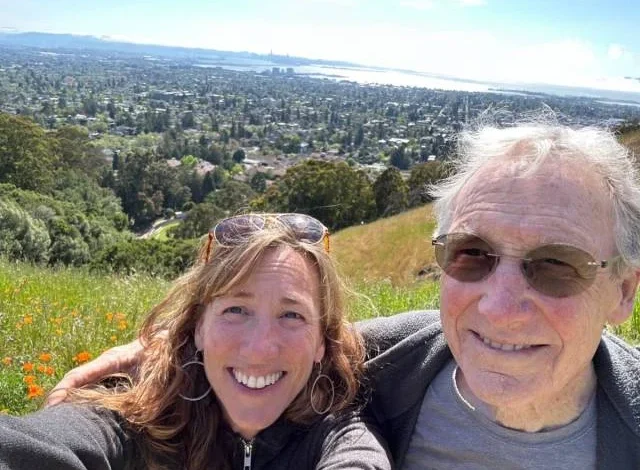
The unraveling of life as Christine Carter once knew it began on a drizzly January morning in 2022. For many, the post-pandemic era was intended to be a period of stabilization; for Carter, it marked the commencement of a profound, years-long sequence of personal losses that would fundamentally alter her perspective on human existence, mortality, and the nature of gratitude. What followed was a complex journey through the erosion of domestic anchors and the sudden, unrelenting departure of primary family members, culminating in a philosophical reordering of her personal values.
A Chronology of Unprecedented Loss
The period between 2022 and 2025 served as a concentrated timeframe for what psychologists often refer to as "grief saturation." The sequence of events began with the forced transition of the empty-nest phase. Having raised four children, Carter and her husband, Mark, moved to downsize their living situation, effectively dismantling the physical history of their family life.
This domestic transition coincided with a rapid succession of medical and personal tragedies:
- December 2021: Carter’s mother was diagnosed with terminal ovarian cancer.
- April 2022: Carter’s mother passed away.
- May 2022: One week before her mother’s memorial service, Carter received a diagnosis of invasive breast cancer.
- Summer 2022: A close cousin passed away due to an accidental overdose, and a long-time college friend died suddenly from a cardiac event.
- Late 2022: The family dog, Buster, was diagnosed with lymphoma and euthanized.
- 2023–2024: Carter’s brother-in-law, Brian, was diagnosed with a malignant brain tumor and passed away within nine months.
- April 2025: Carter’s 84-year-old father, who had remained active and independent, passed away suddenly.
This rapid-fire accumulation of losses forced a confrontation with the reality of impermanence. Sociologists note that when individuals experience "compounded grief"—the experience of multiple losses in a short period—the typical grieving process is interrupted, often preventing the mourner from achieving closure before the next trauma occurs.
The Science and Psychology of Compounded Grief
Clinical psychologists define compounded grief as a state where the bereaved lacks the necessary time to process one loss before another ensues. According to research from the American Psychological Association (APA), the emotional load of such events can lead to chronic stress, exhaustion, and a form of "grief fatigue."
However, observers of Carter’s trajectory note a shift from acute distress to a phenomenon known as "post-traumatic growth." This is a psychological concept where individuals report positive psychological change as a result of struggling with highly challenging life circumstances. While the initial impulse in the face of such profound loss is often a desire for withdrawal—as Carter famously stated, the fear that losing her father would result in an indefinite "collapse"—the reality of the human experience often proves more resilient.
Economic and Domestic Realignment
The backdrop of these emotional challenges was a shifting economic landscape. As Carter and her husband attempted to sell their family home in early 2022, they faced a cooling real estate market and rising mortgage interest rates, which had begun to climb for the first time in two decades. This added a layer of logistical stress to the emotional turmoil. The act of clearing out a home filled with childhood artifacts—horse show ribbons, academic records, and toys—serves as a physical manifestation of "disenfranchised grief," where the loss of a place is inextricably linked to the loss of a past identity.
The Synthesis of Gratitude and Mortality
The philosophical pivot in Carter’s narrative centers on the "grief-gratitude paradox." By stripping away the distractions of daily life and the superficiality of modern existence, the sustained experience of loss acted as a catalyst for a return to fundamental priorities.
"Genuine gratitude," Carter reflects, "when we really pause to acknowledge how valuable something is, inherently involves recognizing the impermanence of that thing." This realization aligns with existentialist thought, which posits that the awareness of mortality is not a morbid pursuit, but rather a tool for heightening the value of the present moment. By acknowledging that a person or a moment will not last forever, the observer grants that entity an "extraordinary" status that it might otherwise be denied.
Broader Implications for Modern Society
The implications of Carter’s experience are significant in an era increasingly defined by rapid change and widespread anxiety. Her journey highlights a critical shift in how modern adults might process long-term crises:
- Vulnerability as a Tool: The removal of "defenses and distractions" allows for a deeper, more permeable engagement with life.
- The Role of Community: Despite the loss of key family members, the reliance on remaining kinship networks—such as the time spent with her father during his final years—demonstrates the stabilizing power of familial intimacy.
- Reframing the "Broken" Heart: The internal state of being "broken-open" is not synonymous with being destroyed. Rather, it is a state of increased receptivity.
Expert Perspectives on Grief-Based Growth
Psychotherapists often observe that those who undergo profound, repeated loss frequently develop a heightened sense of empathy. As the boundaries between the self and the "larger human experience" dissolve, individuals are better able to connect with the universal human condition of love and loss.
When Carter describes the "ancient river of sorrow and love" that connects everyone who has ever lived, she is articulating a fundamental tenet of humanistic psychology: that deep sorrow is the direct consequence of deep attachment. To avoid the sorrow would require avoiding the attachment, a tradeoff that few find acceptable.
Moving Forward: The Thanksgiving Paradigm
As Carter approaches the holiday season—a time traditionally associated with family gathering and reflection—her stance on gratitude has evolved from a performative act to a visceral necessity. The absence of key figures at the table does not diminish the capacity for gratitude; rather, it intensifies the awareness of those who remain.
This transformation suggests that the most effective way to navigate the "crucible of loss" is not to seek a return to the status quo, but to integrate the reality of loss into a new definition of normalcy. The "grief-gratitude paradox" offers a roadmap for those currently navigating their own seasons of hardship: acknowledging that while the loss is absolute, the growth that follows is equally profound.
Ultimately, the lesson derived from this series of events is that the depth of the human heart is not finite. As life continues to present challenges, the ability to find "extraordinary" beauty in the "temporary" nature of existence becomes a vital survival mechanism. For those mourning, the lesson is clear: one may not choose the losses they endure, but one can choose to use those "broken-open" places to cultivate a more present, meaningful, and loving life.