The Silent Marathon: Jay Leno’s Journey Through the Realities of Caregiving and Advanced Dementia

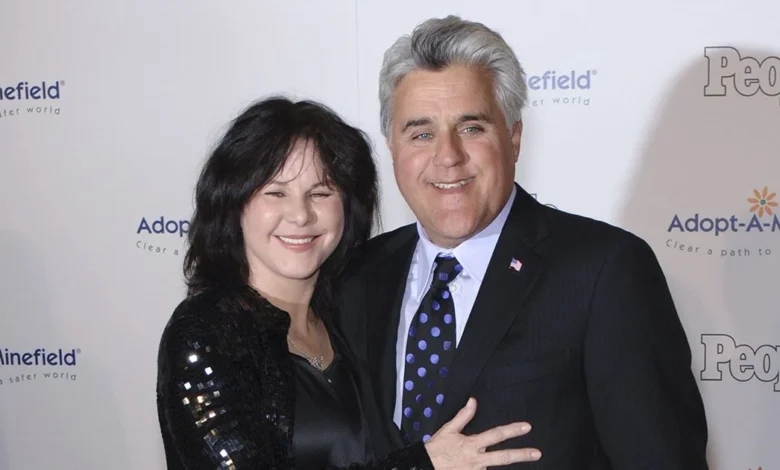
For more than four decades, Jay Leno and Mavis Leno shared a partnership defined by mutual support, intellectual rigor, and a commitment to activism. Today, that relationship has entered a profound, quiet chapter defined by the clinical realities of advanced dementia. As Mavis, 79, navigates the complexities of a condition that disrupts her perception of time and memory, the former late-night host has assumed the role of her primary caregiver. His public reflections on this transition have provided an unvarnished look at the grueling, intimate, and often isolating nature of long-term caregiving, stripping away the polish of celebrity life to reveal the universal challenges faced by millions of American families.
The progression of Mavis Leno’s health became a matter of public record in early 2024, when Jay Leno filed a petition for conservatorship in Los Angeles Superior Court. The legal filing noted that Mavis had been struggling with a progressive loss of capacity and orientation to space and time for several years. By April 2024, the court granted the conservatorship, formalizing a reality that had already begun to reshape the couple’s daily existence. The legal step was not merely a administrative necessity; it was a reflection of a life-altering medical decline that rendered Mavis unable to manage her financial affairs or navigate the requirements of independent living.
A Daily Cycle of Rediscovery
Perhaps the most harrowing element of the Lenos’ journey, as described by Jay, is the phenomenon of repetitive grief. For roughly three years, Mavis would wake up each morning and grapple with the news of her mother’s death. Because advanced dementia often impairs the brain’s ability to encode new long-term memories, the news of the loss did not settle into the past; it remained a perpetually unfolding event. Each morning, Mavis would experience the shock of the news as if it were being delivered for the first time.
This cyclical suffering is a hallmark of the cognitive decline associated with advanced dementia. When the hippocampus and other memory-processing centers of the brain degrade, the buffer that allows human beings to contextualize trauma is effectively removed. For Jay Leno, this meant witnessing the raw, visceral pain of his wife’s grief every single day for years. In interviews with AARP and later on TODAY with Hoda Kotb, Leno described this as the most difficult aspect of his caregiving role, illustrating the emotional toll of witnessing a loved one trapped in an unending loop of fresh loss.
The Anatomy of Caregiving
Beyond the psychological burden, the physical demands of caregiving are immense. Leno’s duties are comprehensive, encompassing the fundamental tasks of human existence: feeding, bathing, dressing, and assisting with toileting. These duties represent a stark departure from the life the couple built over their 43-year marriage. In a moment of characteristic humor—a mechanism he uses to preserve his wife’s dignity—Leno refers to the process of physically lifting Mavis to the bathroom as "Jay and Mavis at the prom," imagining the two of them slow-dancing across a floor. This narrative reframing is a vital survival tool, turning the clinical necessity of care into a moment of human connection.
The data supports the intensity of what Leno is experiencing. According to the Alzheimer’s Association, caregivers for individuals with dementia often provide significantly more hours of labor than those caring for people with other chronic health conditions. While the average caregiver for a patient with other conditions might provide 65 hours of support per month, dementia caregivers average 92 hours. This 27-hour gap represents more than a full additional work week of unpaid labor, often performed without the benefit of institutional support or professional respite.
A Profile of Mavis Leno: The Activist Behind the Care
It is essential to acknowledge that Mavis Leno is defined by more than her diagnosis. Before the onset of her cognitive decline, she was a formidable force in global human rights. In 2002, she was nominated for the Nobel Peace Prize for her advocacy on behalf of women in Afghanistan. As the chair of the Feminist Majority Foundation’s Campaign for Afghan Women and Girls, she was instrumental in bringing international attention to the gender apartheid enforced by the Taliban. Her career was defined by fierce independence and an unrelenting drive for justice. Jay Leno often speaks of this history with reverence, viewing his current caregiving responsibilities as a direct extension of the marital vows they exchanged over four decades ago.
The Broader Crisis: Millions in the Shadows
The Lenos’ experience is a microcosm of a larger national crisis. In 2026, the Alzheimer’s Association estimates that approximately 7.4 million Americans aged 65 and older are living with Alzheimer’s dementia. With women accounting for nearly two-thirds of those diagnoses, the burden of care frequently falls upon spouses, who themselves are often aging and susceptible to the physical and mental strain of the role.
The concept of "anticipatory grief" is central to this experience. Unlike the grief that follows a death, anticipatory grief is a state of perpetual mourning that begins while the loved one is still physically present. It involves the gradual, piece-by-piece loss of the person’s personality, memory, and cognitive identity. For spousal caregivers, who have often spent decades intertwined with their partner’s life, this process is particularly agonizing. The loss does not arrive in a single, defined moment; it unfolds in a slow, relentless erosion of the life they once knew together.
Practical Implications and Expert Guidance
Leno’s public candor serves a dual purpose: it validates the experiences of other caregivers and provides a cautionary message regarding the limits of individual capacity. His statement, "Don’t think you’re up to caregiving because you’re not," is a sobering reminder that the reality of the work consistently outpaces the commitment. The intensity of dementia care is not a test of character or love, but a structural challenge that often requires external resources, including memory care, respite services, and professional mental health support for the caregiver.
For families navigating this terrain, experts emphasize that support is not a sign of failure but a requirement for sustainability. The isolation that frequently accompanies the caregiving role can exacerbate the decline of both the patient and the caregiver. Engaging with local support groups, utilizing adult day care services, and maintaining open lines of communication with medical professionals are critical steps.
A Life Narrowed, But Still Present
Despite the significant challenges, there are moments of profound resonance. Jay Leno has noted that Mavis still recognizes him, a fact that he cherishes deeply. While he acknowledges the possibility that this recognition may eventually fade, he focuses on the present, finding ways to maintain a shared world. Because Mavis can no longer travel, they bring the world to her through nature programs and virtual travelogues. By sitting with her and watching these images, they maintain a connection that, while different from their previous life, remains grounded in love and presence.
The story of Jay and Mavis Leno is a testament to the endurance of the human spirit in the face of progressive loss. It serves as a stark reminder that while dementia may alter the trajectory of a life and the nature of a relationship, the essential commitment to care remains a profound, if difficult, act of devotion. As the population of the United States continues to age, the lessons learned by the Lenos—the importance of patience, the necessity of professional support, and the dignity found in small, daily gestures—will become increasingly relevant to a growing number of families across the nation.
Disclaimer: The information provided in this article is for educational purposes only and does not constitute medical, psychological, or legal advice. Readers should consult with licensed healthcare professionals and legal experts regarding their specific caregiving situations.
AI Disclaimer: This article was researched and drafted with the assistance of artificial intelligence tools and underwent review by a human editor to ensure accuracy and adherence to professional journalistic standards.