Scientists discover a surprising clue to autism’s origins hidden in the placenta

The quest to fully understand the origins of autism spectrum disorder (ASD) has historically centered on neurological development, brain anatomy, and complex genetic architectures. However, a compelling new study emerging from the Cold Spring Harbor Laboratory (CSHL) shifts this paradigm entirely, directing scientific focus away from the cranial cavity and toward an unexpected orchestrator of fetal health: the placenta. By uncovering a sophisticated chain reaction linking maternal immune activation, placental cellular destruction, and the subsequent emergence of autism-like behaviors, researchers have charted a radically new course for developmental neurobiology.
While the scientific community has long recognized that genetic predispositions account for a substantial portion of autism risk, environmental factors operating during the prenatal period have emerged as critical variables. Epidemiological studies in humans have frequently pointed toward maternal infections, severe systemic inflammation, and immune system disruptions as catalysts that can alter fetal trajectories. Until now, however, the precise biological mechanisms operating at the maternal-fetal interface remained nebulous, obscured by the profound complexity of mammalian gestation.
The investigation, spearheaded by CSHL Associate Professor Lucas Cheadle alongside postdoctoral researcher Irene Sanchez Martin, provides unprecedented resolution into these early gestational windows. By meticulously simulating viral infections in murine models without introducing actual pathogens, the CSHL team has isolated the specific moments when a developing fetus is most vulnerable to maternal immune responses. Their findings not only illuminate a remarkably early developmental window for neurodevelopmental disruption but also offer compelling clues regarding one of the most persistent demographic puzzles in medicine: why autism is diagnosed significantly more often in males than in females.
Chronology of Vulnerability: Pinpointing the Critical Gestational Window
To untangle the complex relationship between maternal immunity and fetal outcomes, the CSHL research team devised a controlled experimental timeline. They administered a specialized molecular compound to pregnant mice designed to mimic the biological signature of a viral infection—specifically triggering the maternal immune system without exposing the animals or their litters to a live virus. This method, widely known in scientific literature as maternal immune activation (MIA), allows researchers to study inflammation-driven developmental changes without the confounding variables of active pathogen replication.
By systematically applying this immune trigger at various staggered intervals throughout the standard murine gestation period, the researchers mapped out a precise window of high susceptibility. The data revealed a stark threshold: mouse fetuses were exceptionally vulnerable when systemic inflammation was induced precisely 12.5 days into gestation. Within a remarkably short span of just 24 hours following the maternal immune spike, approximately one-third of the developing fetuses exhibited clear, measurable developmental abnormalities.
This timeline marks a significant shift in developmental biology. While immunologists and neuroscientists have investigated the downstream effects of maternal immune activation for decades, previous observations of structural and behavioral disruptions typically manifested much later in gestation or during postnatal assessments. By capturing signs of developmental distress within a single day of the MIA event at day 12.5, the CSHL study demonstrates that the physiological foundations of neurodevelopmental alterations can be established much earlier than previously conceptualized.
The Placental Gateway: Spongiotrophoblasts Under Siege
To understand why certain fetuses succumbed to the inflammatory challenge while others appeared entirely resilient, Cheadle and Sanchez Martin shifted their investigative lens toward the placenta—the temporary yet vital organ responsible for mediating nutrient exchange, waste elimination, and hormonal regulation between the mother and the developing offspring.
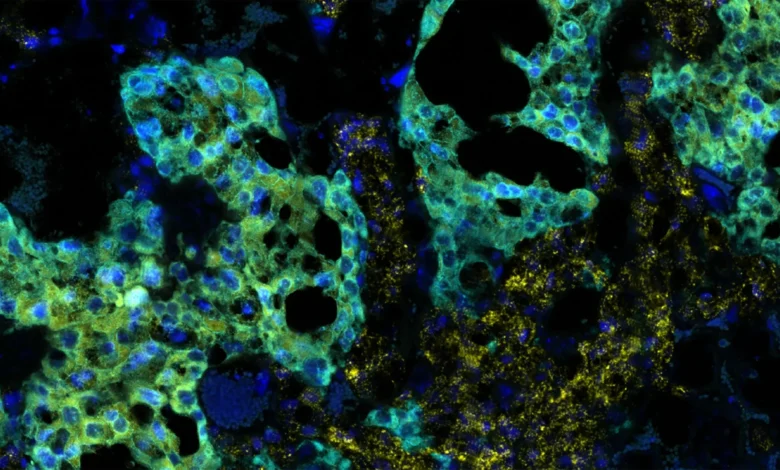
Rather than viewing the placenta as a passive conduit, modern perinatology recognizes it as an active biological barrier and a sophisticated endocrine organ. Within the mouse placenta, the researchers zeroed in on a specialized population of cells known as spongiotrophoblasts. These cells occupy a critical anatomical zone where maternal tissues and fetal tissues interface, playing an indispensable role in establishing and maintaining immune tolerance.
During normal, undisturbed pregnancies, spongiotrophoblasts ensure that the mother’s immune system recognizes the fetus—which possesses foreign genetic material inherited from the father—as a welcomed guest rather than a foreign invader requiring rejection. However, the CSHL study revealed that when maternal immune activation occurs at the critical 12.5-day mark, this delicate immunological truce is shattered.
In fetuses that developed normally despite the maternal inflammatory event, the spongiotrophoblast layer remained structurally intact and functionally robust. Conversely, in male fetuses that subsequently developed autism-like behavioral traits, microscopic analysis revealed severe, visible damage to these specialized placental cells. When spongiotrophoblasts are compromised, their protective buffering capacity collapses. This breakdown allows maternal inflammatory cytokines and immune mediators to cross the placental barrier unchecked, directly assaulting the delicate neural and physiological systems of the developing fetus.
"To truly understand autism spectrum disorder, we have to look beyond the brain," Cheadle emphasizes. "Our work suggests that maternal immune activation and changes within the placenta are a gateway to autism for some unique individuals."
The Sex-Specific Divide: Decoding the Male Vulnerability
One of the most striking and potentially paradigm-shifting revelations of the CSHL study is the absolute dichotomy observed between male and female fetuses. Across every experimental iteration and replicate, autism-like behavioral traits manifested exclusively in male mice. Female littermates, subjected to identical maternal immune activation schedules and equivalent systemic inflammation, continued their development normally, showing no signs of the behavioral or physiological disruptions observed in their male counterparts.
This sharp divergence offers a compelling biological parallel to human epidemiological data, where boys are diagnosed with autism spectrum disorder at a rate roughly four times higher than girls. For years, researchers have debated whether this diagnostic gap stems from true biological protection in females, diagnostic bias in clinical settings, or a combination of both. The CSHL findings strongly support the existence of intrinsic biological mechanisms that protect female fetuses from environmental immune insults.
What makes this discovery particularly profound is the chronological timing of the divergence. In mammalian fetal development, overt sexual differentiation of the brain and the major hormonal surges that dictate physiological sexual dimorphism occur later in gestation. Yet, the sex-based differences in vulnerability to maternal inflammation appeared at embryonic day 12.5—long before these classic hormonal and neurological pathways are established.
"It’s really fascinating, because we’re looking at an age which precedes hormonal surges," Cheadle notes. "It precedes sexual differentiation in the brain and many other regions. So, it’s surprising there would be a sex-based difference this early."
To explain this phenomenon, researchers are pursuing two primary working hypotheses. The first posits that male embryos may produce specific, distinct proteins or cellular markers that inadvertently provoke a more aggressive or damaging maternal immune reaction following a viral mimic. The second, more hopeful hypothesis suggests that female embryos possess an active, innate protective mechanism—perhaps driven by genetic or molecular factors on the sex chromosomes—that actively buffers against inflammation during highly sensitive developmental epochs.
Broader Implications and Future Scientific Horizons
While the implications of the CSHL study are vast, researchers and clinicians emphasize a necessary note of scientific caution: these findings are derived from murine models and do not definitively establish that identical placental mechanisms are the primary driver of autism in humans. Animal models provide invaluable mechanistic insights, but the human placenta and immune system operate with a layer of evolutionary complexity that requires dedicated clinical validation.
Nevertheless, the study opens exciting new avenues for translational medicine and preventive healthcare. By identifying the placenta as an active participant in neurodevelopmental risk, the research encourages a broader interdisciplinary approach that bridges immunology, obstetrics, and psychiatry. If future human studies confirm that placental damage during specific gestational windows acts as a conduit for neurodevelopmental disorders, it could fundamentally transform prenatal care.
Such insights could eventually lead to the development of early screening tools designed to monitor placental health and maternal immune status during high-risk pregnancies, such as those complicated by severe viral infections. Furthermore, understanding the protective mechanisms naturally employed by female fetuses could inspire therapeutic strategies aimed at mimicking those safeguards, potentially offering a way to shield vulnerable fetuses from the damaging cascades of gestational inflammation.
As Cheadle and his team prepare for the next phases of their research—which will involve deeper, granular investigations into the molecular pathways operating within both male and female embryonic tissues—the scientific community moves one step closer to untangling the intricate web of genetic and environmental factors that shape human neurodiversity. By looking outside the brain and into the placenta, researchers are illuminating new pathways toward early intervention, better diagnostics, and a more comprehensive understanding of autism spectrum disorder.
Related posts: