How Chronic Back Pain Rewires the Brain: A New Discovery Linking Physical Suffering to Our Sense of Identity


For hundreds of millions of people worldwide living with chronic back pain, even the most mundane everyday movements—such as bending down to tie a shoe, reaching for a coffee mug, or rising from a chair—can trigger a sudden, debilitating surge of agony. While medical science has long understood that the brain acts as the central processing hub for physical discomfort, a groundbreaking new study reveals that these sudden pain flare-ups activate an unexpected region of the central nervous system: a brain network intimately tied to our very sense of identity, self-reflection, and personal narrative.
Researchers at the University of California, San Diego (UC San Diego) School of Medicine have discovered that movement-triggered pain in individuals suffering from chronic low back pain (cLBP) activates the brain’s Default Mode Network (DMN). Ordinarily, this specialized neural circuit becomes less active when a person experiences acute physical pain. This profound discovery suggests that persistent back pain may become deeply, inextricably intertwined with a patient’s self-image, potentially illuminating why conventional medical therapies and standard pharmacological treatments frequently provide limited or temporary relief.
The findings, published on October 5, 2026, in the British Journal of Anaesthesia, mark a paradigm shift in how neuroscientists and clinicians understand the complex relationship between chronic physical conditions and psychological processing.
The Global Burden of Chronic Low Back Pain
According to data compiled by the World Health Organization (WHO), low back pain is currently the leading cause of disability worldwide, impacting hundreds of millions of individuals across all demographics, socioeconomic statuses, and age groups. Clinically, when pain persists continuously or intermittently for more than 12 weeks, it is formally classified as chronic.
For those afflicted with chronic low back pain, daily existence is frequently characterized by unpredictability. Everyday movements can provoke sudden, severe flare-ups that exacerbate an already challenging medical condition. Despite decades of intense neurological research, scientists have historically struggled to isolate the precise brain circuits responsible for movement-provoked pain flare-ups, often relying on models that treat pain strictly as a bottom-up sensory signal traveling from the body to the brain.
This new study challenges that traditional biomedical model, offering empirical neurological evidence that the brain processes chronic, recurring pain through entirely different mechanisms than acute, short-term injuries.
Unmasking the Default Mode Network: The "Self Network"
To understand the significance of the UC San Diego discovery, one must examine the anatomy and function of the Default Mode Network. Often colloquially referred to by neuroscientists as the "self network," the DMN is an interconnected system of regions spanning the frontal, parietal, and temporal lobes of the brain.
The DMN is exceptionally active during periods of introspection—when our attention is directed inward. This includes moments when we reflect upon personal memories, evaluate our identity, daydream, or process complex emotional states. Conversely, when a human being directs their attention outward to engage with the external environment, the DMN typically suppresses its activity, stepping aside to allow task-positive networks to manage immediate sensory input and motor responses.
During ordinary acute pain—such as accidentally touching a hot stove or cutting a finger—the brain instinctively dampens DMN activity. This evolutionary mechanism forces the individual to focus entirely on the immediate source of danger, mobilizing the body to react and protect itself from further harm.
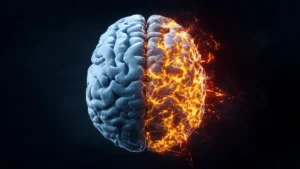
However, the UC San Diego research team discovered that when chronic back pain patients experienced a movement-triggered flare-up, the exact opposite occurred: the DMN lit up. Instead of deactivating to prioritize an external threat, the brain’s self-reflection network switched on, suggesting that chronic pain is processed not merely as an incoming physical sensation, but as an intrinsic component of the self.
Inside the Clinical Trial: Methodology and Findings
To investigate the neurological underpinnings of chronic pain flare-ups, the research team recruited a cohort of 114 clinical participants diagnosed with chronic low back pain.
The study employed a rigorous experimental design. Each participant underwent a "leg raise test," a well-established clinical diagnostic procedure specifically utilized by physicians to provoke back pain in a controlled setting. While participants performed this movement, researchers tracked real-time changes in cerebral blood flow using an advanced, non-invasive neuroimaging technique known as arterial spin labeling (ASL). ASL allows scientists to map precise patterns of brain activity by measuring blood perfusion without requiring the injection of an exogenous contrast agent, offering a clear and dynamic picture of functional neural architecture.
To establish a comparative baseline, the researchers also exposed participants to a separate, acute painful stimulus: a harmless but intensely uncomfortable thermal heat sensation applied directly to the calf, simulating the transient sting of a minor burn.
The comparative analysis revealed a striking neurological dichotomy. When movement triggered a flare of chronic back pain, the DMN exhibited a pronounced surge in activity. Yet, when those exact same individuals experienced the acute thermal heat stimulus, their DMN deactivated normally, following the brain’s classic, evolutionary blueprint for acute injury.
Contaminating the Moment: The Psychological Implications of Identity-Linked Pain
The implications of these findings extend far beyond academic neuroimaging; they offer a profound explanation for the psychological toll and treatment resistance characteristic of chronic pain conditions.
Dr. Fadel Zeidan, PhD, corresponding author of the study, professor in the Department of Anesthesiology, endowed professor at the Sanford Institute for Empathy and Compassion, and director of the Pain Health and Mindfulness Laboratory at UC San Diego School of Medicine, articulated the weight of the discovery.
"In every pain study, when you’re experiencing pain, the DMN deactivates," Dr. Zeidan noted. "What we show for the first time ever is that when you have a pain flare, it turns on instead. You start to identify the experience with who you are."
This fusion of physical distress and self-identity means that chronic back pain ceases to be a localized physical sensation and instead becomes woven into the fabric of a person’s life history, emotional state, and cognitive expectations. For a chronic pain patient, the suffering is rarely confined to the exact second a physical movement occurs.
Instead, the immediate present is, in Dr. Zeidan’s words, "contaminated" by the psychological baggage surrounding the condition. This includes the acute anxiety of anticipating the next flare-up, haunting memories of past episodes where physical limitations caused embarrassment or social isolation, and an overwhelming, pervasive fear of movement—known clinically as kinesiophobia—that drives patients to alter their posture and lifestyle simply to avoid triggering agony.
Because the brain links persistent pain to the self, the neural processing of pain becomes a self-reinforcing loop, where emotional distress amplifies physical perception, and physical discomfort validates emotional despair.
Why Conventional Pain Management Often Fails
The revelation that chronic pain engages identity networks helps clarify a frustrating reality for both patients and clinicians: why conventional pain management strategies so frequently fall short.
Mainstream pharmacological interventions—ranging from over-the-counter anti-inflammatories to potent prescription opioids—are designed primarily to interrupt neural signaling pathways or suppress peripheral inflammation. While these treatments can successfully blunt acute pain signals traveling up the spinal cord, they fundamentally fail to address the complex central nervous system networks that sustain chronic pain at the cognitive and identity level.
"Current pain medicine is fixated on ridding patients of their pain symptoms, but that’s not the source of chronic pain," Dr. Zeidan explained. "These data suggest that a chronic pain flare also encompasses one’s identity."
By treating chronic low back pain solely as a biomechanical failure or a malfunctioning peripheral nerve, modern medicine has historically overlooked the profound neuroplastic changes that embed pain into the psychological architecture of the brain. Recognizing that a pain flare engages the DMN opens the door to novel therapeutic interventions aimed not at eliminating the physiological sensation entirely, but at fundamentally altering the brain’s relationship with that sensation.
A New Horizon: Mindfulness and Psychedelic Medicine as Targeted Therapies
In light of these discoveries, researchers are increasingly turning their attention toward therapeutic modalities that target whole-person processing, cognitive flexibility, and neural network regulation. Dr. Zeidan’s laboratory and other leading research centers have begun exploring alternative interventions, notably mindfulness-based meditation and the administration of controlled psychedelic compounds such as psilocybin.
Recent preliminary investigations into mindfulness meditation indicate that structured mental training can teach patients to observe physical sensations, emotions, and thoughts with non-judgmental present-moment awareness. By cultivating this detached observation, patients can experience physical pain signals without allowing those signals to activate the DMN and contaminate their sense of self.
Concurrently, clinical research into psilocybin—the active psychoactive compound found in certain mushrooms—is examining the compound’s unique capacity to disrupt rigid neural networks. Scientists hypothesize that psilocybin may help "reset" the brain systems that integrate past trauma, emotional distress, and future worries into the pain experience, offering patients a psychological restart.
Neither mindfulness nor psychedelic therapy is viewed by researchers as a miraculous "silver bullet" that will permanently eradicate structural spinal pathology. Rather, their therapeutic value lies in their ability to decouple physical sensation from personal identity.
"They’re not a silver bullet—you’re not necessarily getting rid of the pain, but you’re changing the relationship you have with that pain so it doesn’t contaminate your everyday life," Zeidan emphasized.
Future Directions and Clinical Trials
Building upon these publication milestones, the Pain Health and Mindfulness Laboratory at UC San Diego School of Medicine is actively conducting ongoing clinical trials utilizing advanced neuroimaging to evaluate whether targeted mind-brain therapies can physically alter the neural dynamics of self-reflection in chronic pain patients.
By mapping changes in functional connectivity before and after mindfulness-based interventions or psychedelic-assisted therapy, researchers hope to provide definitive empirical proof that modifying the brain’s relationship with pain can alleviate both subjective suffering and objective disability.
While these advanced therapeutic approaches remain under rigorous clinical investigation, the identification of the Default Mode Network’s paradoxical activation during chronic pain flare-ups provides an invaluable framework for the future of pain medicine. By shifting the clinical focus from mere symptom suppression to comprehensive neural and psychological rehabilitation, medical science moves closer to offering sustainable relief for millions trapped in the cycle of chronic back pain.
Additional co-authors contributing to the landmark study at UC San Diego School of Medicine include Morgan Gianola, Jon Dean, Conan Chen, Daniel Barrows, Gabriel Reigner, and Thomas Liu.
Financial support for the research was provided in part by the National Institutes of Health’s National Center for Complementary and Integrative Health under Grant #R01AT009693, alongside backing from the UC San Diego Sanford Institute for Empathy and Compassion. The study authors reported no competing financial interests or conflicts of interest.