The physiological link between metabolic health and musculoskeletal integrity has become a focal point of recent clinical research, revealing that chronic hyperglycemia acts as a silent architect of joint deterioration. While many patients associate diabetes exclusively with vascular or neurological complications, medical evidence increasingly highlights that the skeletal system—specifically the connective tissues—is equally vulnerable to the ravages of elevated blood glucose. For the millions of Americans living with diabetes, the presence of unexplained stiffness in the shoulders, persistent locking of the fingers, or a diminished range of motion in the hands is often not merely a sign of aging, but a direct consequence of metabolic systemic stress.
The Biochemistry of Stiffness: AGEs and Collagen
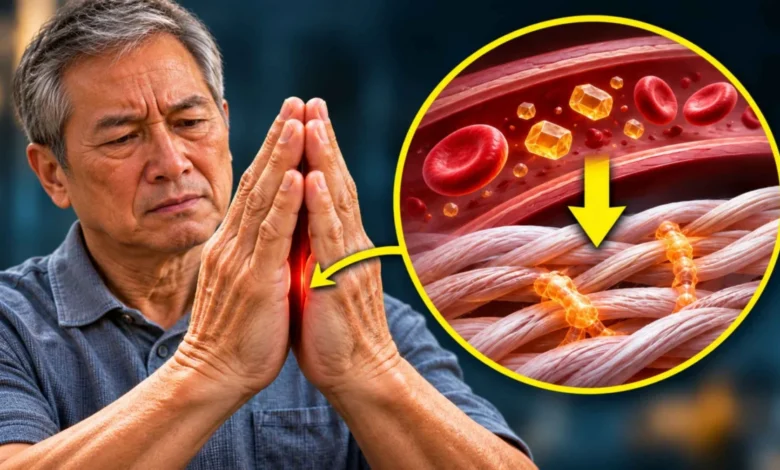
The core of the problem lies in a biochemical process known as glycation. When blood glucose levels remain consistently high, excess sugar molecules bind to proteins throughout the body in a non-enzymatic process. This reaction creates Advanced Glycation End products, commonly referred to as AGEs. Collagen, the primary structural protein found in tendons, ligaments, and cartilage, is particularly susceptible to this modification.
As AGEs accumulate within these tissues over time, they cross-link collagen fibers, effectively transforming healthy, elastic tissue into a rigid, brittle structure. This is often likened to the degradation of a rubber band exposed to extreme heat; it loses its pliability and tensile strength. Because this process occurs at a molecular level over several years, the onset of symptoms is frequently insidious. By the time a patient notices a "locked" finger or a "frozen" shoulder, the structural integrity of the joint capsule has often been significantly compromised. Furthermore, high glucose levels induce a state of chronic, low-grade systemic inflammation, which exacerbates the degradation of synovial fluid and accelerates the damage to the micro-vasculature that nourishes joint tissues.
Clinical Chronology and Conditions
The connection between diabetes and orthopedic issues is well-documented in medical literature, with specific conditions appearing with higher frequency in the diabetic population:
- Diabetic Cheiroarthropathy (Diabetic Hand Syndrome): Often manifesting as a thickening of the skin on the palms and fingers, this condition restricts finger movement, making it difficult for patients to press their palms flat against a surface.
- Stenosing Tenosynovitis (Trigger Finger): This occurs when the tendon sheath in a finger becomes inflamed, causing the finger to catch or lock in a bent position. The prevalence of trigger finger is significantly higher in individuals with diabetes compared to the general population.
- Adhesive Capsulitis (Frozen Shoulder): Characterized by profound stiffness and pain in the shoulder joint, frozen shoulder is notably more common in those with long-standing diabetes. The physiological mechanism involves the thickening and tightening of the shoulder’s capsule.
- Dupuytren’s Contracture: A condition where the tissue under the skin of the palm thickens, eventually causing one or more fingers to bend inward toward the palm.
Dissecting the Osteoarthritis Debate
For years, the medical community engaged in a robust debate regarding whether diabetes is an independent causal factor for osteoarthritis (OA). The complexity of the issue stems from the high rate of comorbidity between metabolic syndrome and obesity. A landmark 2020 meta-analysis involving approximately 295,000 participants sought to clarify this relationship. The study concluded that when researchers controlled for body mass index (BMI), the direct link between diabetes and OA diminished, suggesting that the mechanical stress of excess weight—rather than blood sugar alone—drives much of the joint wear associated with diabetes.
However, recent reviews have suggested a more nuanced view. While mechanical loading is a primary driver, the systemic inflammation caused by metabolic dysregulation likely primes the joints for faster degradation. Thus, diabetes and osteoarthritis exist in a synergistic loop: diabetes-induced inflammation damages cartilage, and the resulting pain limits physical activity, which in turn leads to weight gain and further metabolic decline. Data from the Centers for Disease Control and Prevention (CDC) underscores this cycle, noting that nearly 30% of adults living with both conditions report being physically inactive, compared to just 11% of those without these diagnoses.

A Multimodal Approach to Joint Preservation
Managing the musculoskeletal fallout of diabetes requires a proactive, multidisciplinary strategy. Clinical guidelines emphasize that glycemic control is the foundational step. By keeping A1C levels within a target range, patients can theoretically slow the rate of AGE formation within their connective tissues.
Beyond medical management, physical intervention is critical. Low-impact, consistent movement serves as a "lubricant" for the joints. Exercise protocols focusing on 150 minutes of moderate activity per week—such as swimming, cycling, or brisk walking—are highly recommended to maintain muscle mass and joint mobility. Furthermore, structured resistance training, performed two to three times weekly, serves a dual purpose: it strengthens the muscles that support joints and enhances insulin sensitivity, allowing muscles to utilize glucose more efficiently.
Nutritional strategies also play a pivotal role. Adopting a diet rich in anti-inflammatory foods—such as leafy greens, omega-3 fatty acids found in fish, legumes, and whole grains—can mitigate the systemic inflammation that fuels joint degradation. Conversely, limiting refined carbohydrates and ultra-processed foods is essential to preventing the glucose spikes that accelerate protein glycation.
Implications for Long-Term Care
For the patient, the appearance of joint stiffness should trigger a conversation with their primary care physician or endocrinologist, rather than being dismissed as a normal part of aging. Early diagnosis of conditions like trigger finger or adhesive capsulitis allows for conservative treatments, such as physical therapy, splinting, or targeted exercises, which can prevent the need for more invasive interventions like surgery.
However, patients must remain vigilant regarding common treatments for joint pain. Corticosteroid injections, while effective for reducing inflammation in a stiff joint, carry a well-known risk for those with diabetes: they can trigger significant, temporary spikes in blood glucose levels. Patients should be advised to monitor their glucose more frequently in the days following such an injection. Additionally, the supplement market remains a landscape of limited evidence. Many products marketed for joint health lack rigorous clinical validation and, in some cases, may interact adversely with blood glucose-lowering medications.
The Broader Public Health Context
As the global prevalence of type 2 diabetes continues to rise, the burden on orthopedic services is expected to increase proportionally. Public health officials are increasingly calling for integrated care models where endocrinologists and orthopedic specialists collaborate. By treating the patient as a whole—addressing both the systemic metabolic state and the localized musculoskeletal symptoms—healthcare providers can improve quality of life and maintain patient independence for longer.
The message to the public is clear: joint health and metabolic health are intrinsically linked. Ignoring a stiff joint may be ignoring a warning sign from the endocrine system. Through early detection, consistent physical activity, and rigorous management of glucose levels, individuals living with diabetes can successfully navigate these challenges and preserve their mobility, ensuring that their joints remain as resilient as possible in the face of metabolic pressure.
Related posts: