Bridging the Gap: How Wearable Health Data and AI Are Transforming Modern Medicine

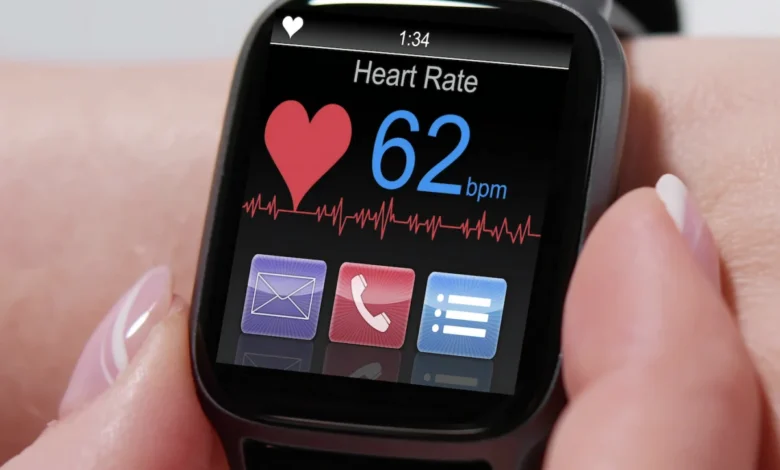
The modern era of decentralized healthcare traces its roots back to the 1960s, when biophysicist Norman J. “Jeff” Holter commercialized the portable electrocardiogram, forever changing how physicians monitor cardiac health. Before the advent of the Holter monitor, evaluating a patient’s heart relied almost entirely on a static snapshot taken inside a clinical setting—a methodology prone to sampling bias that frequently missed cryptic arrhythmias, intermittent palpitations, or sudden syncopal episodes. Holter famously likened assessing a patient’s physiology from a single clinical snapshot to a mining engineer attempting to assay an entire mountain of ore by testing just one rock.
Decades later, that foundational breakthrough has evolved into an ubiquitous consumer phenomenon. Today, millions of people worldwide wear devices on their wrists, fingers, and torsos that continuously stream biometric data. As consumer-grade wellness trackers increasingly intersect with medical-grade diagnostics, the healthcare landscape stands at a critical crossroads. Navigating this new paradigm requires balancing the immense preventative potential of continuous health monitoring against rigorous standards for clinical validation, data privacy, and artificial intelligence integration.
The Evolution of Wearable Technology: From Clinical Tools to Consumer Lifestyle Devices
Throughout the 21st century, remote physiological monitoring has largely bifurcated into two distinct streams. The first involves medical-grade, prescription-based devices strictly engineered for clinical diagnostics and patient management under direct physician oversight. The second comprises consumer electronics—smartwatches, fitness rings, and chest straps manufactured by technology giants such as Apple, Samsung, Garmin, and Oura—marketed primarily as general wellness tools.
However, rapid technological convergence is steadily dissolving the boundaries between these categories. A prominent milestone in this evolution occurred when the U.S. Food and Drug Administration cleared Dexcom’s Stelo, marking the first over-the-counter continuous glucose monitor available directly to consumers without a prescription. Similarly, software ecosystems like Apple’s HealthKit now aggregate electronic health records, laboratory results, and third-party wearable data into a single interface. Concurrently, companies like WHOOP have forged partnerships with major clinical laboratory networks, such as Quest Diagnostics, to integrate wearable physiological metrics with traditional blood testing.
These developments highlight a fundamental shift: consumer-generated health data is increasingly mirroring clinically measured biomarkers. Consequently, the medical community faces an urgent imperative to establish standardized benchmarks determining when these continuous signals are sufficiently accurate, interpretable, and clinically actionable to guide formal patient care.

Regulatory Shifts and Federal Initiatives
Recognizing the rapid pace of technological innovation, regulatory bodies and federal agencies are actively modernizing their oversight frameworks to accommodate digital health tools. In January, during the Consumer Technology Association’s annual CES convention, then-FDA Commissioner Marty Makary announced that the agency was updating its regulatory guidance governing wearable technologies and artificial intelligence-enabled medical devices. The stated objective is to accelerate the path to market for low-risk, high-impact technologies without compromising patient safety.
Furthermore, the Centers for Medicare and Medicaid Services (CMS) and the FDA have initiated landmark pilot programs designed to integrate digital health solutions into standard reimbursement frameworks. Programs such as ACCESS and TEMPO (Technology-Enabled Meaningful Patient Outcomes) aim to pave the way for insurance coverage of wearables prescribed to manage chronic conditions like hypertension, type 2 diabetes, and major depressive disorder. These initiatives enable select digital health tools to reach patients while manufacturers collect real-world performance data, moving away from rigid, legacy regulatory pathways.
Concurrently, the federal Advanced Research Projects Agency for Health (ARPA-H) launched the Delphi program. This ambitious federal initiative is dedicated to supercharging the development of next-generation, low-cost wearable and ingestible biosensors capable of continuously tracking complex biological signals—including hormones, immune markers, and therapeutic drug concentrations—that have historically resisted continuous, non-invasive monitoring.
The Promise of Preventative Medicine and Early Detection
The clinical and public health implications of this technological wave are profound. Wearables offer a vital lifeline by making invisible physiological trends visible during everyday life. Countless individuals have credited smartwatch notifications with prompting them to seek timely medical evaluation for previously unrecognized atrial fibrillation, potentially averting catastrophic strokes.
Similarly, continuous glucose monitors have revolutionized metabolic health awareness. By providing real-time feedback, these devices empower users to directly connect dietary intake, sleep architecture, physical exertion, and psychological stress to immediate glycemic fluctuations. Emerging clinical research also points toward modest benefits for non-diabetic populations seeking to optimize metabolic resilience. More broadly, large-scale epidemiological studies have consistently linked the adoption of wearable trackers to measurable increases in baseline physical activity.

Yet, as consumer-grade data increasingly masquerades as diagnostic information, health policy experts emphasize a glaring discrepancy: these continuous biological signals are rarely held to the rigorous analytical and clinical validation standards traditionally required of hospital laboratory tests.
Validation Frameworks: The Laboratory Versus the Consumer Market
Traditional diagnostic medicine operates within a strictly regulated validation framework. Hospital laboratories in the United States are governed by the federal Clinical Laboratory Improvement Amendments (CLIA) and frequently accredited by organizations such as the College of American Pathologists (CAP). Novel laboratory-developed tests must undergo exhaustive in-house and clinical validation studies before influencing patient management decisions.
Applying this stringent framework to consumer wearables presents distinct technical challenges. Many consumer devices rely on proprietary algorithms and generate composite wellness metrics—such as “readiness scores” or “sleep scores”—rather than reporting isolated concentrations of standard clinical biomarkers. Although physiological inputs like heart-rate variability, skin temperature, and sleep duration provide useful baseline trends, individual manufacturers weigh these parameters differently through opaque software formulas without tying them to universally accepted pathological endpoints.
Validation studies underscore these limitations. While consumer sleep trackers generally demonstrate reliability in detecting sleep onset and morning wake times, their accuracy in differentiating distinct sleep stages remains variable. Furthermore, heart-rate variability metrics can differ significantly across various hardware brands, and because the baseline measurement does not correlate directly to a specific disease pathology, clinicians cannot reliably use it for standalone diagnostic purposes.
Large-scale clinical trials have further illuminated the practical complexities of consumer screening. In a landmark study supported by Apple, researchers enrolled nearly 419,300 participants using a smartwatch application designed to detect irregular pulse rhythms. While the algorithm successfully identified over 2,000 individuals with potential abnormalities, subsequent clinical evaluations confirmed atrial fibrillation in only about one-third of those who sought follow-up care. This disparity underscores the operational hurdle of managing high volumes of false-positive alerts across massive population bases.
The Complex Role of Artificial Intelligence

The integration of artificial intelligence into healthcare further complicates the interpretation of wearable data. Patients increasingly rely on consumer-facing AI chatbots to answer health-related inquiries, while physicians rapidly adopt generative AI tools for clinical documentation, differential diagnoses, and decision support.
In theory, advanced large language models could serve as powerful synthesis engines, distilling massive streams of continuous biometric data into coherent clinical insights. In practice, however, unconstrained AI systems run the risk of confidently misinterpreting poorly standardized physiological signals, amplifying false positives, and inundating already overburdened healthcare delivery systems with unnecessary consultation requests.
For AI to effectively bridge the gap between raw biometric data and clinical action, experts argue it must function as a reliable patient advocate. Rather than simply generating alarming notifications, intelligent health assistants must accurately contextualize data, proactively flag worrying longitudinal trends, and ensure vulnerable patients do not fall through the cracks of fragmented healthcare systems.
Urgent Privacy Concerns in the Era of Big Data
Beyond clinical and technical hurdles, the exponential growth of consumer health data raises profound privacy and ethical concerns. Biometric information collected by commercial wearables falls largely outside the strict privacy protections established by the Health Insurance Portability and Accountability Act (HIPAA), leaving a substantial regulatory vacuum.
Consumer health data sold or shared on the open data broker market can potentially be acquired by commercial entities, employers, insurers, or even law enforcement agencies. Sophisticated analytics applied to ostensibly anonymized accelerometer, heart-rate, and sleep data can easily infer sensitive personal details, including stress levels, psychological moods, and daily behavioral routines.
Legislative efforts to address these vulnerabilities have seen mixed momentum. Past proposals such as the SMARTWATCH Data Act sought to restrict the unauthorized commercial sale of wearable health metrics, while newer legislative measures like the Health Information Privacy Reform Act aim to extend HIPAA-equivalent protections to digital health information gathered outside traditional clinical environments. These initiatives signal a growing awareness among policymakers that consumer privacy protections must evolve alongside digital innovation.

The Future of Decentralized Diagnostics
Despite legitimate concerns regarding validation, standardization, and data privacy, medical professionals and technology experts remain broadly optimistic about the trajectory of wearable health technologies. By shifting the paradigm from reactive treatment to proactive disease prevention, wearables grant individuals unprecedented agency and a direct window into their own internal physiology.
The alignment of regulatory tailwinds from the FDA, CMS, and ARPA-H suggests that wearable biosensors are successfully transitioning from novelty wellness gadgets into foundational components of preventative medicine. If the healthcare laboratory of the future is destined to be decentralized and distributed across the human body, it must be constructed with the same uncompromising commitment to scientific rigor, transparency, and clinical accountability that has historically governed traditional diagnostics. Doing so will honor the legacy of Jeff Holter, ensuring that modern medicine evaluates human health not through isolated snapshots, but through continuous, comprehensive understanding.