Unlocking the Anatomy of Uttanasana: A Decades-Long Evolution in Yoga Practice and Spine Health


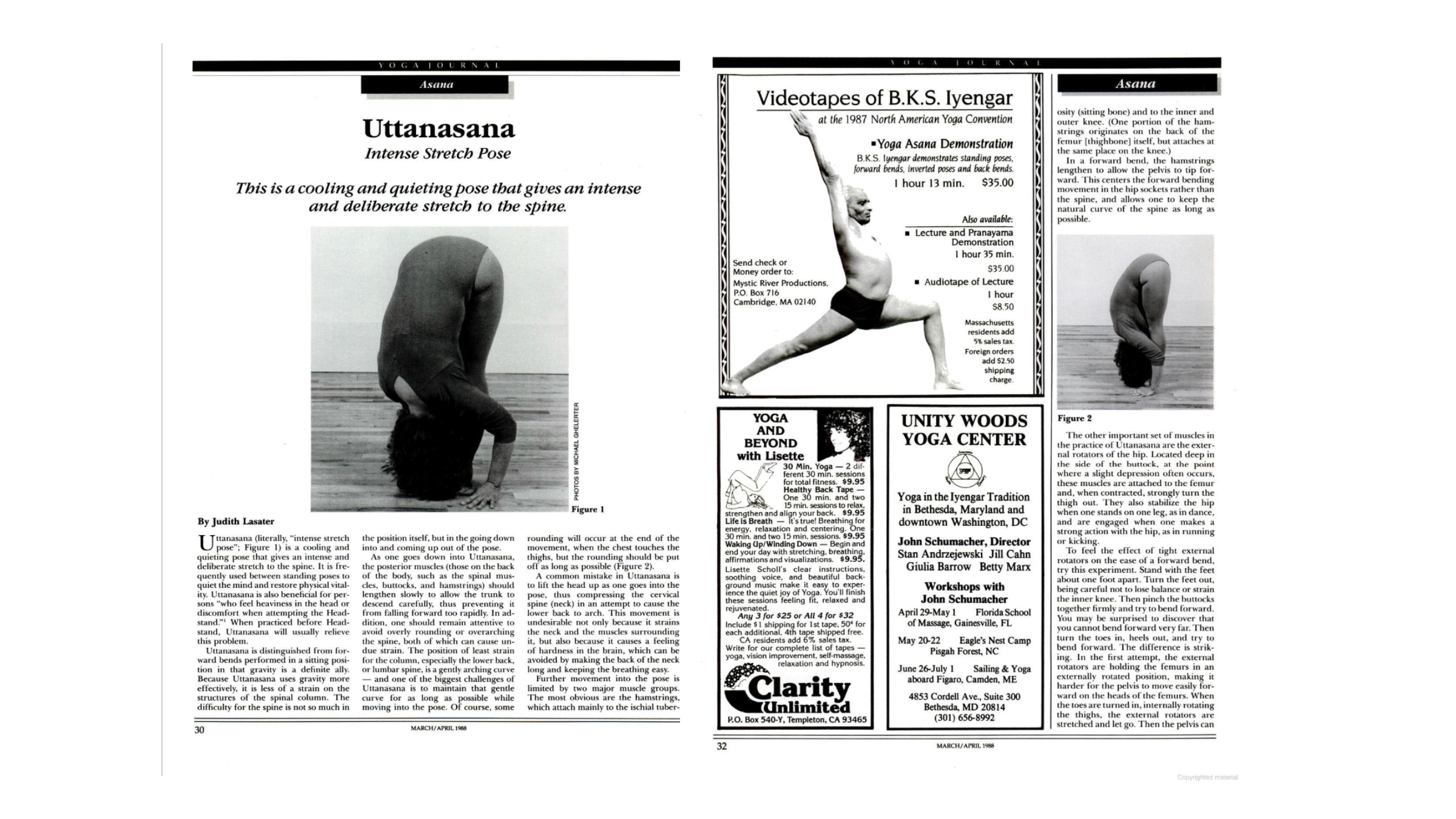
The practice of modern yoga has long wrestled with the dichotomy between outward flexibility and internal anatomical alignment. Among the foundational asanas frequently scrutinized for proper biomechanics is Uttanasana, commonly known as the Standing Forward Bend. Originally cataloged in historical instructional archives dating back to the mid-1970s and detailed extensively in pivotal instructional literature from the spring of 1988, Uttanasana remains a cornerstone of restorative, cooling, and centering sequences. While often perceived as a basic hamstring stretch, biomechanical and historical analyses reveal that mastering this pose requires an intricate understanding of hip rotation, spinal curves, and the often-overlooked mechanics of physical transitions.
Main Facts and Anatomical Mechanics of Uttanasana
At its core, Uttanasana translates literally to "intense stretch pose." It is frequently integrated between intense standing sequences to quiet the nervous system, lower the heart rate, and restore physical vitality. Furthermore, historical pedagogical notes from advanced yoga instructors indicate that Uttanasana serves as a powerful counterpose or preparation for inversions. Specifically, practitioners who experience cranial pressure, dizziness, or discomfort during Headstand (Sirsasana) often find complete relief by executing Uttanasana beforehand.
Unlike seated forward folds where spinal compression can be exacerbated by the absence of dynamic support, Uttanasana enlists gravity as a supportive ally. Because gravity assists the downward descent, the absolute structural stress on the spinal column is theoretically minimized—provided the movement is orchestrated from the hip sockets rather than the vertebrae.
However, the primary mechanical challenge lies not within the static hold of the posture, but during the transitional phases: entering the pose and rising back to a vertical position. As the torso descends, the posterior chain muscles—encompassing the erector spinae, gluteus maximus, and hamstrings—must lengthen in a controlled, eccentric contraction. This prevents the trunk from collapsing forward under its own weight and protects the integrity of the intervertebral discs.

The Myth of the Hamstring and the Role of Hip Rotators
Conventional wisdom among novice yoga practitioners dictates that tight hamstrings are the sole culprit behind a restricted forward bend. While the hamstrings—which originate at the ischial tuberosity (sitting bones) and insert around the knee—certainly play a critical role by limiting pelvic tilt, anatomical studies highlight another vital group of muscles: the external rotators of the hip.
Located deep within the lateral gluteal region, the external rotators are responsible for turning the thigh outward. They provide vital pelvic stabilization during unilateral weight-bearing activities such as running, kicking, or dancing. In the context of a forward bend, however, tight or actively engaged external rotators can inhibit the pelvis from tilting forward over the heads of the femurs.
A simple biomechanical experiment illustrates this phenomenon: when a practitioner stands with feet slightly apart and toes turned outward while contracting the buttocks, forward flexion is severely restricted. Conversely, turning the toes inward (internal rotation of the thighs) stretches the external rotators, effectively releasing them and immediately facilitating a smoother, deeper forward fold from the hip joints. Consequently, contemporary physical therapists and alignment-focused instructors recommend integrating poses that target and stretch these rotators—such as seated and standing twists or Baddha Konasana (Bound Angle Pose)—to systematically improve forward-bending capacity, bypassing the singular focus on hamstring length.
Chronology and Historical Evolution of Yoga Pedagogy
The formalization of anatomical alignment in yoga instruction underwent a profound evolution throughout the late 20th century. Prior to the 1970s, yoga was predominantly taught in the West through intuitive mimicry, with less emphasis placed on musculoskeletal safety, leverage, and joint preservation.
- 1975: The foundational archiving of standard asana families began, establishing baseline documentation for classical poses to preserve traditional lineages while integrating modern physical education concepts.
- March-April 1988: Yoga Journal published a landmark technical analysis of Uttanasana, shifting the pedagogical narrative toward biomechanics, specifically detailing how spinal curves (lumbar lordosis) should be preserved during transitions.
- Late 1990s to Early 2000s: The integration of kinesiology and physical therapy principles into teacher trainings transformed standard cues, emphasizing props (such as blocks, chairs, and folded blankets) to accommodate practitioners with lower back pathologies or extreme stiffness.
- Present Day: Digital archives and modern biomechanical labs continue to analyze traditional yoga postures using motion-capture technology, validating historical insights regarding transitional mindfulness and load distribution on the lumbar spine.
Expert Perspectives and Anatomical Analysis
Kinesiologists and orthopedic specialists note that the primary site of injury during forward bends is the lumbar spine, driven by excessive flexion under load. When a practitioner rounds the lower back prematurely, the posterior annulus fibrosus of the lumbar discs experiences heightened shear stress.
According to instructional consensus, the optimal spinal posture during the descent into Uttanasana is the maintenance of a natural, gentle lumbar arch. Instructors caution against two common compensatory errors:
- Lifting the Head: Novices frequently hyperextend the cervical spine (neck) in an effort to flatten the lower back. This action compresses the cervical vertebrae, strains the surrounding musculature, and induces a neurological sensation of mental tension or hardness.
- Premature Rounding: Allowing the chest to cave inward too early transfers the workload entirely from the hip flexors and core to the passive connective tissues of the back.
To mitigate stress, advanced practitioners utilize slight abdominal engagement ( Uddiyana Bandha or general core bracing) to control the lever arm of the torso, particularly during the ascent, where gravity opposes muscular effort. Furthermore, arm placement can dramatically alter the torque applied to the lower back: keeping arms straight by the sides minimizes leverage, crossing arms over the head introduces moderate resistance, and extending the arms fully forward maximizes the load on the spinal erectors.
Broader Impact and Implications for Daily Life
Beyond its immediate physiological benefits—such as stretching the posterior chain, calming the central nervous system, and improving cerebral circulation—the mindful execution of Uttanasana offers a metaphor for psychological and emotional resilience.
Instructional philosophy across classical and contemporary lineages emphasizes that transitions are just as important as destinations. In a standard asana practice, students frequently rush through transitional movements—such as moving from standing to folding, or rising back to vertical—because the mind naturally fixates on static, comfortable endpoints. This psychological impatience mirrors daily life, where individuals often race toward future milestones while neglecting the present moment.
By anchoring focus onto non-moving points of reference (such as the physical sensation of the soles of the feet on the floor) during the unstable transitions into and out of poses, practitioners cultivate somatic awareness. Translating this mat-based mindfulness into daily existence allows individuals to navigate physical, emotional, and spiritual transitions with centered stability. Ultimately, the careful study of Uttanasana transcends physical stretching; it serves as a disciplined training ground for maintaining equilibrium amidst all of life’s inevitable changes.