Placenta-Derived Nanoparticles Delivered Intranasally Show Promise in Mitigating Alzheimer’s Disease Symptoms in Preclinical Models

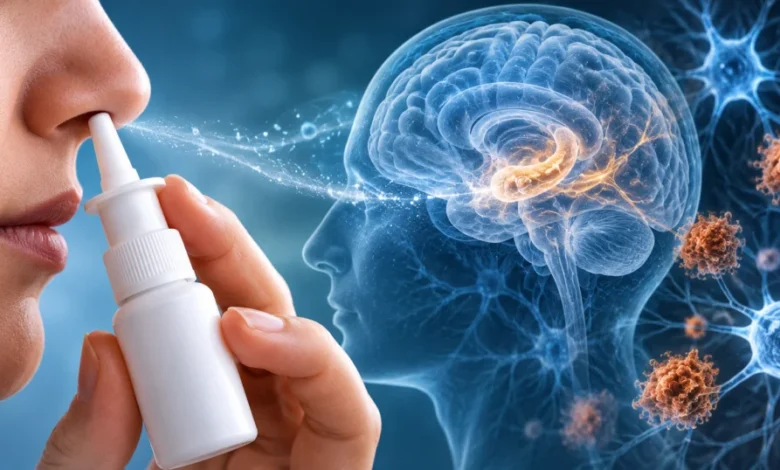
In a significant advancement for neurodegenerative research, scientists have successfully utilized an unconventional delivery method to address Alzheimer’s disease: the administration of microscopic, biologically active packages derived from human placental cells directly into the brain via the nasal cavity. This experimental approach, detailed in the journal Translational Neurodegeneration, suggests that extracellular vesicles (EVs) sourced from amniotic mesenchymal stromal cells (hAMSCs) may hold the key to modulating the neuroinflammatory environment that characterizes the progression of Alzheimer’s.
The study centers on the utilization of the amniotic membrane—the innermost layer of the placenta—as a source of regenerative biological material. By isolating extracellular vesicles from these cells, researchers have developed a potential therapeutic vector that avoids the ethical and physiological complications associated with full-cell transplantation. While the findings represent a major milestone in preclinical neurobiology, experts caution that the transition from rodent models to human clinical application remains a formidable challenge requiring extensive longitudinal validation.
The Mechanism of Action: Harnessing Cellular Communication
The fundamental premise of the research relies on the function of extracellular vesicles. These naturally occurring, membrane-bound particles serve as the body’s internal courier system. Cells release these vesicles to transport a complex cargo of proteins, lipids, and genetic material, such as microRNAs, to neighboring or distant cells. In this study, the research team identified these vesicles as potent signaling hubs capable of delivering neuroprotective and immunomodulatory molecules.
The research process involved collecting hAMSCs from the amniotic membranes of full-term placentas, obtained through informed consent from healthy donors who underwent either vaginal delivery or cesarean sections. Once isolated, the vesicles were concentrated and administered intranasally to mice genetically engineered to express the 3xTg-AD mutation—a model that mimics the development of amyloid-beta plaques and tau pathology common in human Alzheimer’s patients.
Chronology of the Preclinical Investigation
The investigation spanned several months, tracking the effects of the treatment from early-stage disease development to established cognitive decline. In the primary longitudinal study, female 3xTg-AD mice began the intranasal treatment at three months of age, before the onset of symptomatic cognitive impairment. The administration schedule—twice-weekly doses of the placental-derived EVs—continued until the mice reached nine months of age.
Following the six-month intervention period, the researchers subjected the cohort to a battery of behavioral assessments, including spatial memory and recognition tasks. The results were consistent: mice receiving the placental vesicles demonstrated statistically significant improvements in cognitive function compared to the saline-treated control group. Biological analysis of the brain tissue revealed a reduction in amyloid-beta accumulation within the hippocampus—a critical region for memory formation—with one key measure of Aβ indicating a 53% reduction.
A secondary, shorter-term study was conducted on mice aged nine months, which already exhibited advanced symptoms of Alzheimer’s-like pathology. After one month of treatment, the mice demonstrated improved performance on some, though not all, recognition tests. This outcome suggests that while the therapy is highly effective as a preventative or early-intervention measure, its efficacy may diminish once neurodegeneration is firmly established.
Addressing the Blood-Brain Barrier Challenge
One of the most significant barriers to effective neurological drug delivery is the blood-brain barrier (BBB), a highly selective semipermeable border that prevents most solutes in the circulating blood from entering the extracellular fluid of the central nervous system. Traditional systemic treatments often fail because they cannot reach the brain in therapeutic concentrations.
The researchers utilized the intranasal route to circumvent the BBB, a technique increasingly explored in neuropharmacology to bypass systemic circulation. To confirm the efficacy of this delivery, the team fluorescently labeled the vesicles prior to administration. Imaging confirmed their presence within the hippocampus, with specific localization detected inside neurons and microglia. This evidence provides a robust proof of concept, demonstrating that intranasal delivery can successfully transport biological cargo to the specific brain regions most vulnerable to Alzheimer’s.
The Role of Neuroinflammation and Cellular Homeostasis
The research highlights a paradigm shift in how scientists view Alzheimer’s pathology. While the medical community has historically focused on the buildup of amyloid-beta plaques and tau tangles as the primary drivers of the disease, there is growing consensus that neuroinflammation is a critical co-factor in cognitive decline.
In this study, the placental vesicles appeared to modulate the activity of microglia and astrocytes—the brain’s primary immune and support cells. In patients with Alzheimer’s, these cells often shift into a state of chronic, damaging inflammation. The treated mice exhibited signs of reduced activation of these cells, suggesting that the vesicles helped restore a more balanced, homeostatic environment in the brain.
Professor Salvatore Fusco and his colleagues noted that the microRNAs identified within the vesicles were strongly associated with immune regulation and neuroprotection. This suggests that the therapy does not merely target one specific protein, but rather acts as a "systems-level" intervention, tuning the brain’s inflammatory response to create a more hospitable environment for neuronal survival.
In Vitro Analysis: Validation in Human Neuronal Cells
To determine if the observations in mice were translatable to human biology, the researchers extended their study to an in vitro model. Using induced pluripotent stem cells (iPSCs), they created human neurons from three patients with sporadic Alzheimer’s disease and three healthy donors.
The Alzheimer’s-derived neurons exhibited classic signs of cellular dysfunction, including stunted neurite growth and decreased synaptic protein expression. When these cells were treated with the placenta-derived vesicles, the researchers observed a marked improvement in cellular health, including the prevention of neurite atrophy and the restoration of synaptic proteins. While this experiment was limited by the small sample size, it serves as a critical bridge between mouse models and human cellular physiology.
Implications and Future Directions
Despite the promising nature of these findings, the path to clinical translation is fraught with complexities. The research team emphasizes that this is a preclinical proof of concept and not a viable medical treatment currently available to patients.
Several technical and safety hurdles must be cleared before human clinical trials can be considered:
- Standardization: Developing a consistent, pharmaceutical-grade method to extract and manufacture these vesicles is required to ensure dosage accuracy and purity.
- Delivery Efficiency: While intranasal delivery is promising, determining the volume and concentration required for human efficacy without causing nasal irritation or systemic side effects is essential.
- Safety and Long-term Efficacy: The potential for immunogenic reactions to donor-derived materials must be evaluated, as must the long-term impact of repeated intranasal administration on the olfactory system.
- Human Complexity: Alzheimer’s in humans is a highly heterogeneous disease. A mouse model, even one engineered to express human-like symptoms, cannot fully capture the environmental, genetic, and lifestyle complexities of the human condition.
The study of placenta-derived extracellular vesicles represents an exciting frontier in regenerative medicine. By moving beyond the binary "plaque vs. tangle" focus and examining the broader cellular environment of the brain, researchers are identifying new ways to potentially mitigate the progression of neurodegeneration. While it is too early to suggest that this therapy will cure Alzheimer’s, the findings offer a compelling direction for future research.
As the scientific community continues to grapple with the rising global burden of dementia, investigations into the protective signaling properties of placental cells provide a novel, multi-faceted approach to brain health. Future studies will be necessary to determine whether these microscopic biological packages can indeed be harnessed to slow, or perhaps even prevent, the devastating cognitive decline associated with Alzheimer’s disease.
Disclaimer: This report is provided for informational purposes only and does not constitute medical advice, diagnosis, or treatment. Always consult with a qualified healthcare professional regarding any medical concerns or conditions.