The Convergence of Warnings: Independent Economist Echoes Food Security Alarms, Raising Stakes for Global Famine Threat


A growing chorus of concern is sounding the alarm over an impending global food crisis, with prominent economist Professor Steve Keen independently arriving at conclusions that mirror dire predictions made by food security analysts and scientists. This convergence of warnings, emanating from disparate fields of expertise, suggests a confluence of factors—supply chain vulnerabilities, critical fertilizer dependencies, and potentially deliberate policy choices—are coalescing to threaten the food security of billions worldwide.
Professor Keen, renowned for his accurate forecasts of financial crises, has utilized his economic modeling to identify significant risks to global food supplies. His assessment aligns with earlier, persistent warnings from figures within the agricultural and food science sectors, who have long highlighted the fragility of current food systems. While the precise scale of the projected impact varies between analysts, the shared conclusion points towards an unprecedented crisis looming by 2027. The starkness of these independent validations demands serious attention from policymakers, international organizations, and the public alike.
The Mathematical Underpinnings of Food Scarcity
At the heart of the current vulnerability lies the Haber-Bosch process, a cornerstone of modern agriculture. This industrial process, vital for synthesizing ammonia from atmospheric nitrogen to create fertilizers, is an energy-intensive endeavor. It is estimated that this process underpins the production of food for approximately half of the world’s population. However, a significant portion of global fertilizer production, around 10 percent, is geographically concentrated in the Persian Gulf region. This region is currently experiencing heightened geopolitical tensions, particularly concerning the Strait of Hormuz, a critical chokepoint for global maritime trade.
The potential for disruptions in this strategically vital waterway has been a subject of concern for years. The flow of oil and gas, as well as other commodities, through the Strait is crucial for global economic stability. Any significant blockade or conflict in the Strait of Hormuz could have immediate and far-reaching consequences for industries reliant on stable maritime transport, including the agricultural sector.
The immediate impact of fertilizer shortages, exacerbated by geopolitical instability, war, drought, and ongoing trade disruptions, is already being felt in the form of escalating food inflation. These macroeconomic pressures are compounded by the inherent lag time in agricultural production. It typically takes between one to two years for disruptions in fertilizer supply to translate into significant crop failures. This timeline suggests that the full impact of current fertilizer-related challenges may not be fully realized until around 2027.
Estimates of the potential food loss vary. One projection suggests a daily loss equivalent to approximately 400 million "human-equivalent food units" by 2027. This figure accounts for the redistribution of food during periods of scarcity, meaning it does not necessarily imply that 400 million individuals will have absolutely nothing to eat while others remain unaffected. However, the arithmetic is clear: widespread scarcity will inevitably lead to a disproportionate burden on lower and middle-income populations. Wealthier individuals and nations may possess the resources to mitigate the immediate effects through increased purchasing power, but for the majority, a stark reality of reduced availability and accessibility is anticipated. This is not a matter of abstract speculation but a quantifiable consequence of agricultural input dependencies.
A Convergence of Warnings: Independent Analyses Converge
The independent arrival at similar conclusions by Professor Steve Keen and food security analysts highlights the gravity of the situation. Professor Keen, an economist with a track record of prescient financial forecasts, has brought his analytical framework to bear on the food security issue. His work, often referencing the economic principles of debt, credit, and resource depletion, has provided a macro-economic perspective on the potential for widespread famine.
Similarly, food scientists and agricultural experts have been sounding alarms based on the intricate dependencies within the global food supply chain. These warnings have often focused on specific vulnerabilities such as the reliance on synthetic fertilizers, the impact of climate change on agricultural yields, and the fragility of international trade routes for food commodities. The convergence of these independent analyses, utilizing distinct methodologies and drawing from different datasets, lends significant weight to the warnings. When two credible voices from separate disciplines independently reach the same unsettling conclusion, it signals a critical juncture that warrants urgent attention.
The initial warnings, such as those articulated in a 2021 docuseries, had already posited these threats, drawing connections between food shortages and historical patterns of famine, including those referenced in biblical prophecies. The fact that these predictions are now being echoed and amplified by a leading economist underscores the systemic nature of the impending crisis.

Disagreements on Ideology, Agreement on Urgency
While the convergence on the threat of famine is striking, it is important to acknowledge that not all perspectives align on every issue. For instance, disagreements may arise regarding the interpretation of climate change and its impact on agriculture. Some experts maintain that the focus on climate change narratives, particularly those emphasizing carbon dioxide as a pollutant, overlooks fundamental aspects of plant physiology, such as the role of CO2 as essential "plant food" for photosynthesis. From this viewpoint, the prevailing climate discourse may be perceived as potentially hindering energy production and fostering centralized governmental control, which some critics argue can be detrimental.
However, such ideological differences, while present, do not diminish the validity of Professor Keen’s economic insights or the urgency of the food security warnings. The ability to learn from experts, even when there are points of contention on broader issues, is crucial. The shared concern for the potential collapse of food systems transcends ideological divides. As the situation develops, it is imperative to engage with a diverse range of voices and perspectives, including those of other experts such as Michael Yon and Matt Bracken, who have also highlighted these growing threats. The magnitude of the potential crisis necessitates a broad coalition of informed individuals and a willingness to prioritize collective wisdom over ideological purity.
The Imperative of Self-Reliance and Preparedness
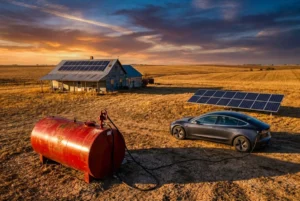
In the face of these escalating threats, the most rational response is proactive preparedness. The fragility of global food systems suggests that individuals and communities must take steps to enhance their self-sufficiency. This includes cultivating personal food gardens, investing in renewable energy sources like solar panels, and stocking long-term, storable food supplies. Discussions with experts in homesteading and sustainable living, such as Marjory Wildcraft, often emphasize the critical role of homegrown food and medicine in navigating periods of systemic breakdown.
For those seeking to secure their food supply, reputable sources for laboratory-tested organic long-term storage food are available. Similarly, in an era of increasing uncertainty regarding communication infrastructure, exploring options like satellite phones from reliable providers can offer a critical lifeline. These are not speculative suggestions but practical measures for mitigating the potential impacts of widespread disruption.
The historical record demonstrates that when complex systems falter, those who have made provisions for themselves are best positioned to weather the ensuing challenges. Relying solely on government assistance during a systemic crisis may prove insufficient. Therefore, investing in personal resilience and preparedness is not merely a prudent measure but a fundamental requirement for survival in the face of unprecedented global food insecurity. The clock is indeed ticking, and the time to act is now.
Broader Implications and the Path Forward
The potential for a global famine of the scale predicted carries profound implications that extend far beyond immediate food shortages. Such a crisis could trigger widespread social unrest, mass migrations, and increased geopolitical instability. Economic systems could face unprecedented strain, and national governments would be compelled to confront the complex challenges of resource allocation and humanitarian aid on a scale not seen in generations.
The current situation highlights the interconnectedness of global supply chains and the inherent risks associated with over-reliance on specific geographic regions or a limited number of critical inputs. The vulnerability of the agricultural sector to geopolitical events, climate variability, and economic shocks underscores the need for a fundamental re-evaluation of how food is produced, distributed, and consumed on a global scale.
Moving forward, addressing this multifaceted crisis will require a concerted effort from governments, international organizations, the private sector, and individuals. This includes:
- Diversifying Agricultural Inputs: Investing in research and development for sustainable fertilizer alternatives and reducing dependence on energy-intensive processes.
- Strengthening Supply Chains: Building more resilient and localized food systems, reducing reliance on long-distance transportation, and stockpiling essential agricultural resources.
- Promoting Sustainable Agriculture: Encouraging practices that enhance soil health, conserve water, and adapt to changing climate conditions.
- International Cooperation: Fostering global dialogue and collaborative initiatives to address food security challenges, share best practices, and provide humanitarian assistance where needed.
- Public Education and Preparedness: Raising public awareness about the risks and empowering individuals with the knowledge and resources to prepare for potential disruptions.
The convergence of warnings from economists and food security experts serves as a critical wake-up call. Ignoring these signals would be a grave error with potentially catastrophic consequences. The time for debate has passed; the time for decisive action and collective preparedness is now.