Thirty Years of Medical Dogma Upended: Garvan Institute Researchers Discover New Mechanism Driving Rare Inflammatory Disorder MKD

For decades, the global medical and scientific communities operated under a firmly entrenched consensus regarding mevalonate kinase deficiency, a debilitating and occasionally fatal genetic condition characterized by severe, recurrent inflammatory episodes. For thirty years, standard pathology models directed therapeutic development and clinical understanding toward macrophages—specialized white blood cells responsible for coordinating the body’s early innate immune defenses—as the primary engine behind the systemic inflammation that plagues patients.
However, a groundbreaking study published in the peer-reviewed journal Immunity by researchers at the Garvan Institute of Medical Research in Sydney, Australia, has decisively shattered this decades-old paradigm. The research team has uncovered compelling evidence demonstrating that the root cause of the hyper-inflammatory response in mevalonate kinase deficiency patients does not stem from macrophages at all, but rather from a profound, previously unrecognized functional defect within natural killer cells. This paradigm shift not only rewrites fundamental immunological textbooks regarding the rare disorder but has already paved the way for a lifesaving, compassionate-use treatment intervention utilizing existing medications, offering new hope to individuals who have long exhausted conventional therapies.
The Clinical Reality of Mevalonate Kinase Deficiency
Mevalonate kinase deficiency is a rare, lifelong autoinflammatory condition that affects hundreds of children and adults globally, though epidemiological experts strongly suspect that many more cases remain undiagnosed or misattributed due to the complexity of the symptom presentation. Clinically, MKD manifests as severe, recurring flare-ups marked by soaring high fevers, painful skin rashes, arthralgia (joint pain), and debilitating abdominal inflammation. In its most aggressive presentations, these acute attacks can trigger systemic complications that are potentially fatal, profoundly disrupting the quality of life for patients and placing immense stress on their families.
Historically, the medical management of MKD has been fraught with challenges. Because conventional research pointed exclusively toward macrophage hyperactivity as the primary culprit, therapeutic strategies were engineered specifically to block the inflammatory cytokines released by these specific cells. Yet, approximately half of all diagnosed MKD patients fail to respond adequately to these standard-of-care treatments. This therapeutic ceiling left a critical unmet need within the medical community, driving researchers to look deeper into the cellular machinery of the immune system to uncover what mechanisms might have been overlooked.
A Chronology of Discovery: Rewriting Thirty Years of Immunology
To challenge a consensus held for three decades, the Garvan Institute research team, led by senior author Professor Mike Rogers and lead researcher Dr. Marcia Munoz, undertook a rigorous investigative process. Collaborating extensively with Professor Mariapia Degli-Esposti and a team of specialized scientists at Monash University, the researchers analyzed complex blood samples drawn from human patients suffering from MKD, juxtaposing these findings against advanced preclinical models of the disorder.
The historical timeline of MKD research highlights the magnitude of this discovery:
- The 1990s: Scientists first mapped the genetic underpinnings of MKD, linking mutations in the MVK gene to defective cholesterol and isoprenoid biosynthesis. Macrophages were quickly identified as prominent players in the inflammatory cascade, setting a trajectory of research that would persist largely unchallenged for thirty years.
- The 2000s and 2010s: Therapeutic interventions were developed around macrophage-targeted cytokine blockade, primarily focusing on interleukin-1 inhibitors. While beneficial for some, a persistent cohort of 50% of patients remained refractory to these treatments.
- The Present Study: By utilizing modern cellular assays and preclinical models, the Garvan Institute team identified that natural killer cells—lymphocytes traditionally celebrated for their ability to eliminate virally infected cells and tumor cells—were severely compromised in individuals with MKD.
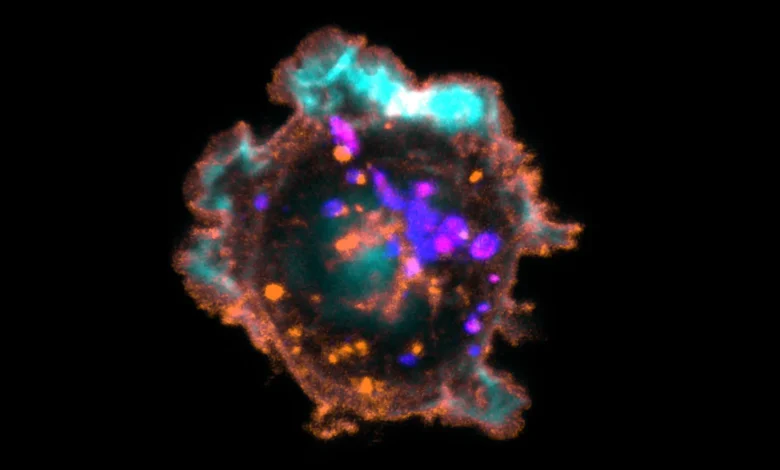
Rather than maturing properly, NK cells in MKD patients display a profound structural and functional handicap. They are packed with specialized granules containing toxic proteins designed to eradicate infected host cells before a pathogen can replicate and spread throughout the body. However, due to the underlying metabolic defect characteristic of the condition, these toxic granules remain trapped and cannot be released.
Unable to execute their primary cytotoxic function, the malfunctioning natural killer cells essentially enter a state of panic, attempting to compensate for their operational failure by amplifying secondary signaling pathways. They begin pumping out massive quantities of interferon gamma, a notoriously potent inflammatory cytokine. This surge of interferon gamma acts as a biochemical megaphone, broadcasting distress signals that hyperactivate neighboring immune cells, triggering the systemic inflammation, spiking fevers, and profound tissue damage observed clinically during an MKD flare-up.
"This really turns on its head 30 years of dogma about what was thought to be the underlying mechanism of disease," states Dr. Marcia Munoz, Group Leader in the Rogers Laboratory and lead researcher on the study. "In MKD, the primary problem is in natural killer cells and not in macrophages, as previously believed."
Professor Mike Rogers elaborates on the mechanics of the cellular misfire: "We found that these immune cells are essentially misfiring. NK cells are loaded with toxic ammunition, stored in granules that are released to kill infected cells. However, in MKD these toxic granules can’t be released from NK cells and remain trapped inside. When an NK cell fails to kill its target, it compensates by shouting for help, pumping out large amounts of interferon gamma—a powerful inflammatory signal. This activates other immune cells and causes the dangerous fever and widespread inflammation seen in patients."
Translating Basic Science into Clinical Breakthroughs
The identification of natural killer cell dysfunction and the overproduction of interferon gamma as the central drivers of MKD did not merely alter theoretical immunology; it provided an immediate, actionable therapeutic strategy.
In a powerful demonstration of bench-to-bedside translation, the discovery directly informed an experimental treatment regimen for a severely ill infant suffering from advanced complications of MKD. Working in close collaboration with pediatric specialists at the Royal Children’s Hospital in Melbourne, the research team evaluated whether baricitinib—a medication belonging to a class of drugs known as JAK inhibitors—could successfully blunt the excessive inflammatory signaling cascade observed in the patient.
JAK inhibitors function by disrupting the intracellular signaling pathways utilized by various cytokines, most notably those involved in the interferon gamma response. Because baricitinib was already approved and widely utilized for other immune-mediated conditions such as rheumatoid arthritis and atopic dermatitis, its safety profile in clinical settings was already well-documented.
Medical professionals administered baricitinib as an adjunct to the infant’s existing therapeutic protocol. The clinical response was remarkably encouraging: the frequency and severity of the child’s inflammatory flare-ups diminished significantly, and profound gastrointestinal inflammation began to show clinical signs of healing.
While clinical researchers exercise appropriate scientific caution, emphasizing that data derived from a single patient cannot definitively prove universal efficacy across the broader patient population, the intervention provides invaluable early-phase proof of concept. It validates the hypothesis that targeting the interferon gamma pathway via JAK inhibitors can interrupt the pathological cascade driven by defective natural killer cells. Consequently, the Garvan team is laying the groundwork for formal, future clinical trials to rigorously evaluate JAK inhibitors and other targeted anti-interferon gamma therapeutics in larger cohorts of MKD patients, particularly those who have historically failed standard-of-care treatments.
Broader Implications: Prenylopathies and the Diagnostic Odyssey
The ramifications of this discovery extend far beyond mevalonate kinase deficiency. MKD belongs to a broader family of rare genetic conditions collectively referred to by researchers as ‘prenylopathies.’ These disorders share common disruptions within the same metabolic pathway that governs cellular isoprenoid production.
Preliminary investigations suggest that other prenylopathies may share the identical foundational defect identified in MKD: natural killer cells that fail to mature and function correctly, subsequently driving runaway inflammation through aberrant cytokine release. If subsequent clinical and preclinical studies confirm this hypothesis, medical science may soon possess a unified mechanistic framework for diagnosing and treating an entire class of currently intractable rare diseases.
Such a breakthrough holds the profound potential to shorten what clinical geneticists term the "diagnostic odyssey"—the agonizing journey many patients endure for years, or even decades, moving from specialist to specialist before receiving an accurate diagnosis and effective clinical management.
"Confirming this link could help end the diagnostic odyssey many patients endure for years or even decades before receiving effective treatment," Professor Rogers concludes. As the medical community digests this monumental shift in immunological understanding, the work conducted at the Garvan Institute stands as a testament to the power of questioning established scientific dogmas in the relentless pursuit of human health.