JJ Spaun Overcomes Misdiagnosis and Health Crisis to Reach Pinnacle of Professional Golf

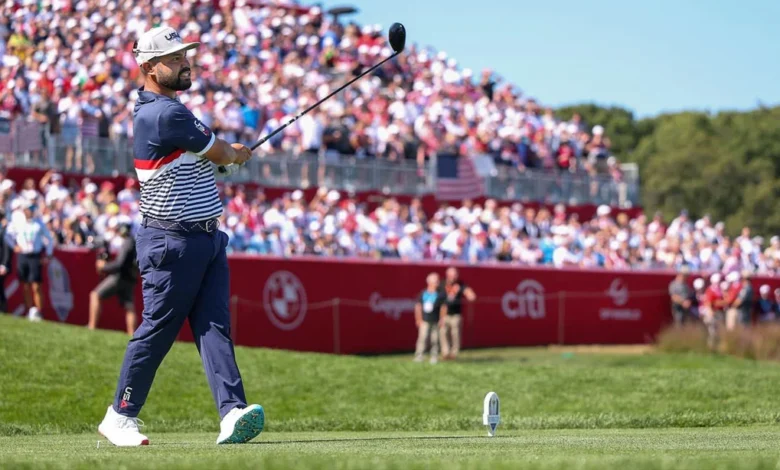
The journey of PGA Tour professional John Michael “JJ” Spaun is a compelling narrative of resilience, defined not only by his transition from a gifted youth athlete to a major championship winner but also by his harrowing multi-year struggle with an undiagnosed health crisis. For years, the Southern California native battled debilitating symptoms that nearly derailed his career, only to discover that the root cause was a medical misdiagnosis. Today, having secured a major victory at the 125th U.S. Open and a high-profile win at the BMW PGA Championship, Spaun’s story serves as both a testament to athletic endurance and a critical case study in the complexities of managing Type 1 diabetes.
Early Life and the Athletic Foundation
Born into a family where golf was a foundational activity, Spaun’s introduction to the sport came via a plastic club set at age three. While he followed in his mother’s footsteps, his youth was characterized by a diverse athletic portfolio. Growing up in the cultural epicenter of Southern California, Spaun found himself drawn to the adrenaline-fueled world of skateboarding, as well as baseball, hockey, and basketball.
In retrospect, these varied pursuits were not merely hobbies; they were the building blocks of his professional success. Modern sports science emphasizes the importance of multisport participation in developing proprioception and spatial awareness. Spaun’s current swing coach, who has worked with the athlete for six years, attributes much of Spaun’s success on the green to the footwork and balance developed on a skateboard. According to his team, these early developmental years created a level of lower-body stability that remains his "superpower" on the tour today.
The Chronology of a Medical Crisis
Spaun’s professional trajectory saw steady growth after he turned pro in 2012, eventually securing his first PGA Tour card in 2016. However, the summer of 2018 marked a turning point, not in his performance, but in his physiology.
The onset of his condition was insidious. Spaun reported severe, unexplained thirst, frequent nocturnal urination, and rapid, involuntary weight loss. By 2020, the physical toll was visible; he struggled to maintain his weight, eventually dropping to 155 pounds—a weight he had not seen since high school. During the 2020-21 season, his performance suffered, culminating in a 174th-place finish in the FedEx Cup standings and the subsequent loss of his tour card.
Initially, medical professionals diagnosed him with Type 2 diabetes. This diagnosis, while common, failed to address the underlying autoimmune nature of his condition. For three years, Spaun attempted to manage his health through protocols intended for Type 2 patients, which focus heavily on lifestyle adjustments and diet. During this period, he lost 50 pounds, his energy levels plummeted, and his ability to compete at a professional level evaporated. It was only after seeking a second opinion from an endocrinologist that the definitive diagnosis was corrected to Type 1 diabetes—a condition where the immune system destroys insulin-producing cells in the pancreas.
The Path to Recovery and Technological Integration
The transition to a correct diagnosis in 2021 was the catalyst for Spaun’s professional resurgence. Upon beginning insulin therapy, the recovery was nearly immediate. "In a matter of weeks, I could feel the strength coming back," Spaun remarked. However, the physical recovery was only half the battle; he also had to rebuild his muscle mass and re-calibrate his golf mechanics, which had been significantly altered by his prolonged state of physical wasting.
To maintain consistent performance, Spaun adopted a suite of advanced diabetes management technologies. He currently utilizes the Dexcom G7 continuous glucose monitor (CGM), which provides real-time blood sugar data, allowing him to make micro-adjustments during the high-pressure environment of a tournament round. Additionally, he transitioned from traditional insulin injections to the Omnipod 5, a tubeless automated insulin delivery system. This technological integration has allowed him to stabilize his glucose levels, eliminating the dangerous fluctuations that previously hindered his concentration and physical output.
2025-2026: A Season of Triumph
The culmination of his recovery manifested in the 2025 season, highlighted by a historic victory at the 125th U.S. Open. This win was not merely a trophy; it was a validation of his ability to manage a chronic illness while competing at the highest level of professional sport.
Following his major success, Spaun continued his momentum into the 2026 season. In September 2026, he secured a victory at the prestigious BMW PGA Championship at Wentworth in England. His performance at this event was noteworthy for more than his score; it brought international attention to his charitable efforts. Inspired by his travels in the Cotswolds and his appreciation for the television series Clarkson’s Farm, Spaun gained an appreciation for the economic struggles faced by local agricultural families. Following his victory, he donated a portion of his prize money to the Addington Fund, an organization dedicated to supporting farming communities in the United Kingdom.
Broader Implications for Chronic Illness in Sports
The medical community has often highlighted the disparity in awareness between Type 1 and Type 2 diabetes. With Type 2 diabetes accounting for approximately 90% of cases, standard diagnostic protocols often default to that category. Spaun’s case underscores the necessity for thorough immunological testing, particularly when patients present with rapid weight loss, regardless of age or fitness level.
From a sports management perspective, Spaun’s journey provides a blueprint for how athletes can navigate chronic health conditions. His success has prompted discussions among PGA officials regarding the accessibility of medical support for players on tour. Furthermore, his transparency regarding his reliance on medical technology—specifically CGMs and insulin pumps—has served to destigmatize the management of diabetes in professional athletics.
Analysis of Athletic Longevity
The data regarding Spaun’s performance metrics suggests that his "comeback" was not just a return to form, but an evolution. By regaining the weight and strength lost during his undiagnosed years, Spaun has been able to leverage the biomechanical foundation he built as a youth skateboarder more effectively. His swing coach notes that the stability provided by his current health regimen has allowed him to achieve a higher degree of consistency in his ball striking.
Statistical analysis of the PGA Tour shows that players who maintain consistent glucose levels—preventing both hypoglycemia (low blood sugar) and hyperglycemia (high blood sugar)—exhibit significantly higher accuracy in high-stress putting scenarios. For Spaun, the psychological relief of having a "real solution" to his physical decline cannot be understated. By removing the uncertainty of his physical state, he has been able to refocus his mental energy on the tactical aspects of golf.
Conclusion and Future Outlook
As the 2026 season concludes, JJ Spaun finds himself in a position of stability and success that seemed impossible during his darkest days in 2020. Having transitioned from a player fighting for his tour card to a major champion, he now views his career through a different lens.
"I’m a strong believer that you get out of this game what you put in," Spaun says. This philosophy now extends beyond the golf course and into his daily management of Type 1 diabetes. His focus has shifted toward balancing the rigorous demands of professional golf with the needs of his family and his commitment to charitable work. As he looks toward future seasons, Spaun remains a prominent figure in the golfing world, representing both the pinnacle of athletic achievement and the perseverance required to overcome life-altering health challenges. His story is a poignant reminder that with the right diagnosis, modern medical intervention, and a disciplined approach to recovery, the ceiling for an athlete’s potential can be significantly higher than previously imagined.