Putin declares Russia beat sanctions, EU in humiliating decline ahead of summit with Xi and Trump

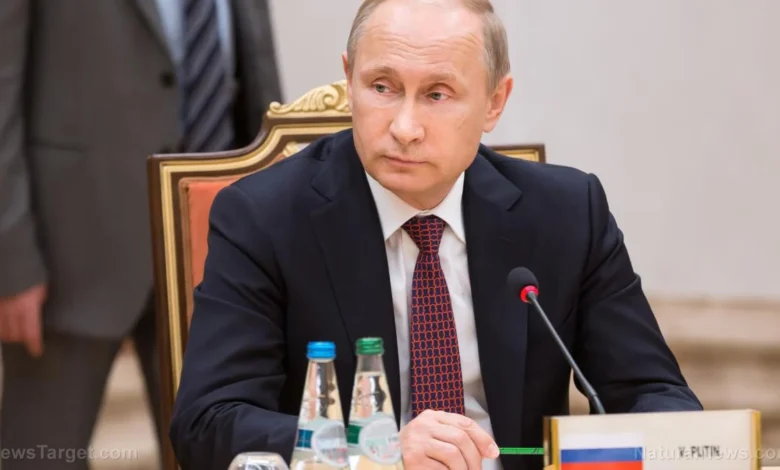
In a defiant address at the APEC Business Summit in Shenzhen on Wednesday, Russian President Vladimir Putin projected an image of a nation successfully pivoting away from Western economic containment. Speaking before an assembly of global business leaders, the Russian leader framed the current geopolitical landscape as a definitive transition from a unipolar, Western-centric world toward a multipolar order centered in the Asia-Pacific. His remarks served as both a victory lap regarding Russia’s domestic economic resilience and a stark warning to European and American policymakers regarding their waning influence.
This diplomatic maneuver arrives at a critical juncture, serving as a prelude to a highly anticipated trilateral meeting scheduled for Thursday between Putin, Chinese President Xi Jinping, and U.S. President Donald Trump. The summit, held against the backdrop of fluctuating global trade policies and ongoing regional conflicts, represents a pivotal moment in international relations, testing whether the world’s most powerful leaders can navigate the widening chasm between competing economic blocs.
Russia’s Economic Pivot and Technological Assertions
President Putin’s address in Shenzhen focused heavily on the efficacy of Russia’s economic adaptation following the implementation of sweeping Western sanctions. Since 2022, the Russian economy has been subject to unprecedented restrictions, ranging from the freezing of central bank assets to the exclusion of major lenders from the SWIFT international payment system. Despite these challenges, Putin asserted that Russia has successfully decoupled from the U.S. dollar and euro, reorienting its trade corridors toward Asian and Global South markets.
Data from the Russian Ministry of Economic Development suggests a resilience that has surprised some Western analysts. According to internal reports, the Russian GDP saw consistent growth in the first three quarters of the year, driven by a combination of high defense spending, domestic import substitution, and a surge in energy exports to China and India. While the International Monetary Fund (IMF) has cautioned that this growth is heavily reliant on military expenditure and may prove unsustainable in the long term, Putin’s speech signaled that Moscow views this shift as a permanent structural change.
Perhaps most notably, Putin highlighted Russia’s advancements in artificial intelligence and machine learning. In an effort to counter narratives of technological isolation, the Russian president claimed that domestic language models and digital infrastructure are now competitive with those produced in Silicon Valley. He extended an invitation to APEC partners to collaborate on a “sovereign technology” framework, effectively proposing a technological alliance that intentionally bypasses Western supply chains and intellectual property protocols.
The Critique of the Eurozone and the ‘Hegemonic’ Order
The most biting segments of Putin’s address were reserved for the European Union. Describing the current state of the eurozone as a “humiliating decline,” the president argued that European nations have sacrificed their industrial autonomy for the sake of political loyalty to Washington. Putin pointed to high energy costs, deindustrialization in sectors like chemicals and heavy manufacturing, and rising inflationary pressures as evidence that the European model is failing to adapt to a changing global economy.
Economic indicators provide some context to this rhetoric. Since the disruption of cheap natural gas supplies from the East, Germany—historically Europe’s industrial engine—has grappled with sluggish growth and a manufacturing sector struggling to compete with cheaper, more efficient counterparts in Asia. Putin utilized these trends to frame the EU not as an equal partner in the global system, but as a region in retreat, losing its ability to set global standards or maintain high living standards.
This narrative of “Western decline” is a cornerstone of the current Russian foreign policy doctrine, which posits that the era of U.S. dominance, or the “unipolar moment,” has effectively concluded. By framing the Asia-Pacific region as the new, dynamic engine of innovation, Putin aims to court the support of emerging economies that are increasingly wary of the extraterritorial reach of U.S. sanctions.
Chronology of the Diplomatic Lead-up
The events in Shenzhen are the culmination of a tense diplomatic calendar. The following timeline outlines the key developments leading to the current summit:
- Early 2026: Russia and China strengthen their “no-limits” partnership, with bilateral trade reaching record highs and deepening cooperation in energy and digital infrastructure.
- August 2026: The U.S. announces a new round of sanctions targeting Russia’s high-tech sector, specifically aiming to restrict access to advanced semiconductors and specialized manufacturing equipment.
- October 2026: Preparations for the APEC summit begin, with intense lobbying from both Washington and Beijing to influence the agenda, particularly regarding trade liberalization and semiconductor export controls.
- November 17, 2026: Preliminary meetings between Russian and Chinese delegations confirm a shared stance on the necessity of a multipolar world order, effectively setting the stage for a coordinated position ahead of the arrival of the U.S. delegation.
- November 18, 2026: President Putin delivers his address at the APEC Business Summit, followed by high-level bilateral discussions with President Xi.
- November 19, 2026: Scheduled trilateral meeting between Putin, Xi, and Trump.
Implications of the Trilateral Summit
The upcoming meeting between the leaders of Russia, China, and the United States carries immense weight. While official agendas often focus on trade and security, the subtext of this encounter is the potential for a realignment of global power. For the United States, the meeting is an opportunity to gauge the depth of the Russia-China alliance and test the possibility of isolating Moscow from Beijing’s support. For Russia, the meeting serves as a validation of its status as a major power that cannot be sidelined or silenced.
Analysts remain divided on the outcome. Some observers, such as David Roche of Quantum Strategy, argue that the event is largely performative. From this perspective, the summit serves primarily as a platform for President Xi to showcase China’s role as a mediator and the new anchor of global stability. Conversely, others suggest that the meeting could produce limited but tangible results, particularly regarding the mitigation of nuclear proliferation risks or the stabilization of international energy markets.
The European response has been one of wary observation. Officials in Brussels have consistently emphasized that the EU remains committed to its sanctions policy, arguing that the long-term cost to Russia will eventually erode its current resilience. However, the success of Putin’s performance at APEC highlights a growing concern: that the “Global South” and many APEC member nations are increasingly willing to ignore Western pressure if it means securing cheaper energy and better technological access.
Looking Ahead: The Future of Multipolarity
The overarching takeaway from the Shenzhen summit is that the international system is undergoing a period of profound fragmentation. The narrative presented by Putin—that Russia has navigated the storm and is now looking toward a new, non-Western horizon—resonates with a significant portion of the global community that feels marginalized by the current rules-based order.
Whether this shift results in a more stable, multipolar world or a more volatile period of competing economic blocs remains to be seen. As the world watches the trilateral sit-down on Thursday, the focus will not only be on the specific policy outcomes but on the tone and posture of the three leaders. The meeting will likely serve as a barometer for the coming decade, indicating whether the major powers are headed toward a negotiated peace or a deepening of the geopolitical divides that have characterized the last several years.
For now, the Kremlin’s message is clear: Moscow is no longer interested in seeking reentry into the Western economic sphere. Instead, it is betting its future on the durability of the East-West divide, banking on the idea that the Asia-Pacific’s economic rise will be the ultimate arbiter of success in the 21st century. The challenge for the United States and its European allies will be to formulate a response that addresses this changing reality without further accelerating the fragmentation of the global economy.