Theme Park Thrills Uncover Unexpected Resilience: A Roller Coaster Ride Becomes a Lesson in Self-Mastery

Published July 21, 2026 08:45AM
The air in the theme park restroom was thick with the scent of disinfectant and adolescent anxiety. Amidst the clamor of a bustling amusement park, a moment of introspection unfolded in a cramped stall. Splashing cold water on a face reflected in a smudged mirror, a silent, internal dialogue commenced. The question, posed with the gravitas of a parental warning, was stark: "Are you sure you want to do this? You’re not just going along with it to look cool, are you?" This internal interrogation stemmed from an impending encounter with a colossal steel roller coaster, its serpentine track a dizzying labyrinth of inversions and turns, promising a visceral, almost disorienting, experience.
This particular afternoon, a spontaneous decision, fueled by a "yes, and…" philosophy of spontaneous adventure, had led the narrator and friends to this amusement park. What began as a casual suggestion for Mexican food had, through a chain of agreeable impulses, culminated in standing at the precipice of a thrilling, albeit terrifying, roller coaster. The decision was a testament to a whimsical summer day, where the presence of sunshine seemed to be the only prerequisite for embracing an impulse toward adventure.
A Shifting Perspective on Thrills
Historically, the allure of amusement park rides, particularly roller coasters, held a strong appeal. Childhood memories are often punctuated by the exhilarating anticipation of the queue, the breathless rush of the initial ascent, the stomach-lurching freefall, and the sheer exhilaration of the ride’s conclusion. However, as the narrator navigated adulthood, this enthusiasm waned. A solitary roller coaster ride in their twenties had transformed the experience from thrilling to torturous. The seconds spent waiting in line, strapped into the seat, or ascending the initial incline were perceived as prolonged periods of dread, akin to a prelude to a medical emergency. The preference shifted to keeping one’s internal organs firmly in place.
The proximity to the imposing roller coaster, however, brought a stark reawakening of this apprehension. The guttural screams emanating from riders currently experiencing the attraction served as a potent reminder of the ride’s intensity. This sensory input, combined with an overactive imagination, fueled anxieties. Internal monologues, echoing imagined future pronouncements, played against the stark reality of the coaster’s mechanical symphony. The imagined dialogue, "She had such a promising future… until she went on that roller coaster when she was 32," underscored the perceived risk.
Coping Mechanisms in the Queue
Seeking solace, the narrator observed the presence of children patiently waiting in line alongside them. This observation offered a peculiar form of comfort. To further manage the escalating anxiety, a technique rooted in mindfulness was employed. The internal mantra shifted from the impending doom to the present reality: "I am waiting in line." This, too, felt laden with foreboding. A more grounded observation followed: "I am standing." This simple acknowledgment provided a marginal sense of relief. As the queue advanced, the thought evolved: "I am walking." This cyclical practice of focusing on the literal, physical actions being performed alternated with the overwhelming internal chorus of alarm, "YOU’RE MAKING AN IRREVERSIBLE MISTAKE!" The visual deterrent of a plastic box displaying the mangled remains of cell phones, accompanied by a stark warning to remove all loose items, did little to assuage these fears.
The Commitment to Experience
Upon being secured in the roller coaster car, a profound sense of commitment settled in. The realization that turning back was no longer a viable option, short of a public display of distress to the ride operator, paradoxically offered a strange comfort. In the brief interlude between being fastened into the seat and the commencement of the ride, a heightened sense of aliveness and presence emerged. It was a state akin to a hyper-vigilant animal, acutely aware of its surroundings.
A friend in the car ahead turned back, suggesting a collective gesture of raising hands during the ride. The narrator’s immediate, albeit unvoiced, response was to dismiss the suggestion. However, any further exchange was rendered impossible as the ride lurched into motion.
Navigating the Chaos: A Breath of Calm
The initial moments of the ride were characterized by an overwhelming sense of bodily vulnerability against the sheer speed and dynamic motion. The experience was a rapid-fire succession of sharp turns, sudden drops, and swift ascents, occurring faster than coherent thought could form. The instinctive reaction was to close one’s eyes, a physical manifestation of the body clenching and the mind resisting the perceived chaos. The rising panic in the chest demanded a strategy for self-settlement.
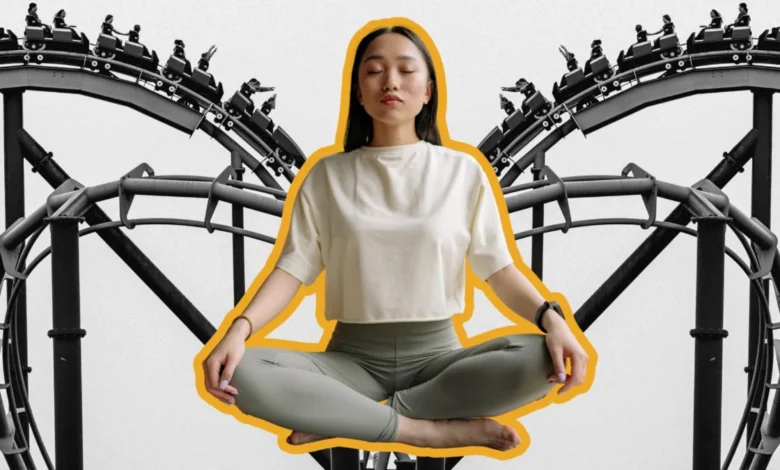
Drawing upon years of accumulated yoga practice, a familiar directive surfaced: "Focus on your breath." Initially shallow, the breaths gradually deepened, with the narrator feeling their abdomen press against the restraint system during inhalations. Exhalations also became more profound. A subtle, yet significant, shift occurred as muscles began to relax, even amidst the disorienting movements.
The practice evolved into visualizing breath as a conduit, extending into each erratic movement and high-speed turn. The breath was also imagined as a force of expansion, filling the body and causing it to broaden in all directions. This energetic opening and surrender to the experience mitigated the shock of the abrupt shifts in direction. The internal mantra of "in" on inhalation and "out" on exhalation became a constant anchor. When a sudden descent or spiral threatened to derail this focus, the "ins" and "outs" served as a reliable return point.
Unexpected Serenity Amidst the Storm
While the experience was far from a leisurely one – the physical realities of steel beams, the narrator’s own screams, and high speeds were undeniable – a remarkable discovery was made: the ability to control one’s breath, even in the face of extreme stimuli. This controlled breathing served as a calming mechanism, facilitating a release of tension. The most surprising revelation was that meditating on a roller coaster proved, in some respects, more accessible than during a typical yoga class. This unexpected ease might be attributed to the stark, life-or-death context of the roller coaster, where focusing on breath was the most logical and available coping strategy for a situation voluntarily entered into under the guise of enjoyment.
Lessons Learned Beyond the Ride
As the ride concluded and eyes were opened, a sense of disorientation and mild dizziness persisted. The immediate, predictable vow to swear off roller coasters was made. However, the profound lessons imparted by the experience were not forgotten, and the narrator acknowledged that their receptivity to these lessons was, in large part, a testament to their yoga background. The core message resonated with broader life principles: resistance often amplifies pain, while opening oneself to an experience, regardless of perceived appropriateness or potential regret, can lead to a more peaceful acceptance. The ultimate insight suggested that perhaps the key lies not in trusting the ride itself, but in trusting one’s own capacity to navigate and experience it.
Analysis of Implications
This personal narrative, while anecdotal, touches upon broader psychological and physiological responses to stress and fear. The effectiveness of controlled breathing as a self-regulation technique is well-documented in various fields, including psychology, sports, and mindfulness practices. The narrator’s experience highlights how learned coping mechanisms, even those seemingly unrelated to the immediate situation (like yoga for a roller coaster), can be remarkably effective when applied under duress.
The concept of "surrender" as a pathway to reduced panic is also a recurring theme in stress management literature. By ceasing to resist the uncontrollable forces of the roller coaster and instead focusing on internal regulation (breath), the narrator effectively reframed their experience from one of victimhood to one of active participation and adaptation. The comparison to meditation in yoga class further underscores the idea that external circumstances can, paradoxically, provide the very focus needed for internal practice. The "threat to survival" narrative, however hyperbolic, serves to illustrate the heightened state of arousal that can, in some individuals, paradoxically make certain forms of focused attention more accessible.
The implications extend beyond individual coping mechanisms. In an era where the pursuit of novel experiences and extreme sensations is prevalent, this account serves as a reminder of the internal resources individuals can cultivate to manage the psychological impact of such pursuits. It underscores the value of mindfulness and self-awareness not just in calm environments, but as vital tools for navigating the unpredictable and often overwhelming aspects of modern life, whether they manifest as a high-speed roller coaster or more metaphorical "rides" of personal challenge.
Future Considerations for Theme Park Operators and Visitors
While this article focuses on a personal experience, it raises subtle points for consideration within the amusement park industry. The inherent nature of thrill rides involves managing and mitigating perceived risk while maximizing excitement. The effectiveness of the warning about loose items, for instance, highlights the tangible dangers that must be communicated. Furthermore, the psychological impact of these rides, as illustrated by the narrator’s journey from anxiety to a form of empowered acceptance, suggests that the experience is not solely physical but also deeply psychological.
For visitors, the narrative reinforces the importance of self-awareness and preparation. Understanding one’s own tolerance for risk and employing coping strategies, whether through mindfulness, deep breathing, or simply embracing a "yes, and…" spirit with a dose of personal resilience, can significantly enhance the overall experience of participating in high-thrill activities. The article, therefore, serves not only as a personal reflection but also as a subtle guide for navigating the exhilarating, and at times daunting, world of amusement park adventures.