Mastering the Deadlift Starting Position: A Comprehensive Guide to Biomechanical Efficiency

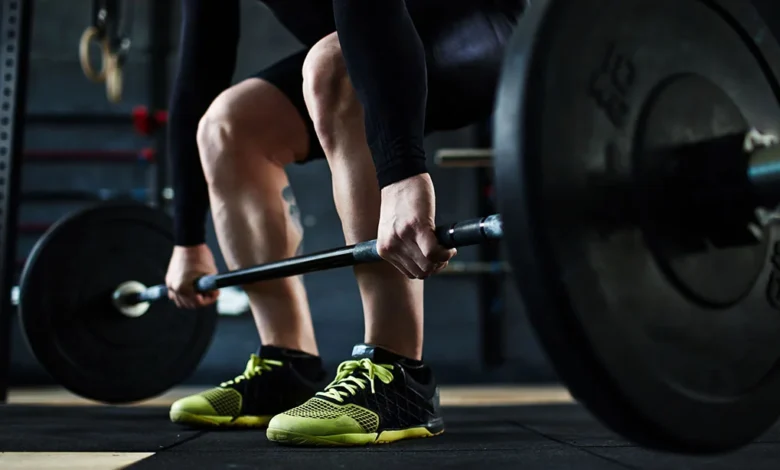
The deadlift is widely regarded as the gold standard for assessing total-body strength, yet it remains one of the most technically demanding movements in the weight room. While enthusiasts often focus on the lockout or the speed of the ascent, seasoned strength professionals maintain that the most critical phase of the lift occurs before the barbell leaves the floor. If the starting geometry is flawed, the subsequent mechanical disadvantages—such as excessive lower back rounding or the loss of hamstring tension—increase the risk of injury and severely limit force production. By refining mobility, stability, and spatial awareness, athletes can establish a foundation that maximizes leverage and power output.
The Biomechanical Foundation of the Pull
The deadlift is fundamentally a test of hinge mechanics. Research in biomechanics suggests that a successful pull requires a synergistic relationship between the hips, ankles, thoracic spine, and the posterior chain. When an athlete lacks sufficient range of motion in these areas, the body instinctively resorts to compensatory patterns. These often manifest as lumbar flexion (rounding of the lower back) or "squatting" the weight, where the knees travel too far forward, pushing the barbell away from the midfoot.
The center of mass is the defining factor in deadlift efficiency. When the bar drifts even a few inches away from the shins, the lever arm increases significantly. Physics dictates that a longer lever arm requires substantially higher force from the spinal erectors and hip extensors to maintain a neutral position. By maintaining the bar over the midfoot, lifters can minimize the distance between the load and their center of gravity, effectively shortening the lever and allowing the prime movers—the hamstrings and glutes—to perform the majority of the work.
Analyzing Common Setup Deficiencies
Strength coaches, including Matt Wenning of Wenning Strength, emphasize that many performance plateaus are not the result of a lack of raw strength, but rather a failure to "own" the bottom position. Diagnostic observation of the starting stance often reveals four primary errors that impede progress:
- Squatting the Deadlift: This error occurs when the hips are set too low. The resulting movement pattern mimics a squat, causing the knees to push the bar forward. This creates a mechanical disadvantage that forces the lifter to navigate around their own shins, often resulting in a loss of tension in the hamstrings.
- Lumbar Flexion: While elite powerlifters may occasionally utilize a rounded upper back to shorten the range of motion, lower back rounding is a significant risk factor for disc herniation and soft tissue strain in the general population. Proper hip flexion is the necessary antidote to this instability.
- High-Hip Hips: Conversely, starting with hips too high turns the lift into a stiff-legged deadlift. This removes the quads from the initial phase of the pull, placing the entire burden on the lower back and hamstrings, which often leads to early fatigue and potential injury.
- Inadequate Lat Engagement: The lats serve as the primary stabilizers for the spine. When they are not active, the barbell drifts away from the body. Activating the lats—often visualized as "squeezing an orange in the armpits"—is essential to creating the necessary stiffness to transfer force from the floor through the legs to the barbell.
Implementing Corrective Mobility Protocols
To address these deficiencies, athletes must move beyond simple stretching and focus on dynamic mobility drills that simulate the specific demands of the deadlift. These exercises serve to prime the central nervous system and prepare the joints for the unique stresses of heavy loading.
1. Chair Sumo Deadlift
This drill serves as a foundational tool for learning how to hinge. By placing a chair behind them, the lifter is forced to reach back with their hips rather than down. The sumo stance encourages hip abduction and external rotation, opening up the pelvic space and allowing for a more upright torso. This provides the lifter with a tangible target, ensuring they develop the neurological pathway to sit back effectively.
2. Half-Kneeling Hamstring Mobilization With Ankle Rocker
The hamstrings and ankles are the two most common "bottlenecks" in the deadlift. This dual-purpose drill allows the lifter to lengthen the hamstrings while maintaining tension, while simultaneously working on ankle dorsiflexion. For the deadlift, the goal is not extreme ankle mobility, but sufficient range to allow the shins to touch the bar without forcing the heels to lift off the floor.
3. Goblet Prying Squat
While the deadlift is a hinge, the bottom position requires a degree of hip flexion that can be difficult for many individuals to access. By using a kettlebell as a counterbalance in a deep squat, the lifter can push the elbows into the knees to pry the hips open. This improves adductor and hip mobility, which directly translates to a more stable, comfortable bottom position when addressing the barbell.
4. Rockback Breathing With Double-Elbow Reach
Often, overactive lats and low back extensors create a "stuck" feeling in the bottom position. This drill utilizes spinal flexion and diaphragmatic breathing to reset the ribcage and pelvis. By reaching the elbows forward, the lifter can stretch the tight musculature of the upper back and lats, enabling a more neutral spine during the actual lift.
5. Straight-Arm Band Pulldown Into Deadlift Hold
This drill acts as a bridge between mobility work and performance. By pulling a resistance band toward the thighs, the athlete learns to activate the lats while in a hinged position. This builds the "tightness" required to keep the barbell glued to the shins throughout the entirety of the pull.
Broader Implications for Training Longevity
The integration of these mobility drills into a standard warm-up routine has significant implications for training longevity. In the context of strength training history, the shift toward mobility-focused programming has coincided with a decrease in reported training-related spinal injuries among intermediate lifters. By viewing the deadlift as a series of integrated segments rather than a single explosive movement, lifters can identify specific weak points in their kinetic chain.
Data from elite training facilities indicate that athletes who perform specific preparatory mobility work prior to their main lifts demonstrate higher technical proficiency under maximal loads. When the starting position is optimized, the load is distributed across the largest muscle groups—the quads, glutes, and hamstrings—rather than being disproportionately absorbed by the lumbar spine.
Conclusion: The Importance of the Setup
Ultimately, the deadlift is a complex display of structural tension. The ability to reach the floor is not merely a matter of flexibility; it is a matter of control. By systematically addressing the mobility of the hips, ankles, and upper back, and by practicing the tension-building cues of lat engagement and proper hinging, lifters can transform their performance.
The most successful pulls are not won during the final lockout; they are won in the seconds before the lift begins. By mastering the bottom position, the lifter ensures that every ounce of force generated is directed into moving the barbell, rather than compensating for mechanical inefficiencies. As with any high-level athletic endeavor, the key to progress lies in the details of the setup. By investing time in these five mobility exercises, athletes can ensure they are not just pulling heavier, but pulling smarter and safer, building a legacy of strength that is both durable and effective.