The Evolving Science of Creatine Monohydrate and its Efficacy for Female Athletes

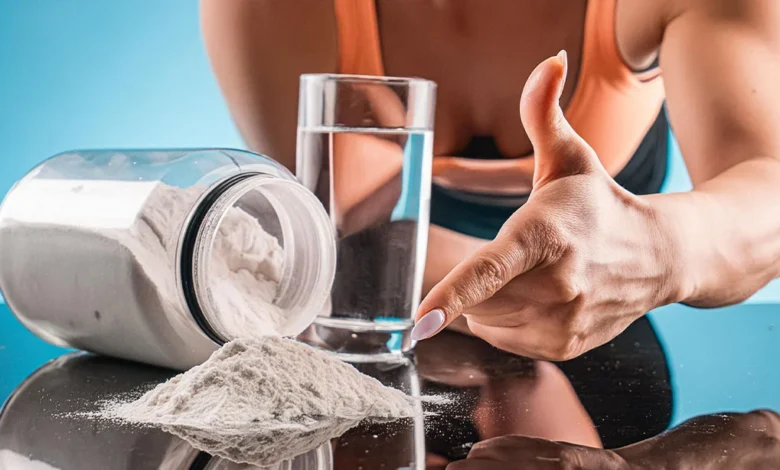
For over three decades, creatine monohydrate has occupied the most unassuming corner of the supplement market. While trends in the fitness industry have shifted from ephedrine-based thermogenics to complex, proprietary “anabolic matrices” with names evoking military-grade chemistry, creatine has remained a static, affordable, and unpretentious white powder. Despite its lack of marketing flash, it stands as arguably the most rigorously scrutinized ergogenic aid in sports nutrition history. Yet, for much of that time, the research landscape was dominated by male subjects, leaving a significant knowledge gap regarding its specific application for women. Recent clinical meta-analyses published in late 2026 are finally beginning to bridge that divide, offering a clearer, data-driven perspective on how female athletes can utilize this supplement to support performance and body composition.
A History of Scientific Scrutiny
The journey of creatine into the mainstream began in earnest in the early 1990s. Following the 1992 Barcelona Olympics, where rumors of its use by gold-medal-winning track athletes surfaced, the supplement surged in popularity. Since then, thousands of studies have explored its role in adenosine triphosphate (ATP) resynthesis. Phosphocreatine, the stored form of creatine in muscle tissue, acts as a primary energy buffer during short-duration, high-intensity bouts of exercise. By increasing intramuscular creatine stores, athletes can theoretically maintain higher power outputs for longer durations during repetitive efforts.
Historically, the demographic skew in clinical trials was stark. Because early performance research focused on powerlifting, football, and combat sports, male participants were the default. This gender bias created a persistent lack of nuance in dosage recommendations and expected outcomes for women, contributing to a "one-size-fits-all" approach that rarely addressed the physiological differences in metabolism, hormonal fluctuations, and muscle fiber composition between the sexes.
The 2026 Meta-Analysis: A Turning Point
The research landscape shifted on September 4, 2026, with the publication of a landmark systematic review and meta-analysis. Researchers conducted an exhaustive screening process, evaluating over 13,000 records to isolate studies specifically targeting women in structured training or athletic environments. From this massive data set, 34 studies met the inclusion criteria, encompassing 692 female participants.
The primary objective was to determine whether the performance benefits observed in men—namely improvements in power, lean mass, and high-intensity output—held true for women. The results, while not suggesting a "miracle" effect, provided statistically significant evidence of efficacy. The study identified an average standardized effect size of 0.30 for performance outcomes and 0.24 for body composition metrics. While these figures suggest modest gains rather than transformative overnight changes, the consistency of the findings across varied sports—including soccer, swimming, and resistance training—adds substantial weight to the argument that creatine is a viable tool for female athletes.
Addressing the "Bulking" Myth
One of the primary barriers to creatine adoption among women has been the persistent concern regarding body weight and perceived "bulk." Fitness marketing has long conflated the physiological function of creatine—which involves drawing water into muscle cells to facilitate energy production—with unwanted subcutaneous fluid retention or rapid, non-functional mass gain.
Physiologically, creatine does increase intracellular hydration. This is a vital component of its ergogenic effect, as a well-hydrated muscle is more metabolically efficient. However, the fear that this will lead to an unintended, masculine-leaning physique is unsupported by clinical data. The mechanism of muscle hypertrophy, particularly in women, is governed by a complex interplay of hormonal levels, protein synthesis, and mechanical tension from training. Supplementation with five grams of creatine monohydrate does not bypass these biological constraints. Experts in sports nutrition emphasize that the weight gain associated with creatine is typically minimal and restricted to the muscle fiber itself, which often aids, rather than hinders, the aesthetic and functional goals of the athlete.
Insights for Postmenopausal Health
The relevance of creatine extends beyond competitive athletics into the realm of longevity and women’s health. A secondary 2026 meta-analysis focused on the postmenopausal demographic, involving 608 participants across seven randomized trials. As women age, the loss of muscle mass (sarcopenia) becomes a critical health concern. The study found that consistent creatine supplementation, particularly when paired with a minimum of five grams per day and a structured resistance training program, correlated with an increase in lean mass and improved lower-body strength, specifically measured through leg-press performance.
This finding is significant because it shifts the conversation from performance-enhancing athletics to health-span maintenance. By mitigating the rate of muscle loss and bone density decline, creatine serves as a functional, low-risk, and cost-effective intervention for aging populations.
Contextualizing the Data: A Measured Approach
The scientific community’s response to these findings has been characterized by academic restraint. The authors of the 2026 meta-analysis noted that the "certainty of evidence" remains low to moderate. This is not due to a failure of the supplement, but rather the heterogeneity of the studies analyzed. Different sports, varying dosing protocols, and inconsistent training methodologies make it difficult to provide a singular, universal recommendation.
Critics and researchers alike agree that the industry must avoid "cherry-picking" positive results. The data confirms that creatine is an effective tool, but it is not a panacea. It cannot compensate for inadequate protein intake, poor sleep hygiene, or a lack of consistent, progressive training. The evidence suggests that for the female athlete, the benefits of creatine are maximized when it is viewed as a baseline supplement—a "floor" upon which an effective training program is built, rather than a "ceiling" that defines the limit of potential.
Future Implications for Female Sports Nutrition
The shift toward gender-specific research marks a maturation in the sports nutrition industry. As the body of evidence grows, the focus is moving away from generic, male-oriented marketing and toward personalized nutrition protocols. For female athletes, this means moving past the apprehension regarding weight gain and understanding that the metabolic demands of their training are well-served by the same fundamental science that has supported male athletes for decades.
The implications for the broader supplement market are clear: consumers are increasingly demanding transparency and evidence-based efficacy. The "boring" nature of creatine monohydrate—its low cost, its long history of safety, and its consistent, if modest, efficacy—is becoming its greatest asset. As more women incorporate creatine into their routines, the normalization of the practice is likely to drive further interest in targeted research, ultimately leading to more precise guidelines regarding timing, dosage, and cycle-based supplementation.
In summary, while the recent 2026 meta-analyses do not claim that creatine is a shortcut to athletic dominance, they do confirm that it is one of the few supplements with the evidentiary backing to support its claims. For women seeking to optimize their training, increase their power output, and support long-term body composition, the data suggests that creatine is not just a viable option, but a foundational one. The "magic" is not in the molecule itself, but in the combination of consistent, hard work and a scientifically validated, reliable tool.