The Great Divergence: Why the Med Spa Industry is Outpacing Traditional Wellness by Forty to One

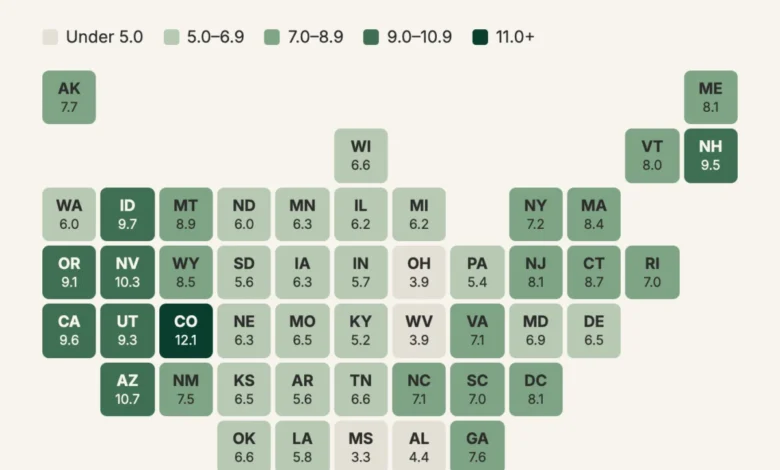
The American landscape of health and wellness is undergoing a structural transformation that reflects a profound shift in consumer priorities, moving away from long-term, discipline-based practices toward immediate, aesthetic-focused interventions. According to recent market analysis from the research firm SANOR, the United States hosted 26,171 operating medical spa locations as of September 2026. This figure represents a staggering 17% year-over-year increase from the 22,368 locations documented in 2025. In stark contrast, the traditional boutique fitness sector—specifically yoga and Pilates studios—has remained largely stagnant. Data from IBISWorld indicates that the yoga and Pilates industry has experienced a negligible annual growth rate of approximately 0.4% since 2020, with the total number of studios hovering around 37,300. When these growth rates are placed in direct competition, the med spa sector is expanding at a velocity more than 40 times faster than its counterparts in the movement and mindfulness industry.
A Chronology of the Aesthetic Shift
The rise of the med spa is not a sudden phenomenon but the culmination of a decade-long acceleration in the "lunchtime procedure" market. In the early 2010s, the medical spa industry was a niche subset of dermatology and plastic surgery, largely concentrated in affluent urban centers. The integration of non-invasive aesthetic treatments—most notably neuromodulators like Botox and dermal fillers—into the mainstream began in earnest around 2016. By 2020, despite the global pandemic forcing temporary closures of non-essential businesses, the demand for aesthetic services surged upon reopening.
The year 2023 marked a pivot point where venture capital began aggressively entering the space, funding chains of med spas that prioritized standardized branding and high-volume, low-friction patient experiences. By 2025, the consolidation of these smaller clinics into regional and national franchises allowed for economies of scale that traditional, owner-operated yoga studios simply could not replicate. The data from late 2026 confirms that this growth is not confined to high-wealth corridors but has permeated mid-sized suburban markets, effectively normalizing the use of injectable aesthetics as a standard part of routine personal maintenance.
Comparative Market Analysis and Supporting Data
The divergence between these two sectors—fitness and aesthetics—can be analyzed through the lens of product design and consumer psychology. IBISWorld’s longitudinal data on yoga and Pilates reveals that the sector reached a saturation point shortly before 2020. With roughly 37,300 studios operating in a competitive landscape where high overhead costs and the reliance on skilled, physical labor create significant barriers to scaling, the industry has struggled to capture new market share.
Conversely, the med spa model leverages a high-margin, high-retention business cycle. SANOR’s 2026 study highlights that 83% of med spas derive the majority of their revenue from neuromodulator injections. These products possess a unique "natural expiration" feature: because the biological effects of these injections fade within three to four months, they create a built-in renewal cycle. This is fundamentally different from a yoga studio, where the "product"—the physical and mental benefits of exercise—requires the client to provide the labor of showing up. While a studio must compete for a client’s time and willpower every week, a med spa client is effectively subscribed to a recurring service that requires minimal effort once the appointment is scheduled.
The Economics of the Quick Fix
The rapid expansion of the med spa industry is also a testament to the effectiveness of the "low-friction" business model. In modern consumer behavior, the "time-to-value" metric is critical. A patient receiving a Botox injection experiences a visible outcome within days, with minimal post-procedure recovery. This immediate visual feedback creates a psychological reinforcement loop that is difficult for traditional wellness modalities to match.

For the yoga and meditation sector, the value proposition is rooted in long-term health, stress reduction, and physical conditioning—outcomes that are often invisible, slow-moving, and highly dependent on individual consistency. When these two value propositions are weighed against the demands of a high-speed, digital-first economy, the path of least resistance is clear. The "lunchtime procedure" fits seamlessly into a professional’s schedule, whereas a 60-minute Vinyasa class requires a significant investment of time, physical exertion, and logistical planning. The market is currently signaling that for a growing segment of the American population, the aesthetic result is the primary driver of discretionary wellness spending.
Industry Perspectives and Stakeholder Reactions
While the growth of the med spa sector is viewed as a success story by investors and industry stakeholders, it has prompted a period of introspection among practitioners in the holistic health space. Many fitness studio owners and yoga instructors argue that the surge in med spas represents a move toward "performative health," where the appearance of wellness is prioritized over physiological function.
However, medical aesthetic professionals contend that the industry is providing a legitimate psychological service. Surveys of med spa clients frequently cite an increase in confidence and a desire to align their outward appearance with their perceived internal vitality. From a professional standpoint, the med spa sector argues that they are simply meeting a long-standing demand for accessible, non-surgical cosmetic enhancement. The industry has effectively professionalized these services, moving them out of the back rooms of doctors’ offices and into accessible, retail-style environments, which has significantly lowered the psychological barrier to entry for the average consumer.
Broader Implications and Future Outlook
The implications of this shift are profound for the broader health and wellness economy. If the current trajectory continues, the infrastructure for aesthetics will continue to dwarf that of physical conditioning. This raises questions about the long-term impact on public health. While med spas address cosmetic concerns, they do not offer the cardiovascular, metabolic, or musculoskeletal benefits associated with the yoga and Pilates industry.
Economists monitoring the wellness sector suggest that we are witnessing the "commoditization of youth." As these services become more affordable and widespread, they are no longer viewed as luxury items but as essential maintenance. The challenge for the traditional wellness industry is to adapt to this new reality. Some experts propose that the future of physical wellness may lie in integrating "visible results" into their marketing—moving away from the abstract promise of "feeling better" toward measurable, data-driven outcomes like improved mobility scores, reduced inflammatory markers, or sleep quality metrics that can be tracked via wearable technology.
The 40-to-1 growth ratio reported by SANOR is a stark metric of where the American consumer is placing their trust—and their capital. As the med spa industry continues to professionalize and expand, the traditional wellness sector must determine whether it can evolve to meet the consumer’s demand for speed and visibility, or if it will continue to lose ground to a model that promises—and delivers—a faster, more predictable return on investment. The data as of September 2026 suggests that until the wellness industry can bridge the gap between long-term health and immediate, tangible gratification, the aesthetic boom will continue to define the new American wellness standard.