Every cargo ship is a target: Russia strikes again off Odessa as talks go nowhere

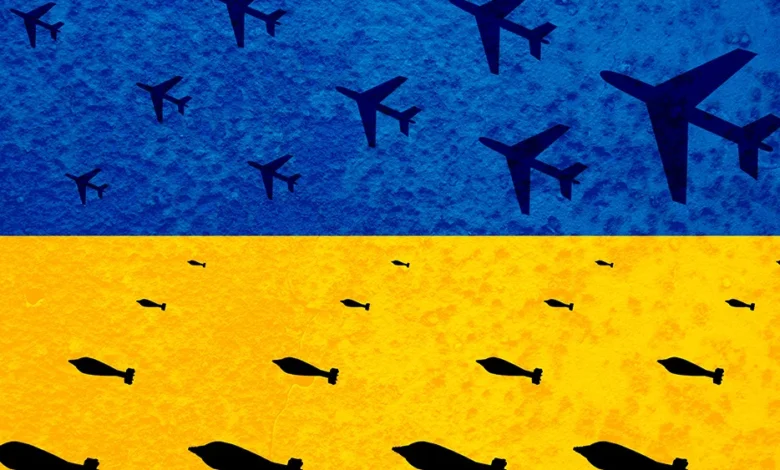
The Black Sea has effectively transformed into a high-stakes maritime theater of war, where the line between civilian commerce and military logistics has all but evaporated. In the latest escalation of a relentless campaign to sever Ukraine’s supply lines, Russian forces confirmed on Friday that they successfully struck a cargo vessel southwest of the port city of Odessa. The Russian Defense Ministry reported that the ship was transporting military equipment and ammunition destined for Ukrainian front-line units. While Moscow did not disclose the vessel’s identity, flag, or ownership, the strike marks the fifth such incident within a single week, underscoring a deliberate strategy to turn the region into a virtual no-go zone for merchant shipping.
This maritime aggression occurs against a backdrop of intensifying diplomatic efforts. U.S. envoys Jared Kushner and Steve Witkoff have been conducting high-intensity shuttle diplomacy between Moscow, Kyiv, and European capitals, seeking a path toward a ceasefire. Despite these efforts, the situation on the ground remains volatile, with both sides exhibiting little willingness to compromise on fundamental territorial and security demands.
A Timeline of Escalation in the Black Sea
The current volatility in the Black Sea is not a sudden development but the culmination of months of hardening strategies. Following the collapse of previous grain corridor agreements, Russia has adopted a "zero-tolerance" policy regarding maritime traffic near Ukrainian ports.
- Mid-July: The cargo ship MV Golden Leo was struck near Odessa, resulting in the deaths of four Indian sailors. This incident drew sharp international condemnation, including a formal summons of the Russian charge d’affaires by the Indian government.
- Early November: A string of attacks began targeting a series of vessels, including a container ship docked in Chornomorsk and several other cargo carriers navigating the waters near the Odesa coastline.
- November 12-14: Russian forces ramped up drone and missile sorties, with a container ship being hit seven kilometers southwest of Odessa.
- November 15: The Russian Ministry of Defense confirmed the most recent strike, framing it as a necessary interdiction of Western-supplied military hardware.
This operational tempo indicates a shift in Russian military doctrine. Rather than focusing exclusively on static port infrastructure, the Kremlin is increasingly targeting the transit phase of logistics, effectively attempting to force a self-imposed blockade by creating an environment too dangerous for insurance underwriters and shipping companies to accept.
The Reciprocal Drone Campaign
While Russia targets maritime logistics, Ukraine has responded with an aggressive, asymmetric air campaign. On Thursday night, Russian officials reported a massive drone swarm directed at Russian territory. The Russian Defense Ministry claimed its air defense networks intercepted 1,198 drones out of an estimated 1,200 launched, a figure that—if accurate—represents one of the largest single-night drone operations of the conflict.
The human and physical toll of these exchanges is mounting. In Volgograd, four individuals were killed when an industrial site was struck, and satellite-adjacent imagery on social media platforms suggested a significant fire broke out at a critical oil refinery. Conversely, Russian retaliatory strikes on Odessa resulted in at least two civilian deaths. Perhaps most concerning to international observers was a strike on a hospital in Kyiv, which left one person injured and caused significant damage to the medical facility, further blurring the distinction between military targets and civilian infrastructure.
Diplomatic Impasse: The U.S. and European Friction
The ongoing violence has severely undermined the efforts of the U.S. negotiating team. Kushner and Witkoff’s recent meetings with President Vladimir Putin in Moscow and President Volodymyr Zelenskyy in Dublin were intended to foster a framework for a ceasefire. However, the diplomatic optics have been chaotic.
On Thursday, claims emerged from the U.S. delegation that Russia had agreed in principle to include European stakeholders in future peace negotiations. This statement was met with a swift, public retraction from the Kremlin. Dmitry Peskov, the Kremlin spokesperson, clarified on Friday that Russia remains skeptical of European involvement, stating that Moscow would only consider an "expanded format" once it gains clarity on the specific geopolitical intentions of the European Union.
The fundamental divide remains the status of the Donbas region. Moscow continues to insist on total control over these territories as a prerequisite for any cessation of hostilities, a condition that Kyiv maintains is a non-starter for any sovereign peace deal. Furthermore, internal divisions within Europe regarding which member state or institution should lead the delegation have hindered a unified approach, leaving the U.S. envoys to navigate a fragmented and often contradictory diplomatic landscape.
Economic and Strategic Implications
The sustained attacks on merchant vessels carry profound global economic consequences. The Black Sea remains a vital artery for global food security and energy transit. The systemic targeting of cargo ships has led to a surge in maritime insurance premiums, effectively pricing smaller shipping operators out of the region.
Data Points and Market Impact:
- Logistics Suffocation: Analysts suggest that by targeting "dual-use" cargo, Russia is attempting to create a "gray zone" of legitimacy for its strikes, making it increasingly difficult for international shipping companies to distinguish between humanitarian shipments and military logistics.
- Industrial Attrition: The strikes on Russian oil refineries and Ukrainian power substations signal a move toward total industrial attrition. If energy infrastructure continues to be degraded, the capacity for both nations to sustain a long-term war effort will be severely tested by the winter months.
- Humanitarian Cost: With hospitals and residential areas caught in the crossfire, the displacement of civilians is expected to rise, potentially creating a secondary migration crisis in Eastern Europe if the conflict intensity continues at its current rate.
Analysis: The Shooting Gallery
The current situation is characterized by a "tit-for-tat" escalation cycle. Russia’s blockade-by-fire strategy is designed to demonstrate that the Black Sea is no longer a viable route for Western support. By hitting cargo ships, Moscow creates a strategic dilemma for Kyiv: either prioritize the security of its logistics chain—which requires diverting air defense assets from the front lines—or risk the total collapse of its maritime supply route.
Ukraine’s response, characterized by the use of mass drone swarms, serves as a message that the Russian homeland is not immune to the economic consequences of the war. By targeting refineries, Kyiv is attempting to impose a cost on the Russian economy that outweighs the tactical gains of sinking cargo ships.
However, the diplomats are failing to keep pace with the military reality. As the U.S. delegation shuttles between capitals, the disconnect between the negotiating table and the battlefield is widening. The "shooting gallery" in the Black Sea is not just a tactical issue; it is a symptom of a conflict that has moved beyond the scope of traditional diplomacy. Until there is a fundamental shift in the security guarantees offered to merchant vessels, or a significant breakthrough in territorial negotiations, the crews of these ships will remain in the crosshairs of a war that shows no immediate sign of resolution. The international community, meanwhile, watches as the volatility of these waters threatens to spill over into broader economic instability, with no clear mechanism in place to de-escalate the maritime conflict.