Dr. Fundaro’s transition away from macro tracking is not an isolated incident but a reflection of a broader movement toward "autoregulation" in nutrition, mirroring the successful integration of Rate of Perceived Exertion (RPE) training in professional athletics. This article examines the move toward intuitive, framework-based nutrition, the science behind RPE-Eating, and the potential long-term implications for public health and sports nutrition.
The Evolution of Nutritional Tracking
For the past two decades, the fitness industry has been dominated by the "calories in, calories out" (CICO) model, bolstered by the accessibility of mobile applications. These digital tools turned nutrition into a data-entry exercise. While effective for short-term fat loss or muscle gain, researchers have long warned about the potential for "orthorexia"—a fixation on healthy eating that can devolve into disordered behavior.
Dr. Fundaro’s experience illustrates this trajectory. After competing in six powerlifting events, she reached a point of exhaustion where the necessity of hitting exact gram targets for protein and carbohydrates became a source of significant anxiety rather than empowerment. The fear of "losing her physique" or "gaining fat" if she stopped tracking is a common sentiment among high-performance athletes, representing a dependency on external validation rather than internal physiological cues.
Understanding the Rate of Perceived Exertion (RPE)
The RPE scale, originally developed by Gunnar Borg in the 1960s, was designed to quantify physiological effort. It revolutionized physical therapy and strength training by allowing individuals to adjust their intensity based on how they felt on a given day—accounting for variables like sleep, stress, and recovery.
In a modern 0–10 scale, 0 represents total rest, while 10 signifies maximal effort. In the gym, an athlete might aim for an RPE of 8, meaning they finish their set feeling they could have performed perhaps two more repetitions but no more. This subjective data point has been validated by numerous studies as a reliable proxy for objective performance metrics, proving that human intuition, when calibrated with a structured scale, is a powerful performance tool.
The Birth of RPE-Eating
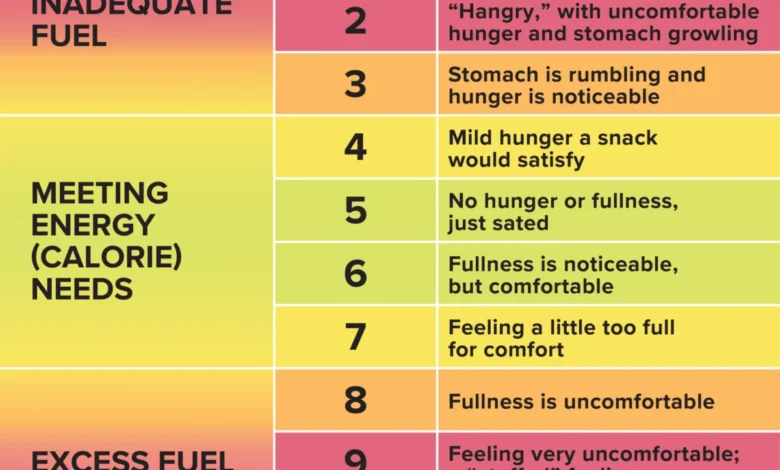
Dr. Fundaro’s innovation was to map this training logic onto nutritional consumption. RPE-Eating replaces the external metric of a smartphone app with an internal metric of hunger and satiety. The scale follows a clear progression:
- 1–3 (Inadequate Fuel): Characterized by physical symptoms such as lightheadedness, dizziness, or intense "hangry" irritability.
- 4–7 (Adequate Fuel): The target zone where hunger is present but manageable, and satiety is reached without discomfort.
- 8–10 (Excess Fuel): Ranges from feeling physically stuffed to the point of sickness.
This method does not ask users to "eat whatever they want." Instead, it asks them to "eat what they need," while building the necessary interoceptive awareness—the ability to perceive the internal state of the body—to distinguish between true hunger and emotional triggers.
Chronology of the Shift
The transition from tracking to RPE-Eating typically follows a multi-stage process for those attempting to break the cycle of restrictive dieting:

- The Recognition Phase: The individual realizes that tracking is causing more psychological harm than physical good.
- The Calibration Phase: Using a journal or notes app, the individual records their RPE level before, during, and after meals. This "data collection" serves as a bridge, allowing the brain to learn the physical sensations associated with specific hunger levels.
- The Discontinuation Phase: The individual gradually stops recording the data as their internal intuition becomes calibrated.
- The Maintenance Phase: The individual uses periodic check-ins only during periods of high stress or significant life changes.
Data-Driven Reality vs. Psychological Well-being
Critics of intuitive eating often argue that it lacks the precision required for elite athletic performance. However, Dr. Fundaro and her peers argue that for the general population—and even for many athletes—the "perfection" of tracking is often illusory. Research suggests that food labels can have an error margin of up to 20%, and the body’s metabolic rate fluctuates based on hormones, thermic effect of food, and daily activity. Therefore, the "precision" offered by macro tracking is often a false sense of security.
Furthermore, a study published in the Journal of Health Psychology indicates that individuals who rely on external cues for eating are less likely to maintain long-term weight stability compared to those who practice mindful eating. The psychological stress induced by rigid tracking often triggers cortisol spikes, which can paradoxically make fat loss more difficult.
Addressing Non-Hunger Triggers
A critical component of RPE-Eating is the distinction between "hunger" (the biological need for energy) and "appetite" (the emotional or environmental desire to eat). The RPE-Eating system encourages a "notice and name" practice. When an individual feels the urge to eat outside of their hunger cues—such as after a stressful workday—they are taught to identify the emotional catalyst.
This approach shifts the focus from "Willpower" (denying oneself food) to "Awareness" (understanding why the urge exists). By widening the repertoire of coping mechanisms—such as taking a walk, practicing breathwork, or engaging in social activity—the individual learns that food is not the only mechanism for self-soothing.
Implications for Weight Modification
While Dr. Fundaro maintains that RPE-Eating is best suited for weight-neutral living, it can be applied to weight modification through strategic adjustments. For weight loss, the goal is to consistently hover in the 4–5 range of the scale. For muscle hypertrophy, the goal shifts toward the 7–8 range to ensure caloric surplus.
However, the medical community cautions that for those with a history of clinical eating disorders, RPE-Eating should only be attempted under the guidance of a licensed professional. It is not a replacement for medical therapy but rather a tool for behavioral regulation.
Broader Industry Impact
The rise of RPE-Eating signals a turning point in the fitness industry. Coaches and trainers are increasingly moving away from the "one-size-fits-all" approach to diet. There is a growing acknowledgment that the "best" diet is the one that an individual can sustain without damaging their relationship with food.
The professional implications are significant. As the fitness industry matures, the focus is shifting from "optimization" to "sustainability." For many, the ability to walk into a restaurant, look at a menu, and make a decision based on how their body feels—without needing a calculator—is the true marker of nutritional mastery.
Conclusion
The transition from macro tracking to RPE-Eating is not merely a change in methodology; it is a change in philosophy. By treating the body as an intelligent system capable of signaling its own needs, practitioners can move toward a more sustainable and psychologically healthy lifestyle. While the method requires patience and a willingness to sit with the discomfort of uncertainty, the long-term result—self-trust and nutritional competence—is a far more valuable asset than any number on a tracking app. As Dr. Fundaro notes, the ultimate goal is to reach a place where one knows they are adequately nourishing themselves, with or without the crutch of external data.