How Big Meat Manipulated the Science: A Critical Examination of Controversial Red Meat Dietary Guidelines

The release of a controversial series of studies in the Annals of Internal Medicine ignited a fierce debate within the global health and scientific communities. Authored by an international panel operating under the name NutriRECS, the research challenged decades of established nutritional consensus by suggesting that individuals do not need to reduce their consumption of red and processed meats for health reasons. Despite uncovering statistically significant associations between lower meat consumption and reduced risks of all-cause mortality, cardiovascular disease, and cancer, the panel’s overarching recommendation advised the public to continue eating meat largely without restriction. This paradoxical conclusion immediately drew sharp criticism from leading epidemiologists, public health organizations, and academic institutions worldwide, who raised serious concerns regarding methodological transparency, potential conflicts of interest, and the fundamental interpretation of public health data.
Background Context of the NutriRECS Controversy
To understand the weight of the controversy, it is necessary to examine the historical trajectory of nutritional epidemiology regarding dietary protein sources. For decades, major health authorities—including the World Health Organization (WHO), the American Heart Association, and the Harvard T.H. Chan School of Public Health—have consistently recommended limiting the intake of red and processed meats. These guidelines have historically been grounded in extensive prospective cohort studies demonstrating correlations between high meat intake and elevated rates of chronic non-communicable diseases, such as colorectal cancer, type 2 diabetes, and ischemic heart disease.
The publication of the NutriRECS papers marked a sharp departure from this established paradigm. The panel conducted a series of systematic reviews and meta-analyses aiming to re-evaluate the evidentiary foundation of existing dietary recommendations. Rather than validating the public health consensus, the panel concluded that the certainty of the evidence linking meat consumption to adverse health outcomes was "low" to "very low." Consequently, they asserted that the small absolute risk reductions associated with cutting back on meat did not justify issuing restrictive population-wide dietary guidelines.
The Panel’s Core Rationales and Methodological Criticisms
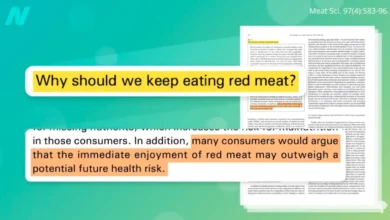
In defending their unexpected conclusions, the authors of the NutriRECS studies offered three primary justifications. First, they pointed to consumer preferences, noting that many individuals simply enjoy eating meat and value the culinary satisfaction it provides. Public health experts rapidly pushed back against this rationale, arguing that personal preference should not dictate empirical science or public health messaging. Analogies were swiftly drawn to other lifestyle factors, such as physical inactivity or excessive alcohol consumption; while individuals may enjoy these behaviors, public health agencies do not alter scientific consensus or policy recommendations to accommodate personal habits.
Second, the panel highlighted their utilization of the GRADE (Grading of Recommendations, Assessment, Development, and Evaluation) methodology. Traditionally developed to assess the certainty of evidence in pharmaceutical and drug trials involving randomized controlled trials (RCTs), critics argued that GRADE is poorly suited for complex nutritional and lifestyle epidemiology, where long-term randomized interventions are frequently impractical, unethical, or financially prohibitive. Public health researchers warned that inappropriately applying strict drug-trial criteria to nutritional science could systematically undermine well-established public health guidance regarding secondhand smoke, air pollution, trans fats, and physical inactivity.
Third, the panel emphasized what they termed the "very small magnitude" of the observed health effects. They argued that even if red and processed meat consumption marginally increases the risk of specific chronic illnesses, the absolute risk difference for any single individual is negligible. This argument sparked intense debate, with critics comparing the logic to downplaying the incremental dangers of smoking additional cigarettes.
Scrutiny of Excluded Data and Alleged Cherry-Picking
As independent researchers began analyzing the NutriRECS methodology, significant concerns emerged regarding the handling of existing scientific literature. Critics accused the panel of applying overly restrictive inclusion criteria and omitting critical bodies of evidence that contradicted their preferred narrative. Notably, major randomized controlled trials examining dietary patterns—such as the PREDIMED trial on the Mediterranean diet, the extensive body of research surrounding the DASH (Dietary Approaches to Stop Hypertension) diet, and the Lyon Diet Heart Study—were either marginalized or excluded entirely.
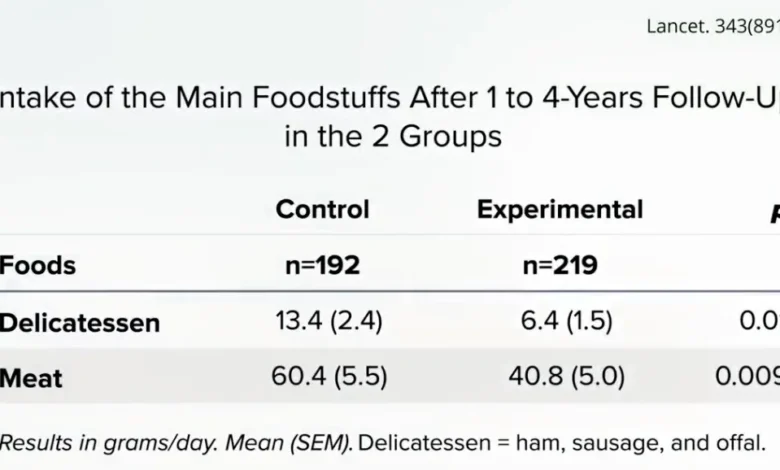
The exclusion of the Lyon Diet Heart Study proved particularly contentious. That landmark trial randomized participants to a Mediterranean-style diet characterized, among other elements, by a significant reduction in meat consumption. The intervention group experienced a remarkable 70% reduction in all-cause mortality compared to the control group. The NutriRECS panel excluded this crucial study on the grounds that it reported an "implausibly large treatment effect," effectively discarding robust empirical evidence because the results did not align with their analytical framework.

Furthermore, investigators scrutinized the financial and institutional ties surrounding the panel. Several members of the NutriRECS consortium maintained professional affiliations with Texas A&M AgriLife, an institution that historically receives substantial annual funding from the livestock and meat industries. These disclosures fueled widespread allegations of institutional bias and conflict of interest, drawing formal complaints and petitions from concerned scientists and consumer advocacy groups to regulatory bodies such as the Federal Trade Commission (FTC).
Comparative Analysis of Health Implications and Public Health Data
Despite the methodological hurdles and the panel’s efforts to downplay the findings, the underlying data within their own meta-analyses continued to demonstrate measurable adverse effects. Based on large-scale cohort evaluations, moderate reductions in red and processed meat consumption were associated with statistically significant risk reductions:
- Total mortality decreased by approximately 13%.
- Cardiovascular disease mortality dropped by roughly 14%.
- Cancer mortality declined by about 11%.
- The risk of developing type 2 diabetes fell by nearly 24%.
Public health economists and epidemiologists noted that modern medicine routinely invests billions of dollars into pharmacological interventions—such as statins and antihypertensive medications—aimed at achieving risk reductions of a comparable magnitude. Furthermore, while pharmaceutical agents frequently carry unintended side effects (such as statins marginally increasing the risk of type 2 diabetes while offering little protection against cancer), dietary modifications targeting meat reduction concurrently improve multiple health endpoints.
To contextualize the human toll, prominent nutritional scientists estimated that a modest, population-wide reduction in red meat consumption could prevent approximately 200,000 premature deaths annually in the United States alone. Public health officials argued that framing these figures as a "very small effect" ignores the profound sociological and economic impact on hundreds of thousands of families affected by preventable chronic illnesses.
The Tobacco Analogy and Historical Parallels
Throughout the scientific discourse following the publication, epidemiologists repeatedly invoked historical parallels to the tobacco industry’s decades-long efforts to obscure the health risks of cigarette smoking. Critics highlighted structural similarities in how industry-influenced research can manipulate study design: by focusing exclusively on studies with narrow exposure gaps (such as comparing heavy smokers to moderate smokers, or high meat-eaters to slightly lower meat-eaters) while deliberately avoiding comparisons against non-consumers (such as vegetarians), researchers can manufacture artificial ambiguity.
This dynamic closely mirrors historical tactics documented in mid-century public health battles. As noted in classic analyses of scientific consensus-building, if the accumulated mountain of evidence linking meat consumption to chronic disease had originated from a newly introduced synthetic agent rather than an entrenched, economically powerful agricultural industry, the hazards would likely be regarded as beyond scientific dispute.
Broader Implications for Dietary Guidelines and Science Communication
The NutriRECS controversy serves as a watershed moment for modern nutritional science, highlighting the urgent need for standardized, transparent frameworks capable of evaluating complex lifestyle and dietary data without succumbing to commercial pressures. As academic institutions, regulatory agencies, and scientific journals re-evaluate how consensus is formed, the episode underscores the critical importance of methodological rigor and independence in protecting public health.
Ultimately, the debate over red meat extends far beyond individual dietary choices; it strikes at the core of how scientific evidence is interpreted, communicated, and translated into policy. As public health authorities continue to refine dietary guidelines for future generations, the scientific community remains resolute in demanding that public health recommendations prioritize empirical integrity and human longevity over commercial interests and consumer convenience.
Related posts: