Understanding the Critical Moments for Accurate Blood Pressure Measurement: Avoiding Misleading Readings and Ensuring Optimal Health Monitoring

Millions of individuals worldwide rely on daily blood pressure checks as a cornerstone of their health management, yet a significant proportion are inadvertently obtaining inaccurate readings. This widespread issue stems not from faulty devices, but from a critical lack of awareness regarding the optimal timing and conditions for measurement. Insights from medical experts, including Dr. Mitch Rice, underscore that the moment chosen to check blood pressure profoundly dictates the reliability of the reading, potentially leading to misdiagnosis, unnecessary anxiety, or, conversely, a dangerous false sense of security. This article delves into the common pitfalls that yield misleading numbers and illuminates the precise windows that offer the closest approximation to an individual’s true physiological baseline.
The Silent Threat: Why Accurate Blood Pressure Monitoring is Paramount
Hypertension, or high blood pressure, is often dubbed the "silent killer" because it typically presents no symptoms until it has caused significant damage to vital organs. Globally, it affects an estimated 1.28 billion adults aged 30-79 years, making it a leading risk factor for premature death. Uncontrolled hypertension dramatically increases the risk of heart attack, stroke, kidney disease, and other serious cardiovascular complications. Given these profound health implications, regular and accurate blood pressure monitoring is not merely a recommendation but a critical component of preventive care and disease management.
Home blood pressure monitoring has emerged as an invaluable tool, offering several advantages over clinic measurements. It provides a more comprehensive picture of blood pressure fluctuations over time, helps identify "white-coat hypertension" (elevated readings only in a clinical setting) and "masked hypertension" (normal readings in clinic but high at home), and empowers patients to actively participate in their health management. However, these benefits are entirely contingent on the accuracy of the readings, which, as experts highlight, is frequently compromised by avoidable errors in technique and timing.
Common Pitfalls: Five Moments That Reliably Skew Your Readings
Understanding when not to measure your blood pressure is as crucial as knowing when to do so. Several common scenarios can artificially inflate or deflate readings, leading to a distorted view of one’s cardiovascular health.
1. The Middle of the Day: A Symphony of Stress and Activity
This represents arguably the most common mistake and a significant source of unwarranted panic for individuals monitoring their blood pressure. The human body’s physiological rhythms are complex, and the middle of the day is inherently a period of heightened activity and stress. Cortisol, the body’s primary stress hormone, naturally follows a diurnal curve, peaking in the morning and remaining elevated throughout the active daytime hours. Concurrently, the sympathetic nervous system – responsible for the "fight or flight" response that elevates heart rate and constricts blood vessels – is highly active as the brain processes demands, responds to environmental stimuli, and navigates daily stressors.
Beyond hormonal and neurological factors, the constant, albeit subtle, physical movements associated with daily life – walking, standing, changing posture, and even talking – introduce small, transient fluctuations in blood pressure. The accumulated psychological stress of a busy morning further contributes to a sustained elevation in cortisol and adrenaline, collectively pushing blood pressure meaningfully above a true resting baseline. Research published in reputable journals like the Journal of Clinical Hypertension has consistently demonstrated that blood pressure readings taken during active daytime hours are significantly higher and more variable than those obtained under standardized resting conditions. Critically, these midday readings have been shown to produce the highest rate of false hypertension classification in home monitoring settings, leading to potential over-medication or unnecessary diagnostic procedures. The straightforward solution is to avoid checking blood pressure during the middle of the day entirely.
2. Within 30–60 Minutes of Caffeine Consumption: The Stimulant Effect
For many, a morning routine is incomplete without coffee or another caffeinated beverage. However, measuring blood pressure shortly after consuming caffeine can profoundly undermine the accuracy of the reading. Caffeine is a potent central nervous system stimulant that directly activates the sympathetic nervous system. It achieves this primarily by blocking adenosine receptors in the brain, which normally promote relaxation and drowsiness. This blockade leads to increased neuronal firing and the release of neurotransmitters like adrenaline, resulting in an elevated heart rate and systemic vasoconstriction (narrowing of blood vessels).
Within 30 to 60 minutes of caffeine intake, systolic blood pressure can experience a transient rise ranging from 5 to 15 points, particularly in individuals who are sensitive to its effects. It is important to note that caffeine sensitivity varies significantly among individuals, influenced by genetics, metabolic rate, and habitual intake. For someone with borderline hypertension, this caffeine-induced spike could push a reading into a diagnostic range, triggering undue alarm. To obtain a reading reflective of your baseline, it is advisable to wait at least 60 minutes, and ideally up to 2 hours, after consuming any caffeinated product before measuring blood pressure.
3. With a Full Bladder: The Unexpected Reflex
This particular factor often catches individuals by surprise, yet its impact on blood pressure can be substantial and well-documented. A full bladder activates the sympathetic nervous system through specialized stretch receptors embedded within the bladder wall. As the bladder distends with urine, these mechanoreceptors send signals to the central nervous system, which, in turn, increases sympathetic outflow. This physiological response is part of a broader "vesicopressor reflex" or "bladder-cardiac reflex," designed to heighten alertness and arousal, which incidentally elevates blood pressure.
Studies published in journals such as the Journal of Human Hypertension have quantified this effect, demonstrating that bladder fullness can elevate systolic blood pressure by an average of 10-15 mmHg. For many, this magnitude of increase is sufficient to shift a reading from a normal range into the elevated or even Stage 1 hypertension category. Given the ease with which this confounding factor can be eliminated, emptying the bladder fully before any blood pressure measurement is a simple yet profoundly meaningful step towards ensuring accuracy.
4. Within an Hour of Hard Exercise: The Body’s Recovery Phase
While regular physical activity is undeniably one of the most effective long-term strategies for managing and lowering blood pressure, measuring blood pressure immediately after an intense workout is almost guaranteed to produce a misleading result. During strenuous exercise, the heart’s workload increases dramatically, leading to a significant surge in cardiac output and, consequently, a substantial rise in blood pressure. Systolic readings can reach levels of 180-200 mmHg or even higher in healthy adults during peak effort.
Post-exercise, blood pressure typically begins to drop within the first 3-5 minutes as the body recovers. However, it does not fully return to its true resting baseline for approximately 60 minutes. Within this 30-60 minute post-exercise window, readings can be highly unpredictable. Some individuals may experience paradoxically high readings due to residual sympathetic activation that has not yet resolved, while others might observe paradoxically low readings stemming from post-exercise vasodilation, where blood vessels remain dilated temporarily, causing pressure to dip below their usual resting baseline. In either scenario, the reading obtained does not accurately reflect the individual’s true resting cardiovascular state. Therefore, a minimum waiting period of 60 minutes after exercising is essential before taking a blood pressure measurement.
5. Relying on a Single Reading: The Illusion of a Snapshot
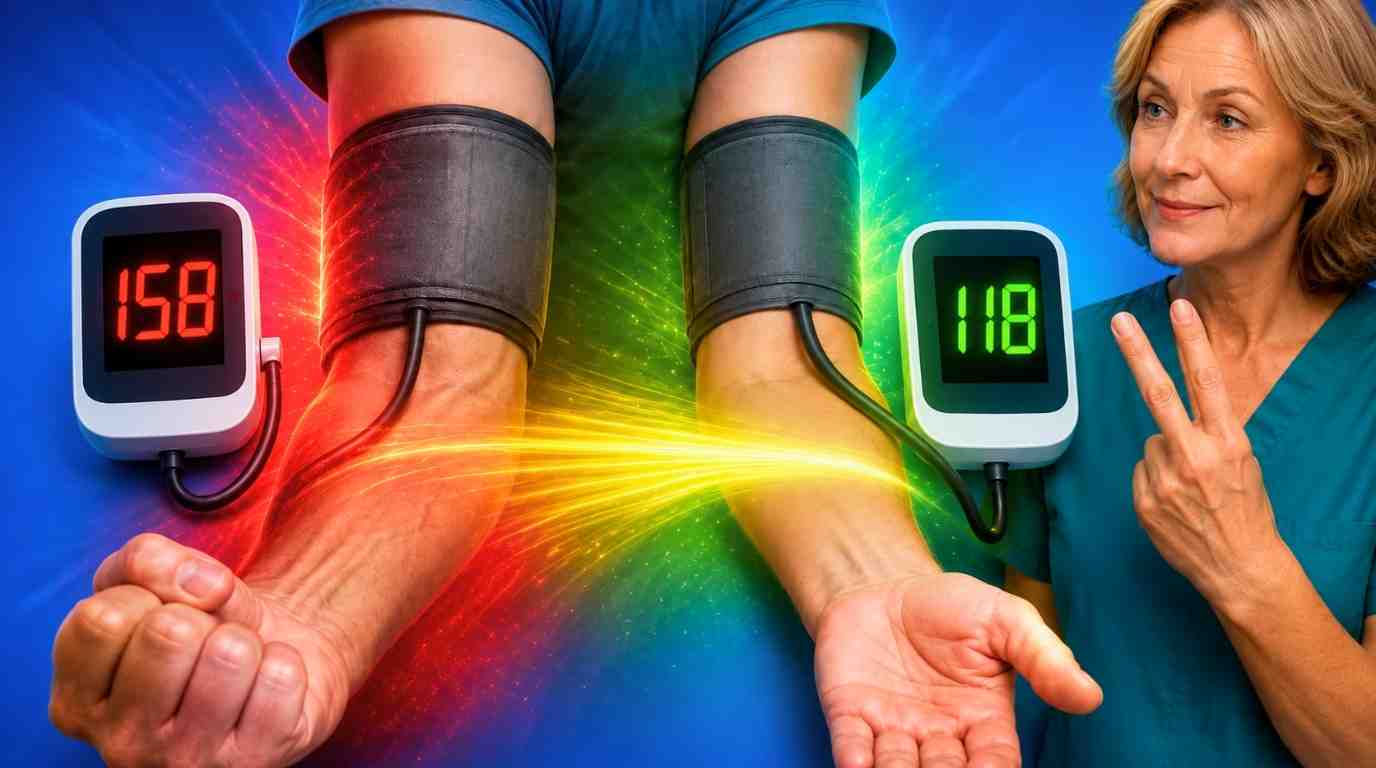
This factor, while not tied to a specific time, is arguably the most critical item on this list. Blood pressure is a dynamic physiological parameter, constantly fluctuating throughout the day in response to myriad internal and external variables. Factors such as breathing patterns, changes in posture, ambient temperature, emotional state, recent meals, and even minor conversational exchanges can cause immediate, momentary shifts. A single blood pressure reading captures merely one fleeting moment in this perpetual fluctuation and may land anywhere along the spectrum surrounding an individual’s actual baseline.
Consider an individual who obtains a reading of 158/95 mmHg, experiences immediate panic, and then records 134/82 mmHg just two minutes later, feeling utterly confused. This scenario exemplifies completely normal moment-to-moment variability. Neither reading is inherently "wrong," but neither, on its own, tells the complete story of their blood pressure status. Relying on a single reading can lead to inappropriate medical decisions or undue stress.
The universally recommended protocol to account for this variability involves a standardized approach:
- Sit quietly for a full 5 minutes beforehand, ensuring feet are flat on the floor and uncrossed, the back is supported, and the arm is resting at heart level.
- The bladder should be empty.
- Avoid talking during the measurement.
- Take two readings at least one minute apart, and record the lower of the two for both systolic and diastolic values.
- Crucially, this process should be repeated daily, and all recorded numbers averaged over time. This long-term average provides a far more statistically robust and clinically meaningful representation of one’s true baseline blood pressure than any single measurement.
Establishing Your True Baseline: The Optimal Measurement Windows
While many moments can lead to inaccurate readings, two specific windows consistently provide the most reliable data, allowing individuals to establish a true baseline blood pressure. These times are carefully chosen to minimize the influence of daily activities, stress hormones, and external stimulants, ensuring the body is in a state closest to its basal physiological rhythm.
1. The Morning Window: First Thing Upon Waking
The ideal morning measurement should occur shortly after waking up, but critically, before consuming any caffeine, taking medications, or eating breakfast. It is also imperative to empty the bladder prior to this measurement. This window is optimal because the body is typically in its most rested state, with minimal physical and psychological stressors influencing the cardiovascular system. Cortisol levels, while rising, have not yet peaked into the sustained high of midday, and the sympathetic nervous system is relatively subdued compared to active hours. Taking two readings during this period, one minute apart, and recording the lower value, contributes to a more accurate representation.
2. The Evening Window: Before Dinner and Evening Medications
The second highly reliable window for blood pressure measurement is in the evening, specifically before dinner and prior to taking any evening medications. Similar to the morning protocol, ensure the bladder is empty and a period of quiet rest (at least 5 minutes) precedes the measurement. By this time of day, the acute stressors and activities of the morning and afternoon have typically subsided. The body is beginning to wind down, and the physiological environment is generally less prone to the spikes and fluctuations seen earlier in the day. Again, two readings, one minute apart, with the lower value recorded, are recommended.
The 10-Day Averaging Strategy: A Gold Standard for Accuracy
To derive a truly dependable baseline, a systematic approach over several days is essential. By consistently measuring blood pressure during these two optimal windows (morning and evening) for approximately 10 consecutive days, and meticulously recording the lower of the two readings each time, a robust data set can be compiled. Subsequently, averaging all the systolic numbers together and all the diastolic numbers together will yield a combined average that represents an individual’s true baseline blood pressure. This methodology significantly minimizes the impact of day-to-day variability and provides healthcare providers with invaluable, actionable data for diagnosis and treatment adjustments. This is far more reliable and clinically relevant than reacting to any single reading taken at a random point in the day.
Broader Implications and Expert Consensus
The implications of accurate home blood pressure monitoring extend far beyond individual readings. Misleading measurements can lead to several adverse outcomes:
- Misdiagnosis: False high readings can lead to unnecessary medication or lifestyle interventions, while false low readings can delay crucial treatment for actual hypertension.
- Inappropriate Treatment: Dosing of antihypertensive medications is often adjusted based on home readings. Inaccurate data can result in over-medication (leading to hypotension and associated risks like falls) or under-medication (leaving hypertension uncontrolled and increasing cardiovascular risk).
- Patient Anxiety: Consistently fluctuating or unexpectedly high readings, especially when taken incorrectly, can cause significant psychological distress and anxiety, further impacting blood pressure.
Leading health organizations, including the American Heart Association (AHA) and the World Health Organization (WHO), consistently emphasize the importance of proper technique and timing for home blood pressure monitoring. Their guidelines often mirror the protocols outlined here, stressing the need for patient education by healthcare professionals. Empowering patients with the correct knowledge transforms home monitoring from a potential source of confusion into a powerful tool for proactive health management, fostering better communication with their doctors and ultimately leading to improved cardiovascular outcomes.
Key Recommendations for Accurate Home Blood Pressure Monitoring:
To ensure the most accurate blood pressure readings, adhere to this comprehensive checklist:
- Avoid Midday Checks: Schedule measurements for morning (upon waking) and evening (before dinner).
- Caffeine-Free Zone: Wait at least 60-120 minutes after consuming caffeine.
- Empty Bladder: Always urinate fully before taking a reading.
- Post-Exercise Patience: Allow at least 60 minutes after strenuous exercise.
- Rest First: Sit quietly for 5 minutes with your back supported and feet flat on the floor, uncrossed.
- Arm Position: Ensure your arm is supported at heart level.
- No Talking: Remain silent during the measurement.
- Multiple Readings: Take two readings one minute apart and record the lower one.
- Consistency is Key: Measure daily for 10 days during optimal windows and average the results for your true baseline.
Source: Dr. Mitch Rice
Disclaimer: This article is for general informational purposes only and is not a substitute for professional medical advice, diagnosis, or treatment. If you consistently get high readings using this protocol, or experience symptoms like chest pain, severe headache, or vision changes, contact your doctor promptly.