The newly certified software achieved independent validation across all four scoring domains, providing objective proof of performance.

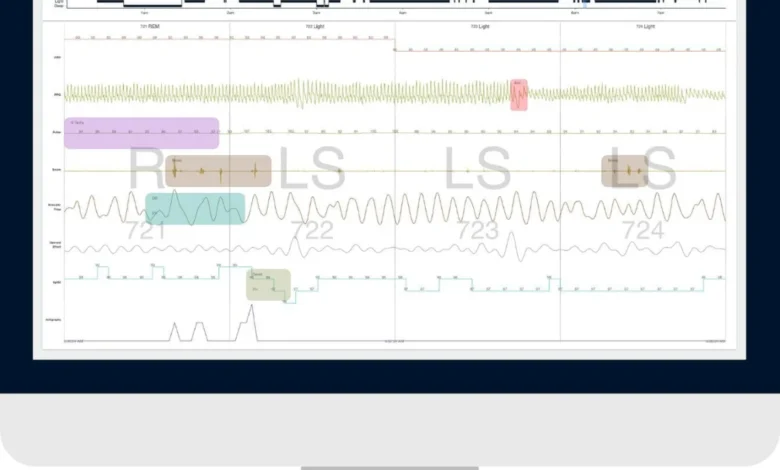
EnsoData has officially secured Full Autoscoring Certification from the American Academy of Sleep Medicine (AASM) for its proprietary EnsoSleep platform, marking a significant milestone in the evolution of sleep diagnostic technology. This achievement distinguishes EnsoSleep as the first AI-powered scoring solution to successfully navigate the AASM’s rigorous, multi-domain evaluation process, setting a new benchmark for automated clinical decision support in both in-lab polysomnography (PSG) and home sleep apnea testing (HSAT).
The Mechanics of the AASM Certification Program
The AASM launched its autoscoring certification program to address the burgeoning marketplace of artificial intelligence tools in sleep medicine. Historically, the proliferation of AI in healthcare has been met with both enthusiasm and skepticism, as clinical practitioners require assurance that algorithmic outputs are not only efficient but also clinically accurate when compared to the gold standard of human interpretation.
The AASM certification process is intentionally exhaustive. To achieve full status, software must demonstrate accuracy across four critical scoring domains: sleep staging, arousal detection, respiratory event identification, and the detection of periodic limb movements. The EnsoSleep platform underwent a blinded, independent evaluation against a dataset of over 140 diverse polysomnography studies. These studies were scored by a panel of 14 registered sleep technologists—the "gold standard" benchmark—to ensure that the AI’s performance reached a level of parity with the highly trained human professionals who have traditionally performed this labor-intensive task.
A Chronology of AI Integration in Sleep Medicine
The journey toward this certification represents the culmination of a decade of advancements in machine learning within the sleep community. For years, the industry relied entirely on manual scoring, a process that is notoriously time-consuming and subject to inter-scorer variability.
- 2010s: The Early Exploration Phase: Academic research into automated sleep scoring began in earnest, with initial algorithms showing promise in staging but struggling with the nuance of respiratory event detection.
- 2018-2020: The FDA Clearance Wave: Companies like EnsoData began securing FDA 510(k) clearances, which confirmed that their software was "substantially equivalent" to predicate devices. However, FDA clearance primarily addresses safety and technical consistency rather than comparative clinical accuracy against human experts.
- 2023: The AASM Establishes Standards: Recognizing the need for clinical standardization, the AASM developed the formal autoscoring certification framework, providing a voluntary, high-bar pathway for developers to prove their software’s efficacy in a real-world clinical setting.
- 2024: The First Full Certification: With the announcement of the certification for EnsoSleep, the industry enters a new era where independent validation serves as a prerequisite for widespread clinical adoption.
Bridging the Gap Between FDA Clearance and Clinical Trust
A common point of confusion for healthcare providers is the distinction between regulatory clearance and clinical certification. FDA clearance is a legal and safety-oriented designation; it ensures that a medical device does not introduce new risks to patients. However, it does not explicitly guarantee that the software’s scoring accuracy will match the performance of a board-certified sleep physician or a registered sleep technologist in every clinical scenario.
Sam Rusk, co-founder and chief AI officer at EnsoData, emphasized the significance of this distinction during recent discussions. "There can be general distrust in companies representing their own products and services," Rusk noted. By seeking validation from the AASM—the primary governing body for sleep medicine in the United States—EnsoData has effectively externalized its quality assurance process. For medical directors who oversee busy sleep laboratories, this certification provides the institutional backing necessary to integrate AI into existing clinical workflows with confidence.
The Impact on Clinical Workflow and Patient Care
The primary value proposition of EnsoSleep and similar diagnostic tools is the optimization of the "time-to-care" metric. Traditional sleep studies generate massive amounts of data; a single overnight PSG can produce hundreds of pages of physiological signals, including EEG (brain waves), EOG (eye movements), EMG (muscle activity), and respiratory airflow. Manual scoring of this data can take several hours per study.
By automating the initial scoring phase, EnsoSleep allows technologists to transition from "scorers" to "reviewers." Instead of laboring over the classification of every individual epoch of sleep or respiratory event, clinicians can focus on verifying the AI’s work and identifying subtle abnormalities that might be missed during a rapid manual review.
The implications for the patient are twofold:
- Reduced Turnaround Times: Patients receive their diagnostic results and subsequent treatment plans (such as CPAP therapy initiation) much faster, reducing the bottleneck often found in sleep centers.
- Standardized Quality: Regardless of the fatigue level or experience of the human scorer, the AI applies a consistent set of rules across all studies, reducing the inter-scorer variability that has long plagued the field of sleep medicine.
Analyzing the Broader Market Implications
The AASM’s decision to offer this certification is a bellwether for the future of AI in medical diagnostics. As more software developers seek to enter the space, the "certified" label will likely become a competitive necessity. Hospitals and private sleep clinics are increasingly prioritizing vendor partnerships that can demonstrate objective, third-party validation.
Furthermore, this move likely signals a shift in the role of the sleep technologist. Rather than becoming obsolete, the role is evolving into a higher-level clinical oversight position. As the AI handles the repetitive, data-heavy aspects of scoring, the technologist is empowered to dedicate more time to patient education, equipment titration, and the management of complex cases that require nuanced human judgment.
Future Outlook and Ethical Considerations
While the EnsoSleep certification is a major success, it does not mark the end of the development cycle. Artificial intelligence in medicine remains a dynamic field. As diagnostic guidelines evolve and new types of sensors (such as consumer-grade wearables) are introduced into the clinical pathway, software will need to be continuously updated and re-certified.
The AASM’s initiative also opens the door for a more data-driven approach to medical policy. By collecting performance data on a wide variety of AI tools, the medical community can better understand the strengths and weaknesses of algorithmic medicine. This transparency is crucial for maintaining public trust. As EnsoData continues to scale its operations, the focus will likely remain on ensuring that the software remains robust across diverse patient demographics, including those with comorbidities or unconventional sleep patterns.
Conclusion
The attainment of the AASM Full Autoscoring Certification by EnsoData serves as a pivotal moment for digital health. By moving beyond the baseline requirements of regulatory safety and into the realm of rigorous, independent clinical performance validation, the company has provided a clear roadmap for the future of diagnostic software. For the sleep medicine community, the message is clear: AI is no longer a peripheral experiment but a validated, essential component of the modern clinical workflow. As the industry looks ahead, the integration of these high-performance, validated tools will be fundamental in addressing the global burden of sleep disorders, ultimately leading to more accurate diagnoses and more timely interventions for millions of patients worldwide.