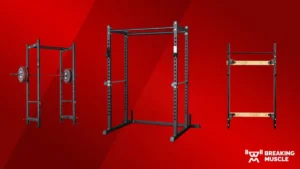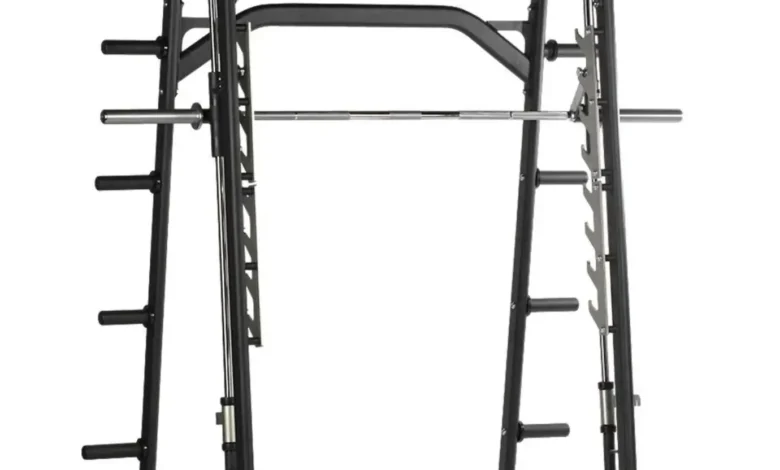
The evolution of home fitness over the last decade has fundamentally shifted how individuals approach strength training, turning the garage gym into a legitimate rival to commercial fitness clubs. Among the various apparatuses driving this trend, the Smith machine has emerged as a premier piece of equipment for home gym layouts. Once found almost exclusively in commercial health clubs next to traditional treadmills and cable crossovers, the Smith machine has transitioned into a highly sought-after multi-purpose asset for residential spaces. This growth is largely driven by its unique combination of safety features, versatility, and the ability to facilitate heavy compound lifts without the presence of a human spotter.
As fitness enthusiasts increasingly build out sophisticated home training spaces, the market has expanded to offer everything from traditional standalone units and comprehensive all-in-one functional trainers to space-saving rack attachments. To navigate this expansive market, product testing teams and fitness experts have evaluated the leading options available for the 2025 consumer season. By analyzing metrics such as build quality, bar-path smoothness, footprint dimensions, and overall financial value, industry professionals have identified the top Smith machines to suit varying budgets and spatial constraints.
Comprehensive Evaluation of the 2025 Market Landscape
Selecting the appropriate Smith machine requires a careful balance of spatial availability, budget, and training goals. Industry experts and professional equipment testers utilize a standardized evaluation rubric to score models across categories such as structural integrity, versatility, ergonomics, and value. This rigorous testing protocol helps consumers distinguish between commercial-grade monoliths and budget-friendly alternatives.
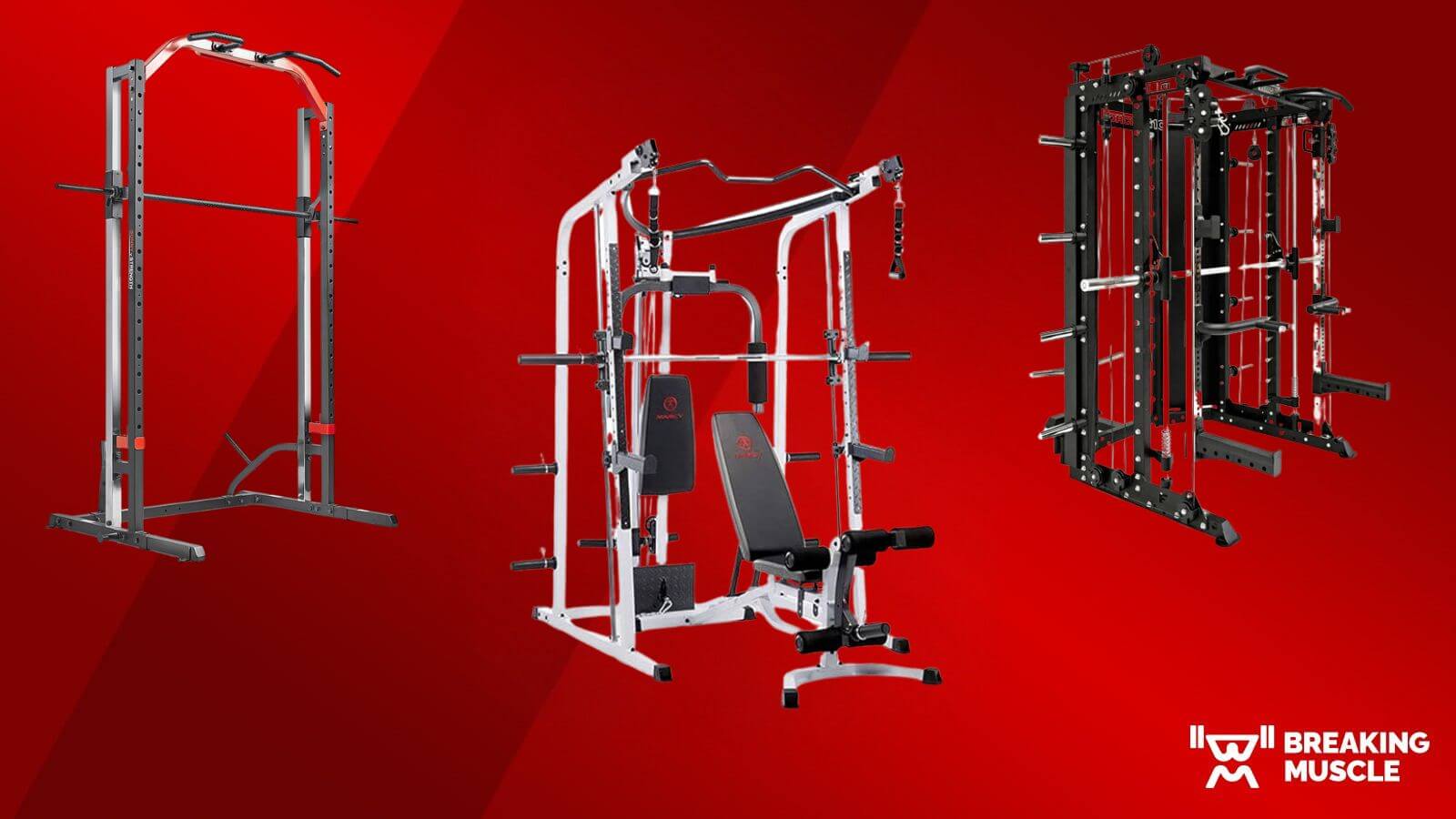
Industry insights from fitness education professionals underscore the primary advantages of incorporating a guided barbell system into a training regimen. Mauro S. Maietta, district fitness and education manager for Crunch Fitness, notes that the fixed bar path offers distinct mechanical benefits. According to Maietta, the system assists athletes by providing structural support, which translates to greater control and stability during high-intensity movements. For novices, this mechanism helps isolate targeted muscle groups, allowing them to learn proper movement patterns without the destabilizing forces typical of standard Olympic free weights.
Furthermore, fitness experts emphasize the utility of these systems in therapeutic contexts. The guided motion makes the equipment an effective instrument for injury rehabilitation and for individuals managing specific mobility constraints. By removing the need to stabilize lateral sway, users can focus on progressive overload—a core training principle validated by sports science research for maximizing muscle hypertrophy and strength development.
Top-Tier Selections for Residential Fitness Spaces
Force USA G15 All-in-One Trainer: The Ultimate Multifunctional Powerhouse
For home gym owners seeking an uncompromising, commercial-grade ecosystem, the Force USA G15 All-in-One Trainer stands out as a preeminent option, though it commands a substantial investment of approximately $5,500. Tipping the scales at nearly 1,000 pounds, the G15 merges a half rack, a functional trainer, and a dedicated Smith machine into a single, heavily anchored chassis.
Measuring over six feet wide, four feet deep, and roughly seven feet tall, the unit requires dedicated spatial planning. It features dual 289-pound weight stacks that contribute to its tank-like durability and structural stability. One of the G15’s defining characteristics is its adjustable pulley ratio system, which allows users to toggle between 2:1 and 4:1 ratios, altering the perceived resistance profile to accommodate users of varying fitness levels.
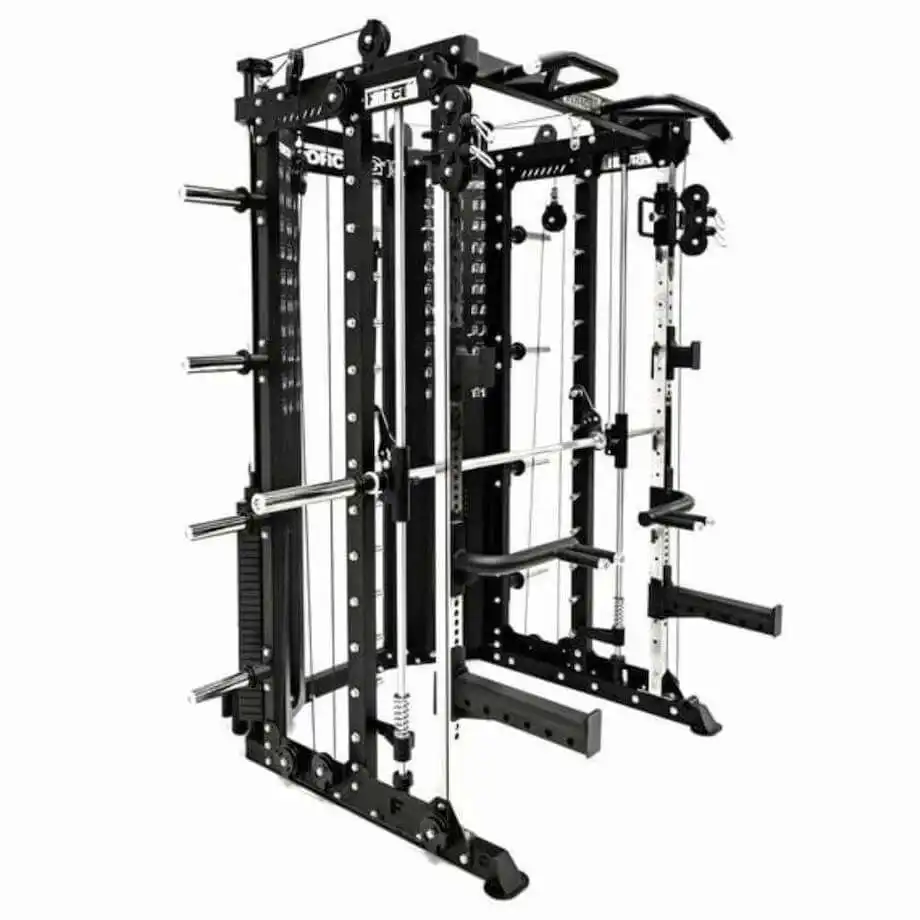
Despite its robust engineering, evaluators noted certain limitations. The cable system utilizes nylon pulleys rather than aluminum, which impacts long-term glide smoothness relative to elite commercial counterparts. Additionally, testers pointed out that the built-in barbell features a passive knurling pattern, which may fall short for advanced lifters handling maximal loads. Assembly is another critical consideration; experts estimate the build process requires approximately 20 man-hours, or an additional professional installation fee of roughly $800.
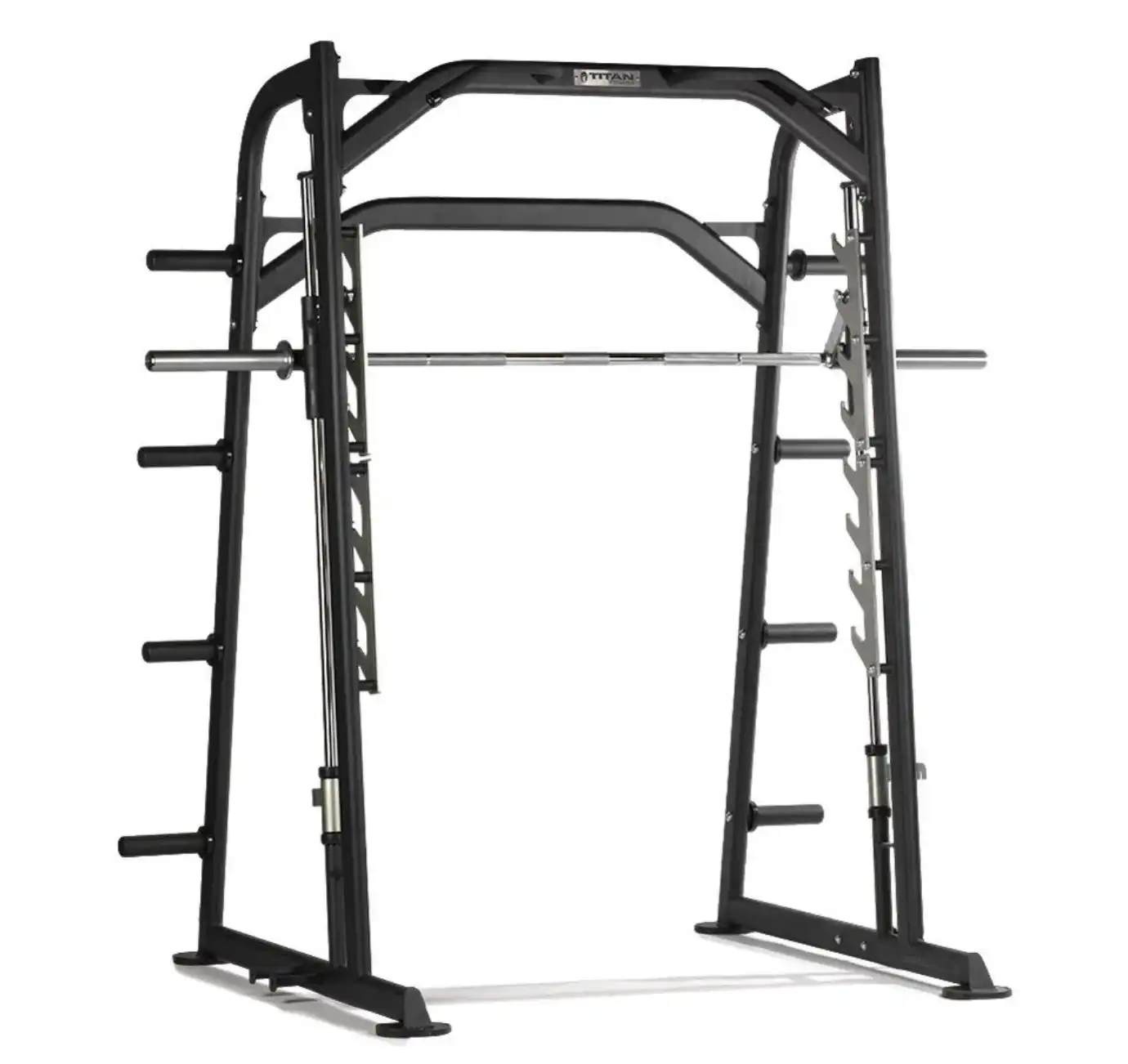
Titan Fitness Smith Machine: Balanced Ergonomics and Value
For consumers seeking a robust, standalone training station without the extreme financial commitment of a multi-thousand-dollar commercial unit, the Titan Fitness Smith Machine offers a compelling middle ground at a price point near $1,700.
A primary engineering feature of the Titan model is its counterbalanced barbell mechanism. While standard commercial bars weigh a full 45 pounds, the counterbalanced design of the Titan machine reduces the starting resistance felt by the user to approximately 15 pounds, making it highly accessible for beginner lifters and individuals working through rehabilitation protocols.
Testers highlighted the machine’s single-axis, angled design, which earned high marks for ergonomics and muscle activation during lower-body compound movements such as squats and lunges. Stability during heavy loading sessions was rated exceptionally high, with zero noticeable wobble or structural give. However, prospective buyers should weigh these performance metrics against the manufacturer’s customer service policies, which include a limited one-year warranty alongside mandatory return shipping costs and restocking fees for returned merchandise.
Bolt Fitness Supply Storm Series Stinger Attachment: Space-Saving Versatility
Home gym operators with restricted floor space often avoid standalone apparatuses in favor of modular solutions. The Bolt Fitness Supply Storm Series Stinger Smith Machine Attachment addresses this need by integrating directly into existing power racks that utilize 3” x 3” uprights with 1-inch hardware.
Priced around $1,100, the Stinger attachment provides 12 vertical adjustment positions spanning 60 inches of travel, allowing users to transition efficiently from incline bench presses to Romanian deadlifts. The unit also incorporates a 43-inch multi-grip pull-up bar. While it offers immense training versatility, testers noted that construction finishes—such as welds and powder coating—do not match the ultra-refined aesthetics of top-tier boutique brands like Rogue Fitness or REP Fitness. Furthermore, the passive knurling on the attachment’s bar mirrors the limitations found on several competing models, necessitating lifting straps for heavy pulling sessions.
RitFit Smith Machine: The Accessible Entry Point
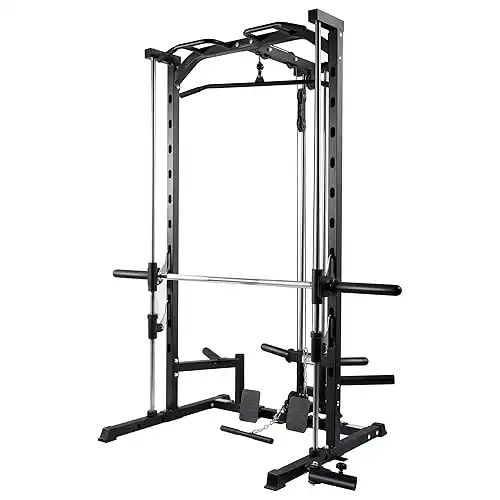
Consumers operating on strict financial constraints can still access the biomechanical benefits of a guided bar path through budget-oriented alternatives. The RitFit Smith Machine, retailed on platforms like Amazon for approximately $500, serves as a viable option for entry-level home fitness enthusiasts.
Weighing a relatively light 140 pounds, the RitFit model features a compact footprint suited for smaller rooms or apartment spaces. Despite its budget classification, the unit incorporates plate-loaded cable pulley attachments for lat pulldowns and low rows, alongside a pin-on landmine attachment and pull-up handles. These inclusions yielded a high value score from evaluators.

Nevertheless, trade-offs are inherent at this price tier. Due to lighter-gauge steel and reduced overall mass, stability scores lower than those of commercial-grade alternatives. Consequently, fitness experts advise that the RitFit model is best utilized by novice lifters or those engaging in moderate resistance training rather than advanced powerlifters handling maximal loads.
Bulletproof VTS Lite Rack Attachment: Modular Innovation
Scheduled for release in May 2025, the Bulletproof VTS Lite Rack Attachment represents a novel approach to rack integration. Priced around $700, the Versa Trolley System Lite allows users to convert an existing squat rack into a fully functional Smith machine using their own standard Olympic barbell.
Weighing only 15 pounds, the VTS Lite utilizes UHMW plastic rollers to ensure a smooth, friction-minimized vertical glide along the rack uprights. Bulletproof offers varying sizing brackets to accommodate 3” x 3”, 2” x 3”, and 2” x 2” rack configurations, alongside customizable hook diameters to match specific barbell dimensions. This modularity positions the VTS Lite as a cost-effective and space-efficient alternative to acquiring an entirely separate machine frame.
Mechanical Benefits and Physiological Implications
The sustained popularity of Smith machines across both commercial and residential sectors is rooted in specific biomechanical advantages. Unlike free-weight training, which demands constant neuromuscular coordination across multiple planes of motion to stabilize a load, the fixed vertical or slightly angled path of a Smith machine constrains the trajectory of the barbell.
According to Dr. Christopher Mohr, PhD, RD, structured training utilizing progressive overload remains the gold standard for skeletal muscle hypertrophy and strength gains. The structural support offered by a guided machine enables individuals to push closer to muscular failure without the immediate risk of catastrophic bar drops. This makes the equipment particularly useful for solo trainees who operate without a human spotter.
However, sports science professionals advise maintaining a balanced approach to exercise selection. Because the fixed path removes natural stabilization requirements, over-reliance on a Smith machine can theoretically lead to disparities in stabilizer muscle development compared to free-weight counterparts. Experts recommend integrating guided apparatuses as part of a comprehensive routine that includes free weights, functional cables, and bodyweight movements to ensure holistic physical development.
Purchasing Criteria for Consumers
When evaluating the vast array of available home gym Smith machines, buyers should systematically assess four core variables:
- Spatial Dimensions: Assessing the exact floor plan and ceiling height of the home gym is critical, particularly when considering all-in-one stations that combine cable towers, pull-up bars, and weight storage pegs into a single footprint.
- Functional Integration: Buyers must determine whether a dedicated, standalone unit is required or if a rack-mounted attachment better serves their current equipment ecosystem.
- Resistance Ratios: Understanding pulley ratios—such as 1:1 versus 2:1 configurations—ensures that the perceived weight load aligns with the user’s actual strength level and training objectives.
- Load Capacities: Ensuring that structural steel gauges and cable ratings comfortably exceed the user’s maximal lifting thresholds guarantees long-term safety and equipment longevity.
As the home fitness market continues to mature through 2025, the expansion of high-quality engineering in residential strength equipment ensures that users can replicate commercial-grade training safety and versatility within their own private spaces.