Slow Cooker Turkey Breast with Gravy Offers a Streamlined Solution for Intimate Holiday Gatherings


Preparing a traditional holiday meal often presents significant logistical challenges for home cooks, particularly when managing limited oven space and complex cooking timelines. As demographic shifts point toward smaller household sizes and more intimate gatherings, culinary traditions are evolving to meet modern demands. Among the most notable innovations in contemporary holiday meal preparation is the adaptation of classic centerpiece dishes for countertop appliances. The slow-cooker turkey breast paired with homemade gravy has emerged as a practical, efficient, and increasingly popular alternative to traditional roasting methods, redefining how families approach festive dining without sacrificing quality or flavor.
Main Facts and Culinary Mechanics
The growing preference for slow-cooker poultry preparation stems from a combination of convenience and culinary science. Unlike whole turkeys that require extensive thawing, complex brining protocols, and hours of attentive oven basting, a bone-in turkey breast prepared in a slow cooker eliminates many traditional pain points. Requiring approximately ten minutes of active preparation time, the method utilizes low and slow ambient heat to maintain moisture in a notoriously lean cut of meat.
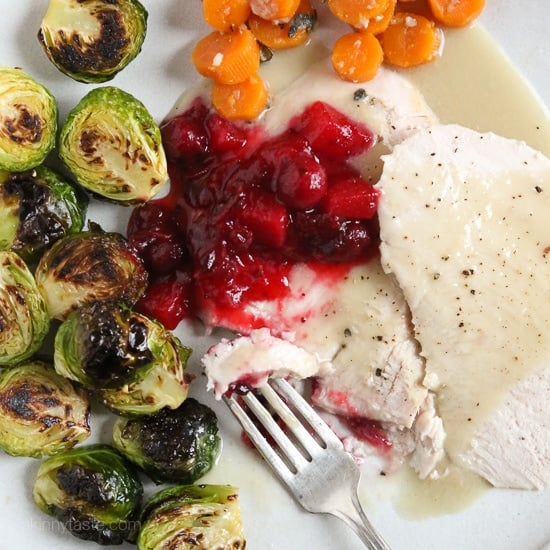
A standard five-pound bone-in turkey breast typically requires between five and seven hours of cooking time on a low heat setting. During this process, the natural juices combine with aromatic cooking liquids to form the base of a rich, scratch-made gravy that develops concurrently within the same vessel. This dual-purpose cooking cycle not only reduces dishwashing and monitoring but also ensures that the internal temperature safely reaches the culinary standard of 165 degrees Fahrenheit while locking in tenderness.
Culinary experts note that turkey breast is particularly susceptible to drying out due to its low fat content. Utilizing a sealed, humid environment such as a slow cooker mitigates this risk by continuously recycling moisture within the vessel. Furthermore, bypassing the oven frees up vital kitchen real estate, allowing hosts to simultaneously prepare multiple side dishes, casseroles, and desserts that demand precise baking temperatures.
Background Context and Shifting Holiday Demographics
The evolution of holiday cooking techniques mirrors broader sociological and economic trends over the past several decades. According to data compiled by the U.S. Census Bureau, average household sizes have steadily declined, with a significant percentage of families consisting of one or two individuals. Large-scale Thanksgiving dinners designed to feed ten to fifteen people no longer align with the lifestyles of many urban dwellers, young professionals, and empty nesters.

Historically, preparing a holiday turkey meant purchasing an entire bird ranging from twelve to twenty pounds, a commitment that frequently resulted in days of repetitive leftovers and considerable food waste. The introduction of single-cut poultry options, such as bone-in or boneless turkey breasts, provided a market-driven solution for smaller consumer segments.
The integration of these cuts into slow-cooker recipes gained momentum as part of a wider cultural movement toward appliance-based cooking, popularized by culinary authorities and recipe developers seeking to democratize gourmet meals. Publications and cookbooks focused on efficient slow-cooker methodology—such as America’s Test Kitchen’s Slow Cooker Revolution—pioneered foundational techniques for adapting traditional roasting recipes to Crock-Pot formats. Over time, home economists and food writers refined these concepts to include simultaneous gravy production, transforming a basic appliance method into a comprehensive meal solution.
Chronology of Modern Slow-Cooker Adoption
The widespread acceptance of slow cookers for gourmet and holiday meals represents a multi-decade progression in kitchen technology and consumer behavior:

- 1970s–1980s: The slow cooker, popularized by the Crock-Pot brand, establishes itself as a staple household appliance primarily utilized for stews, chilis, and inexpensive cuts of beef or pork. Its role is largely defined by convenience for working families rather than holiday entertaining.
- 1990s–2000s: As culinary programming expands on television, home cooks begin experimenting with non-traditional applications for countertop appliances, though holiday meals remain firmly anchored to conventional oven roasting.
- 2010s: Recipe developers and food blogs begin publishing targeted alternatives for minor holidays and small gatherings. The adaptation of turkey breast in slow cookers gains traction online, praised for freeing up oven space and preventing dry meat.
- 2020–Present: Economic shifts, changes in social gathering patterns, and a heightened focus on minimizing food waste accelerate the adoption of scaled-down holiday meals. Countertop appliance usage becomes standard practice across diverse demographics, supported by extensive digital resources and video tutorials.
Supporting Data and Nutritional Profile
From a nutritional and economic standpoint, utilizing a slow-cooker turkey breast offers distinct advantages for individuals monitoring dietary intake. Standard nutritional analysis for a commercially prepared portion—consisting of a four-ounce serving of turkey breast paired with a quarter-cup of homemade gravy—indicates a balanced macronutrient profile:
- Calories: Approximately 167 kcal
- Protein: 25 grams, supporting high-protein dietary preferences
- Total Fat: 5 grams (with saturated fat restricted to 1 gram)
- Carbohydrates: 8 grams, primarily derived from the thickening agents used in the gravy
- Sodium: 743 milligrams, which can be managed through the selection of low-sodium broths and seasonings
- Cholesterol: 55 milligrams
Economically, purchasing a turkey breast rather than a whole bird significantly reduces initial grocery expenditures and eliminates the financial waste associated with unused portions. Data from retail food trackers consistently shows that smaller poultry cuts offer a higher yield of usable, edible meat per dollar spent for households under four people.
Expert Perspectives and Industry Response
Culinary professionals and food safety authorities have increasingly endorsed appliance-based cooking methods, provided proper temperature controls are observed. The United States Department of Agriculture (USDA) emphasizes that regardless of the cooking vessel utilized, poultry must attain a minimum internal temperature of 165 degrees Fahrenheit to ensure the elimination of harmful pathogens such as Salmonella.

Home economists and lifestyle experts frequently highlight the psychological benefits of reducing holiday stress. Preparing the centerpiece dish with minimal active oversight allows hosts to engage more fully with guests rather than remaining tethered to the kitchen. Furthermore, culinary instructors emphasize that the inclusion of pan drippings directly within the slow cooker preserves essential amino acids and savory compounds, resulting in a naturally enhanced gravy that rivals traditional stovetop reductions.
Broader Impact and Future Implications
The mainstreaming of slow-cooker holiday recipes reflects a permanent shift in consumer expectations regarding food preparation. As time scarcity continues to influence domestic routines, culinary traditions are increasingly judged by their efficiency alongside their nostalgic value.
The success of the slow-cooker turkey breast signals a broader trend toward modular cooking, where traditional multi-step meals are broken down into manageable, appliance-friendly components. Food industry analysts anticipate continued innovation in countertop appliance recipes, with manufacturers designing specialized inserts and programmable settings tailored specifically to holiday and specialty cuts of meat. Ultimately, this evolution ensures that cultural culinary traditions remain accessible, adaptable, and sustainable for contemporary households of all sizes.