Gina Hinojosa’s Electricity Price Controls Will Wreck Texas — and I’m Preparing for the Blackouts

The incoming administration of Texas Governor-elect Gina Hinojosa faces a volatile energy landscape as it prepares to implement a series of proposed interventions in the state’s electricity market. Central to this policy shift is the promise to freeze residential electricity rates and impose stricter oversight on the expansion of high-demand infrastructure, such as AI-driven data centers. While these measures are framed as essential consumer protections against rising utility costs, they have triggered significant concern among economists, energy analysts, and grid operators who argue that the proposals may fundamentally undermine the economic incentives necessary to maintain grid reliability.
The Proposed Policy Framework
The core of the Hinojosa energy platform centers on a dual-pronged approach: the stabilization of residential retail rates and a regulatory moratorium on new data center construction until updated grid impact laws are established. Additionally, the transition team has signaled a shift in land-use priorities, including the suspension of proposed land sales to private aerospace entities like SpaceX.
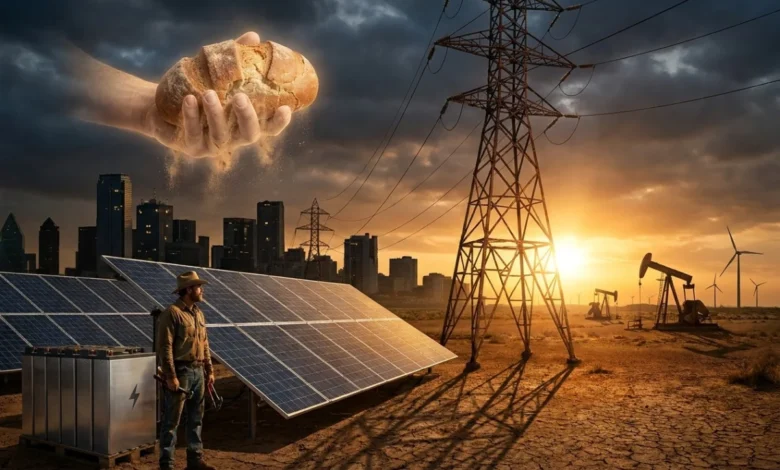
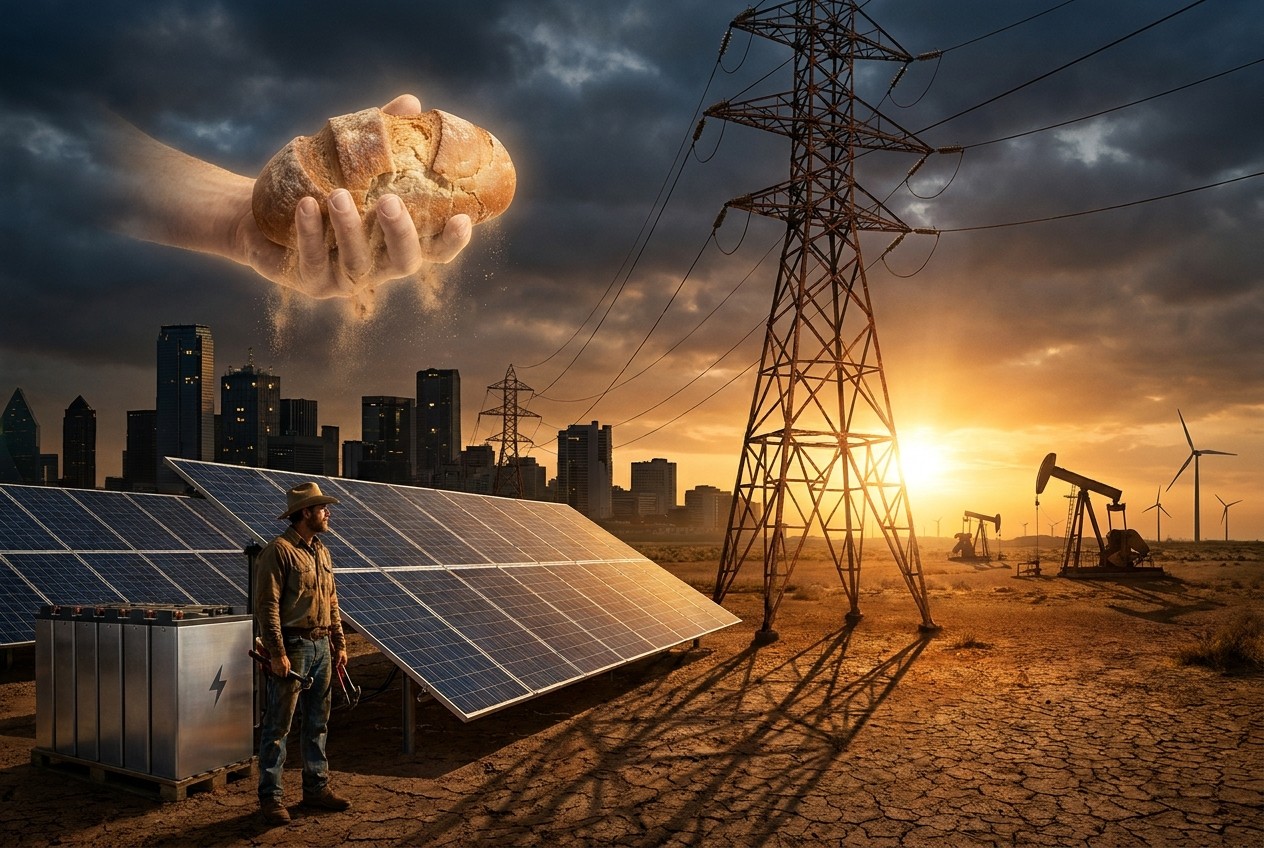
Economists characterize this strategy as a "price control" mechanism. By capping what residential consumers pay, the policy effectively decouples the retail price of electricity from the marginal cost of production and transmission. Historically, such interventions have been met with skepticism by experts in market design, who point to the "bread analogy": when a government mandates that a commodity be sold below the cost of production, supply chains inevitably contract. In the context of the Texas power grid, this implies that generators—facing lower revenue caps—may be forced to defer critical maintenance, delay the construction of new peaking plants, or exit the market entirely.
Chronology of Market Tensions
The current debate follows years of strain on the Texas power grid, most notably the catastrophic failure of the Electric Reliability Council of Texas (ERCOT) during Winter Storm Uri in 2021. Since that time, the state has struggled to balance rapid population growth, industrial expansion, and the integration of intermittent renewable energy sources.
- 2021-2023: Following the 2021 grid collapse, Texas lawmakers passed several bills aimed at weatherizing infrastructure and incentivizing the construction of "dispatchable" generation (gas and nuclear).
- Early 2024: Electricity demand reached record highs, driven by extreme weather patterns and an unprecedented surge in industrial load from AI data centers.
- Late 2024: The Hinojosa campaign gains momentum by promising direct financial relief to residents through one-time $1,500 rebate checks, framing the utility cost crisis as a failure of market oversight.
- Transition Period: Upon election, the incoming administration moves to halt data center permit approvals, signaling an intent to overhaul the Public Utility Commission (PUC) mandate to prioritize residential affordability over industrial capacity growth.
Data-Driven Analysis of Grid Capacity
The primary concern among grid engineers is the physics of supply and demand. According to recent projections from the PJM Interconnection—a grid operator that faces similar challenges to Texas—demand for electricity is expected to climb by more than 30 gigawatts (GW) between 2024 and 2030. Much of this growth is attributed to the energy-intensive nature of high-performance computing and artificial intelligence.
In a market-driven environment, high demand leads to higher prices, which signals to investors that new capacity is needed. By suppressing prices through government decree, the state risks signaling to the market that demand is lower than it actually is. This creates a "demand-side distortion" where consumers continue to use power at high rates while generators are discouraged from bringing new, high-cost peaking units online. The result, according to independent analysts, is a structural deficit in reserve margins—the gap between the power available and the power required during peak times—which significantly increases the probability of rolling blackouts.
Official Responses and Industry Skepticism
While the Hinojosa camp maintains that its policies will provide immediate relief to families struggling with inflation, industrial stakeholders have expressed alarm. Several large-scale energy producers have quietly cautioned that capital investment in Texas infrastructure, which was projected to reach $1.1 trillion by 2030, is contingent upon the ability to earn a market-based return.
Representatives from the data center industry have argued that they are willing to pay for their own grid infrastructure, provided the regulatory framework allows for private power purchase agreements (PPAs). "The issue is not the presence of data centers," noted one industry lobbyist who requested anonymity. "The issue is the way the current grid pricing system socializes the cost of transmission upgrades. If the state creates a price freeze, it removes the only tool we have to force developers to fund their own infrastructure."
The Texas Public Utility Commission (PUC) remains the focal point for this legal and economic battle. Because the PUC is governed by legislative statutes, any move to implement a statewide rate freeze or to reallocate the cost of grid expansion will likely face significant legislative hurdles and potential litigation.
Broader Implications for Energy Independence
The implications of this policy shift extend beyond the borders of Texas. Energy analysts are watching the state as a case study for the risks of centralized market planning. When governments attempt to dictate the price of energy, they often find that they must also dictate the allocation of supply. This has historically led to the formation of "black markets" for electricity or, more commonly, a system of government-sanctioned rationing.
Evidence from international markets, such as Ecuador’s struggle with fuel subsidies, serves as a warning. In that instance, the government’s attempt to artificially lower the price of diesel led to widespread smuggling, as market participants sought to arbitrage the price difference between the subsidized local market and the global market. In a modern power grid, this might manifest as the diversion of generation capacity to neighboring grids where market prices remain intact, effectively exporting the state’s power while leaving local residents in the dark.
The Rise of Decentralized Power
As public confidence in the centralized grid wanes, a growing demographic of homeowners and small businesses is shifting toward decentralized energy solutions. The market for residential solar paired with lithium-iron-phosphate (LFP) battery storage has seen a 15% increase in interest over the last six months. This trend suggests that a significant portion of the population is attempting to "de-risk" their energy consumption by treating the municipal grid as a secondary, rather than primary, source of power.
Technologically, the shift toward "off-grid" self-sufficiency is becoming more viable. Improvements in battery management systems (BMS) and the declining cost of high-capacity storage are enabling households to ride out grid fluctuations without relying on state-mandated relief. However, critics argue that this shift creates a "death spiral" for the utility companies: as wealthier residents leave the grid, the cost of maintaining the aging infrastructure is spread across a smaller, poorer customer base, necessitating even higher rate hikes and prompting further calls for political intervention.
Conclusion: The Economic Reality
The fundamental economic challenge facing Texas is the need for massive infrastructure investment. To meet the demands of the next decade, the state requires the construction of new natural gas, nuclear, and renewable generation assets, along with an extensive expansion of the transmission grid.
Market analysts conclude that these projects cannot be financed in an environment of price suppression. The "sane alternative," according to energy policy experts, involves allowing price signals to work while simultaneously reforming the grid cost-allocation process. This would require data centers and other massive loads to bear the full cost of the infrastructure they require, rather than shifting those costs to residential ratepayers.
As the Hinojosa administration takes the helm, the tension between populist promises and the realities of grid physics will likely define the state’s economic trajectory for years to come. The outcome will test whether a state can maintain its position as an industrial powerhouse while simultaneously attempting to override the fundamental laws of supply and demand. For now, the prospect of grid instability remains a central concern for policymakers and residents alike, underscoring the critical importance of energy policy that favors long-term capacity over short-term political expediency.