Does Drinking During Exercise Actually Improve Athletic Performance: A Comprehensive Systematic Review and Meta-Analysis

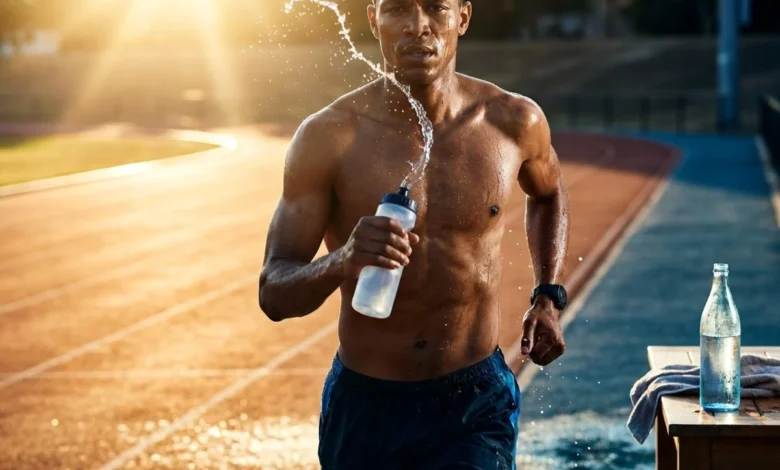
For decades, the sports science community has operated under the conventional wisdom that fluid replacement is a non-negotiable pillar of athletic success. Athletes at all levels—from amateur joggers to elite marathoners—are routinely advised to maintain strict hydration schedules to prevent performance slumps. However, a landmark systematic review and meta-analysis published in the journal Frontiers in Nutrition has challenged this long-standing dogma, suggesting that while hydration is vital for physiological regulation, its direct impact on improving speed and work output remains unproven.
The study, which aggregated data from 24 randomized controlled trials involving 225 adults, analyzed performance outcomes for individuals exercising continuously for at least 60 minutes. The researchers sought to determine if active fluid intake provided a measurable advantage over consuming little or no fluid during exertion. The findings, summarized in a report by Zhané Slambee for mindbodygreen on October 29, 2026, indicate that the link between supplemental hydration during exercise and improved time-trial completion or total work output is far weaker than previously assumed.
A Re-evaluation of Hydration Science
The scientific discourse surrounding hydration has historically been polarized, often driven by industry-sponsored studies and a desire to simplify complex physiological processes into easy-to-follow guidelines. For years, the prevailing recommendation has been to "drink before you are thirsty" to prevent the performance-degrading effects of dehydration. However, this new meta-analysis suggests that the nuance of human physiology has been overlooked in favor of generalized advice.
By pooling 24 disparate trials, the researchers were able to look at a broader spectrum of data than any single study could provide. The trials included in the analysis utilized various methodologies, ranging from comparing forced hydration schedules to "drinking to thirst" protocols, and measuring fluid intake against no-fluid controls. Despite the diversity in the study designs, the overarching conclusion was consistent: for most participants, drinking during exercise did not lead to a statistically significant increase in speed or the amount of work completed within a fixed timeframe.
While some individual trials within the meta-analysis hinted that hydration might allow individuals to exercise for a longer duration before hitting the point of exhaustion, the authors of the review cautioned that the evidence supporting this claim is currently too uncertain to be considered definitive. This creates a significant gap in our understanding of endurance performance, suggesting that the "hydration equals performance" narrative may be an oversimplification.
The Physiological Divide: Performance vs. Regulation
A critical distinction identified by the researchers is the difference between physical performance metrics and internal physiological regulation. While the data failed to show a consistent improvement in speed or power output, it did reveal more predictable results regarding the body’s internal state.
Participants who consumed fluids during exercise consistently demonstrated lower heart rates and lower core temperatures compared to those who drank little or nothing. This is a crucial finding because it highlights that fluid intake does indeed influence the body’s thermal and cardiovascular stability. However, the study serves as a stark reminder that a lower heart rate or a slightly cooler core temperature does not inherently guarantee a faster finish line time.
In the realm of elite athletics, performance is a multifactorial equation. Factors such as pacing strategy, individual aerobic capacity, environmental stressors, and psychological conditioning often play a larger role in determining the outcome of a race than fluid intake alone. The review suggests that for moderate-intensity, shorter-duration exercise, the body is remarkably efficient at managing fluid balance, and drinking to thirst is likely sufficient for the majority of the population.
The Risks of Over-Hydration and the Hyponatremia Threat
The findings of this review carry significant safety implications, particularly regarding the dangers of excessive fluid intake. In the pursuit of maintaining "optimal" hydration, many athletes inadvertently consume more fluid than their bodies can process or sweat out. This behavior can lead to exercise-associated hyponatremia—a condition characterized by a dangerous dilution of sodium levels in the blood.
Hyponatremia is not a trivial side effect; it is a potentially life-threatening medical emergency. Clinical reports have linked excessive water consumption during endurance events to severe complications, including altered mentation, seizures, and pulmonary edema. The review highlights that for prolonged exercise, where sweat loss is significant, the primary concern should not just be water volume, but the maintenance of electrolyte balance. Sodium replacement, often overlooked by those focusing solely on fluid volume, is a critical component for athletes engaging in long-duration activity, especially in hot and humid climates.
Historical Context and the Evolution of Guidance
The history of sports nutrition is a timeline of evolving priorities. In the mid-20th century, fluid restriction was actually the standard for many athletes, as trainers believed water intake caused cramping. By the 1980s and 90s, the pendulum swung aggressively toward aggressive, scheduled hydration. This shift was largely influenced by the growth of the sports beverage industry and a hyper-focus on preventing dehydration at all costs.
Research conducted in the early 2000s established that hypohydration—the state of having a fluid deficit—could indeed reduce heat tolerance. Experiments showed that when fluid loss was not addressed, the time an individual could spend walking in a hot environment dropped from 121 minutes to 55 minutes. This solidified the medical consensus that fluid replacement was essential for safety in extreme environments. However, the current review from 2026 suggests that while preventing extreme hypohydration is essential for safety, there is a "diminishing returns" threshold where additional fluid provides no further performance benefit.
Broader Implications for Training and Recovery
The meta-analysis does not suggest that athletes should stop drinking during exercise, nor does it overturn established medical advice regarding recovery. Dietary guidance remains clear: fluid and electrolyte replenishment is a cornerstone of recovery, particularly for those performing multiple training sessions in a single day or training in high-heat, high-humidity environments.
The study instead serves as a call for personalization. Athletes are encouraged to move away from rigid, "one-size-fits-all" hydration schedules and toward a strategy that considers:
- Duration: Short workouts rarely require the same intervention as ultra-endurance efforts.
- Environmental Conditions: High heat and humidity mandate a more structured approach to both fluid and electrolyte intake.
- Individual Tolerance: The physiological response to fluid intake varies significantly between individuals based on sweat rate and baseline fitness.
- Sweat Composition: Recognizing that some athletes lose significantly more electrolytes than others is key to preventing the physiological dips associated with inadequate replacement.
Analyzing the Meta-Analysis: Methodological Strengths and Limitations
The strength of this review lies in its willingness to pool 24 separate trials, which provides a level of statistical power that individual, smaller-scale studies lack. By looking at the aggregate, the researchers were able to filter out the "noise" of small, potentially biased experiments.
However, the authors acknowledge that the heterogeneity of the trials—meaning the different ways in which each study was conducted—presents a limitation. Because the analysis relied on comparisons across studies rather than a single, massive head-to-head experiment, there is an inherent level of uncertainty. The researchers themselves admit that for several outcomes, the data remains inconclusive, suggesting that the field of sports nutrition is in dire need of more standardized, large-scale, and rigorous investigations.
Conclusion: The Path Forward
The 2026 Frontiers in Nutrition review represents a necessary corrective to the over-marketed and under-proven assumptions surrounding hydration. While the industry has long championed the idea that constant fluid intake is the secret to peak performance, science indicates that the reality is far more nuanced.
For the average recreational athlete, the takeaway is one of empowerment: there is no evidence to suggest that forcing fluids beyond the point of thirst will result in a better workout. For the professional, the takeaway is one of precision: hydration strategies should be viewed as a tool for physiological regulation and safety rather than a magic bullet for speed. By matching fluid intake to the specific demands of the workout and the environment—rather than adhering to a predetermined schedule—athletes can maintain their health and performance without falling prey to the dangers of over-hydration.
As the scientific community continues to peel back the layers of sports performance, this review serves as a benchmark for future research. It reminds us that while we have made massive strides in understanding the human body, some of the most basic tenets of training are still subject to rigorous, evidence-based questioning. The debate between "drink to thirst" and "scheduled hydration" is far from over, but for now, the data suggests that listening to the body’s own signals remains the most reliable strategy for the vast majority of those who exercise.