The Enigmatic Phenomenon of Shoes on Power Lines: A Global Urban Ritual

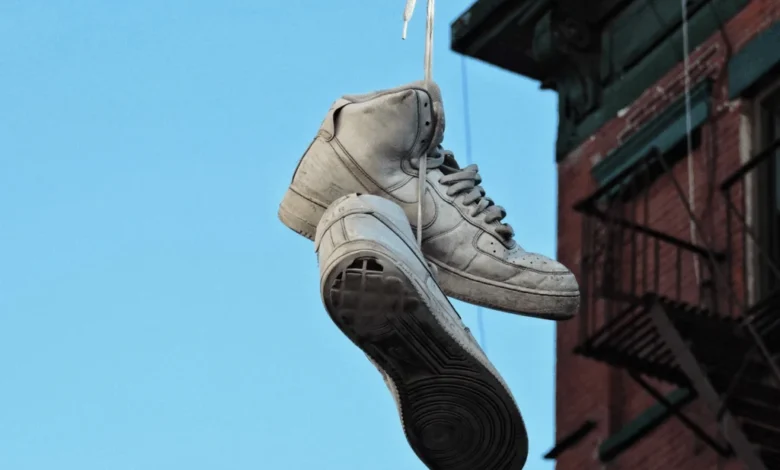
The sight of footwear dangling from overhead utility wires is a ubiquitous, albeit perplexing, fixture of the modern urban landscape. From the boroughs of New York City and the suburbs of Los Angeles to the bustling streets of Melbourne and the historic districts of Rome, this practice—often colloquially dubbed "shoefiti"—has persisted for decades as a silent, mysterious testament to human behavior. While the imagery has been immortalized in cinema, music videos, and street art, the act of throwing shoes onto power lines remains a complex intersection of folklore, adolescent rebellion, military tradition, and urban aesthetics. Despite the lack of a singular, verifiable origin, the phenomenon offers a unique lens through which to examine how communities assign meaning to the mundane and how informal rituals evolve into global cultural markers.
A Chronology of a Cultural Curiosity
While historical records of the practice are largely anecdotal, most sociologists and urban historians trace the widespread emergence of the phenomenon to the latter half of the 20th century. The post-World War II expansion of electrical and telecommunications infrastructure in Western nations provided the necessary hardware for the trend to take hold. By the 1970s, reports of "wire-bound footwear" began appearing in police blotters and local newspapers across the United States.
During the 1980s and 1990s, the practice transitioned from a localized nuisance into a recognizable component of the urban vernacular. This era saw the rise of hip-hop culture and the maturation of independent cinema, both of which began utilizing the imagery of hanging sneakers to establish a sense of "grit" or "neighborhood authenticity." By the turn of the millennium, the practice had achieved global recognition, transcending its North American roots to become a fixture in international urban environments.
The Military Connection: A Ritual of Transition
One of the most widely cited theories regarding the origins of the practice stems from military culture. For decades, military personnel have utilized symbolic gestures to mark significant life transitions, such as the completion of boot camp or the end of a deployment. According to oral histories from veterans, the act of tossing worn-out combat boots over power lines near the perimeter of military bases served as a definitive signal of transition—a "graduation" from the hardships of service into civilian life.
This ritual of closure, once confined to military installations, eventually bled into the civilian sphere. As former service members integrated back into their communities, the act of discarding footwear in high, inaccessible places was adopted as a way to mark personal milestones, including graduations, career changes, or relocations. In this context, the shoes function as a permanent, elevated monument to a chapter of life that has concluded.
Adolescence and the Psychology of Territory
Beyond the formal traditions of the military, psychologists often point to the role of adolescent development in the proliferation of shoefiti. For many, the act represents a rite of passage—a test of motor skill, nerve, and spatial awareness. The challenge of successfully tossing a pair of laced shoes over a wire, ensuring they catch and remain suspended, serves as a form of non-destructive, public competition.
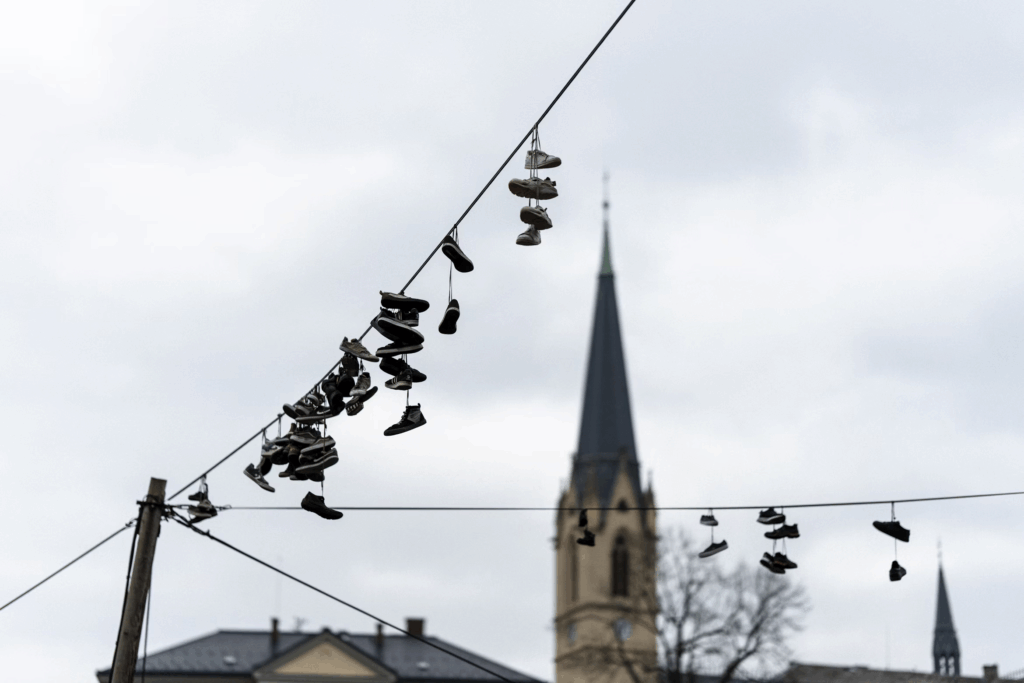
This behavior aligns with established theories of adolescent identity-building. By leaving a mark on the physical environment, young people assert their presence within a community. It is an act of reclaiming public space, transforming a utilitarian object—an old sneaker—into an unsolicited piece of art. This "territorial" aspect has been observed by sociologists as a means of establishing a sense of belonging or "claiming" a neighborhood, a sentiment that has frequently been reinforced by popular media.
Pop Culture and the Global Reach
The transition of the shoe-throwing phenomenon from an obscure act to a global symbol is largely attributable to the influence of pop culture. Beginning in the late 1980s, directors began using hanging shoes as a cinematic shorthand to signal the socio-economic status or atmosphere of a neighborhood. Films such as Boyz n the Hood (1991) and Friday (1995) utilized these visuals to ground their narratives in an authentic urban setting.
This cinematic shorthand was further amplified by the music industry. Hip-hop artists frequently featured power-line-bound sneakers in album art and music videos, shifting the perception of the act from simple mischief to a symbol of neighborhood pride, resilience, and survival. This cultural elevation meant that by the time the internet age arrived, the imagery was already a recognized part of a shared global visual language, leading to its emulation in diverse countries across Europe, Asia, and South America, regardless of whether the original American cultural context was understood.
Technical Implications and Utility Perspectives
While the cultural resonance of the practice is undeniable, it presents a tangible challenge for utility companies and municipal maintenance crews. From the perspective of electrical infrastructure, the presence of footwear on live power lines is a matter of both safety and operational efficiency.
According to utility industry standards, rubber-soled footwear is technically an insulator, meaning that a single pair of shoes rarely poses an immediate electrocution risk. However, the cumulative effect of the practice can lead to mechanical strain. When multiple pairs of shoes are added to a line, or when they become waterlogged during heavy rainfall, the added weight and wind resistance can cause sagging, which may lead to contact with tree limbs or other structures, triggering localized power outages.
Maintenance crews report that while the removal of these items is not a high-priority emergency, it is a consistent operational expense. Specialized equipment, including insulated bucket trucks and non-conductive poles, must be deployed to remove the objects. Because of the cost and labor involved, many utility providers opt to remove the shoes only during routine maintenance or when they pose a demonstrable threat to the grid’s integrity.
Environmental and Urban Planning Concerns
The environmental implications of the phenomenon have also begun to draw attention from urban planners and environmentalists. As synthetic materials and rubber soles break down over time due to UV exposure and oxidation, they potentially release microplastics and chemical additives into the environment. Furthermore, the shoes serve as potential hazards for local wildlife, occasionally being used as nesting material by birds, which can lead to accidental interference with electrical equipment.

Municipalities are increasingly categorizing the practice as a form of urban blight. In response, some cities have implemented "clean and green" initiatives that include the proactive removal of objects from utility lines. These campaigns often frame the issue as a matter of civic responsibility, though they are frequently met with resistance from those who view the shoes as a form of organic street art or historical documentation.
The Evolution of "Shoefiti" as Artistic Expression
The term "shoefiti"—a portmanteau of "shoe" and "graffiti"—has gained traction in artistic and anthropological circles as a way to classify the practice as a form of unsanctioned public art. Unlike traditional graffiti, which involves paint and vandalism, shoefiti utilizes the existing urban landscape to create a suspended installation.
Artists, such as Deepa Mann-Kler, have explored this phenomenon through contemporary installations, such as her Shoefiti project, which featured glowing, LED-equipped sneakers suspended above streets. Such projects invite the public to reconsider the "eyesores" of their cities as potential canvases. By reframing the discarded footwear as art, these creators highlight the human impulse to leave a mark on the built environment, transforming the remnants of daily life into reflections of transition, nostalgia, and community identity.
Conclusion: A Universal Human Impulse
The enduring presence of shoes on power lines serves as a fascinating study of how a simple, spontaneous act can morph into a multifaceted cultural phenomenon. Whether viewed as a rite of passage for youth, a memorial for the deceased, a symbol of military discharge, or a form of urban art, the practice persists because it fulfills a fundamental human need: the desire to leave a visible trace of our existence in the public sphere.
As cities continue to modernize and the nature of public space changes, the "shoefiti" phenomenon remains a resilient feature of the skyline. It stands as a reminder that even in the most sterile, utilitarian environments, human beings will find ways to express their individuality and document their passage through time. While utility companies may continue to manage the physical risks, the cultural meaning of these suspended objects is likely to remain, continuing to prompt observers to pause, look up, and wonder about the stories left behind.