Revitalize Your Workday: A 7-Minute Desk Yoga Routine to Combat Chronic Office Tension and Boost Productivity

The modern knowledge-worker economy has successfully untethered millions of professionals from traditional factories and brick-and-mortar storefronts, shifting the contemporary workspace squarely into the digital sphere. However, this transition to desk-bound, screen-centric labor has ushered in a profound and pervasive physiological toll. Across the globe, millions of employees spend a third or more of their waking hours hunched over workstations, a sedentary posture that biomechanical experts warn is antithetical to human anatomy. Prolonged sitting fosters a cascade of musculoskeletal complaints, notably chronic tension in the neck, shoulders, and upper thoracic spine. While wellness advocates have long urged employees to break the stagnation of long hours, the reality of high-pressure corporate environments often makes extended wellness breaks impractical. Recognizing this critical gap between ideal self-care and corporate reality, seasoned yoga instructor Laia Bové has developed a specialized, highly efficient intervention: a seven-minute desk yoga routine designed to be performed entirely in an office chair without special clothing, equipment, or leaving the workspace.
The Growing Crisis of Sedentary Workplace Strain
In recent years, occupational health researchers have increasingly turned their attention to the cumulative impacts of sedentary office work. According to data from ergonomics and occupational safety organizations, musculoskeletal disorders account for a significant percentage of all workplace injuries and lost productivity costs worldwide. When individuals sit hunched over a computer screen, the cervical spine bears an exponential increase in stress as the head shifts forward from its natural alignment. This sustained forward-head posture places an immense burden on the levator scapulae and trapezius muscles, leading to ischemia—a restriction in blood supply—and the subsequent formation of painful myofascial trigger points.
Furthermore, shallow breathing often accompanies concentrated screen time, starving tissues of optimal oxygenation and exacerbating physical stress responses. While physical activity guidelines recommend regular movement breaks, workers frequently cite a lack of time, overwhelming task lists, and sheer end-of-day exhaustion as primary barriers to exercising before or after office hours. By shifting the paradigm from after-hours exercise to micro-interventions executed during the workday, routines like Bové’s address the root causes of physical stagnation before they crystallize into chronic pain.
Evolution of the 7-Minute Office Yoga Concept
The methodology behind Bové’s routine is built upon more than a decade of instructional experience working with students of diverse fitness backgrounds and physical capabilities. Bové, whose instructional philosophy emphasizes accessibility and practical integration, recognized that traditional yoga classes—often requiring a dedicated studio space, a mat, and a 60-minute time commitment—were largely inaccessible to the average corporate employee trapped in a rigid schedule.
The timeline of workplace wellness has evolved rapidly over the past decade. Initially dominated by rudimentary ergonomic assessments and rudimentary wrist-rest mouse pads, the corporate wellness sector has gradually expanded to encompass mental health apps, standing desks, and corporate-sponsored fitness memberships. Yet, standing desks alone do not solve the problem of upper-body slouching, and many workers report fatigue when standing for prolonged periods. Bové’s sequence fills a specific niche by targeting the upper kinetic chain through deliberate, breath-synchronized movements that can be seamlessly slotted between virtual meetings, intense spreadsheet analysis sessions, or administrative phone calls.
Breaking Down the Routine: Anatomy of a Desk Reset
Designed as a comprehensive reset for the upper body, the seven-minute sequence requires no specialized gear. Practitioners remain seated with both feet firmly planted on the floor, establishing a stable base of support that protects the lower back. The sequence is methodically structured to move the spine and associated musculature through all planes of motion: flexion, extension, lateral bending, and rotation.
Phase One: Mobilizing the Cervical Spine
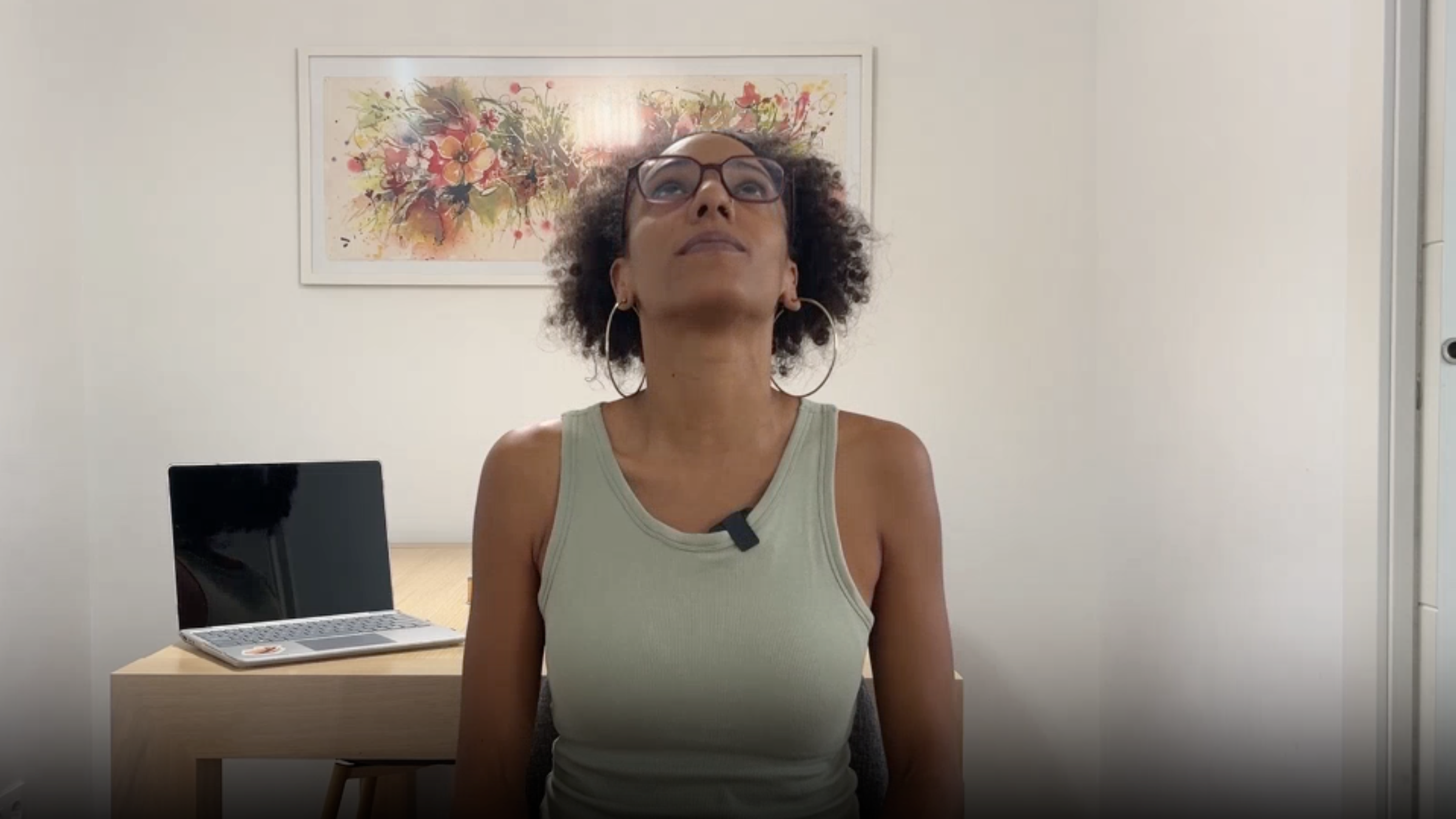
The routine begins with targeted neck stretches designed to release the superficial and deep muscles of the cervical spine. By moving the chin rhythmically toward the chest and ceiling, and subsequently drawing the nose toward opposing shoulders, the practitioner safely articulates the cervical vertebrae. This movement encourages synovial fluid circulation within the joint capsules, lubricating areas that often lock into static positions during intensive reading or writing tasks.
Phase Two: Spinal Articulation via Seated Cat-Cow
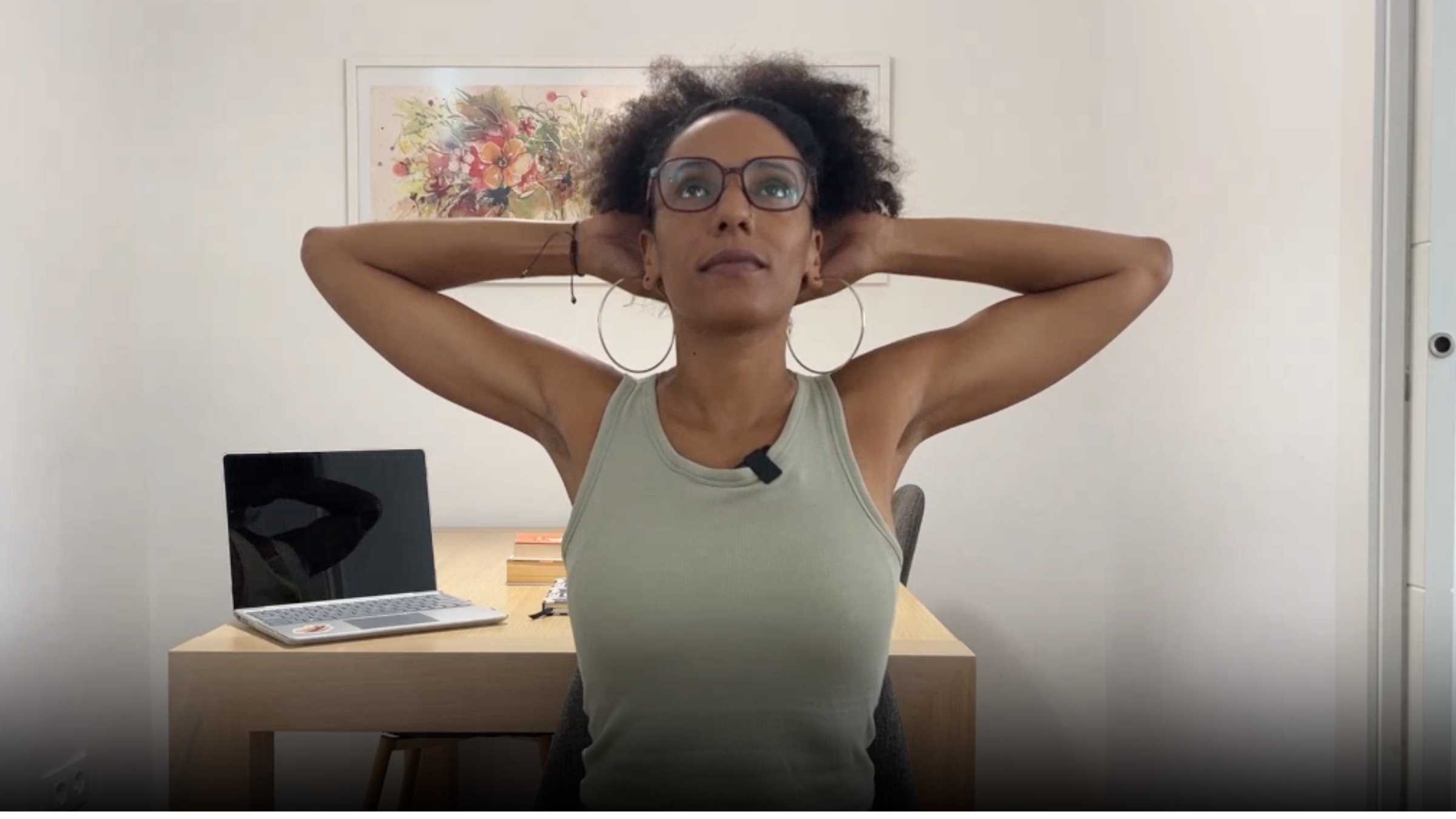
Moving down the kinetic chain, the sequence incorporates a seated variation of the classical Cat-Cow pose. By clasping the hands behind the head with elbows flared wide—a positioning that prevents undue leverage or pressure on the cervical spine—the practitioner alternately arches the upper back (Cow variation) and rounds the spine while drawing the navel toward the spine (Cat variation). This action stimulates the thoracic spine, an area notorious for becoming stiff and immobile in individuals who lean forward toward monitors all day.
Phase Three: Expanding Lateral Mobility
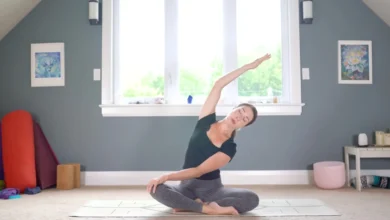
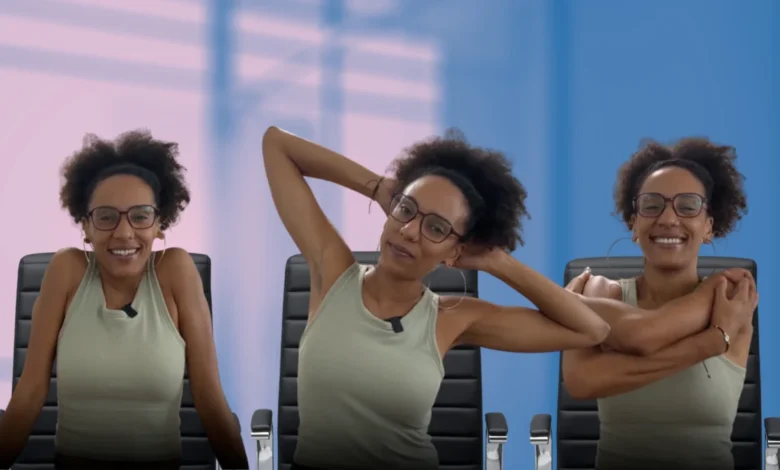
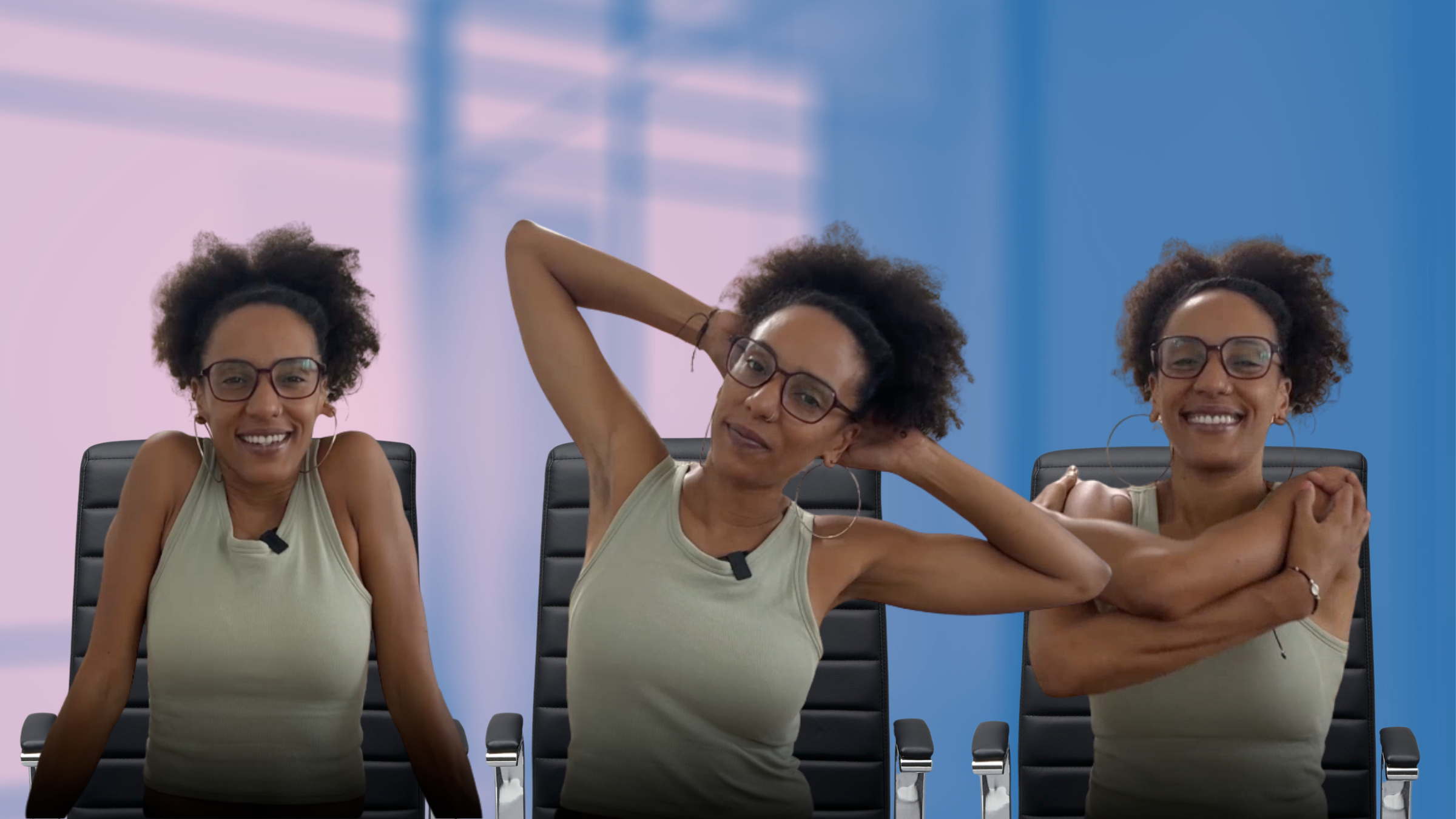
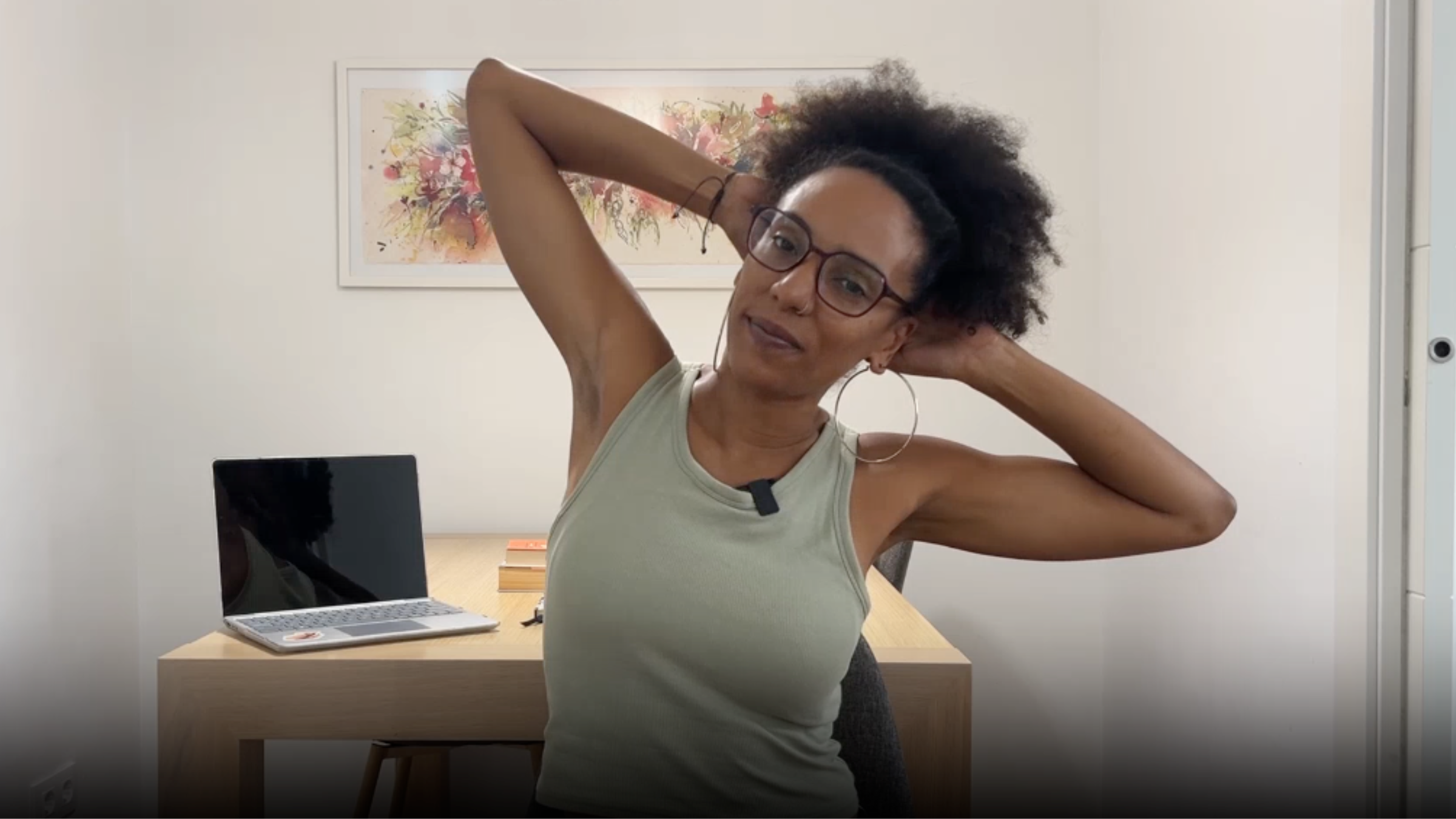
Lateral side stretches follow the spinal articulation phase. Retaining the hand placement behind the head, the practitioner gently leans to the left and right. This movement engages the intercostal muscles between the ribs and stretches the latissimus dorsi and oblique musculature, encouraging deep, expansive breathing by opening the lateral chest wall.
Phase Four: Circular Joint Release with Elbow Circles
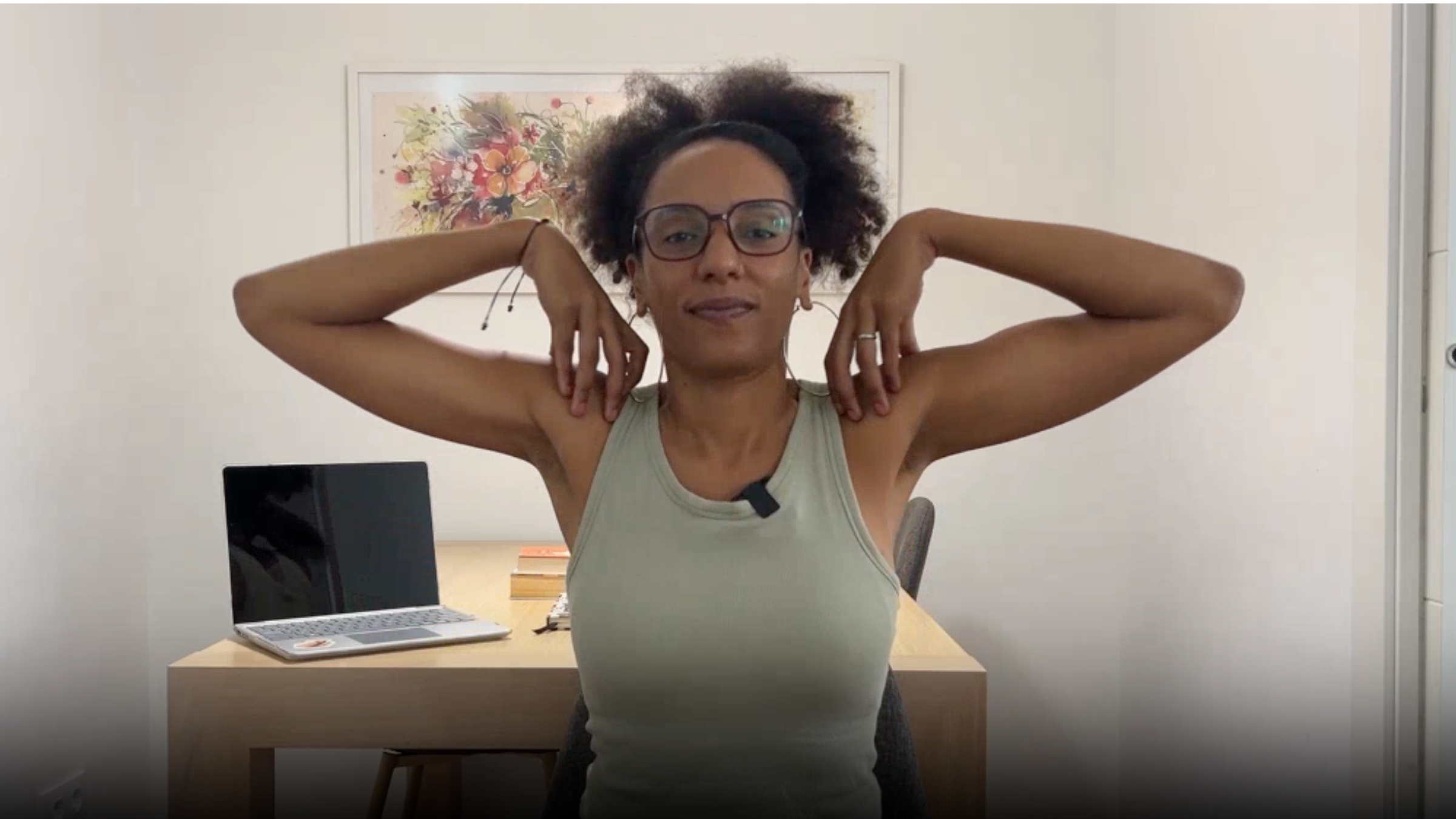
To address the complex joint structures of the shoulders, the sequence utilizes controlled elbow circles. With fingertips resting lightly on the shoulders, the practitioner draws large circles with the elbows, moving them forward, upward, backward, and downward. This multidirectional movement engages the rotator cuff complex and promotes healthy range of motion in the glenohumeral joint, counteracting the internal rotation typical of typing postures.
Phase Five: Refining Relief with Head Tilts
Following the dynamic shoulder work, gentle head tilts—bringing the ear toward the shoulder on each side—provide precise relief to the scalenes and upper trapezius. This isolation helps identify and gently stretch specific focal points of tension that frequently contribute to tension headaches among desk workers.
Phase Six: Reclaiming Openness Through Eagle Arms
The sequence then incorporates a modified Eagle Arms variation. By crossing the arms across the chest in a self-hugging motion, practitioners gently stretch the rhomboids and the posterior deltoids—muscles that are chronically lengthened and strained when shoulders slump forward. Alternating the top arm ensures balanced muscular engagement.
Phase Seven: The Final Release with Shoulder Squeezes and Breath
The routine culminates in a deliberate shoulder squeeze. Practitioners elevate their shoulders tightly toward their ears, engaging the trapezius to maximum contraction before exhaling and letting the shoulders drop heavily back into their natural alignment. This tension-and-release technique leverages neuro-muscular feedback loops to signal deep physical relaxation. A final cycle of deep nasal inhalations and extended exhalations resets the autonomic nervous system, bridging the transition back to focused professional tasks.
Industry Implications and Corporate Wellness Trends
The widespread adoption of micro-wellness interventions like Bové’s desk yoga routine reflects a broader paradigm shift in corporate human resources and occupational health management. Employers are increasingly recognizing that employee well-being is directly correlated with productivity, error reduction, and staff retention. Traditional approaches—such as encouraging annual physicals or offering generic gym discounts—often fail to address the micro-stressors that accumulate hour by hour in a standard workday.
Industry analysts suggest that integrating brief, evidence-based somatic practices into the daily routine offers a high return on investment for organizations. By empowering employees to manage their own physical discomfort proactively, companies can potentially mitigate the long-term healthcare costs associated with chronic musculoskeletal disorders, repetitive strain injuries, and stress-induced absenteeism. Furthermore, providing actionable, low-barrier tools fosters a culture of self-care and psychological safety, signaling that organizations value employee health not merely as a compliance metric, but as an integral component of sustainable business operations.
As remote and hybrid work models continue to mature, the boundaries between office environments and personal living spaces have blurred, often resulting in prolonged sitting times as commuting buffers disappear. In this context, routines that require no extra time, special attire, or physical displacement offer a vital lifeline. By reclaiming just seven minutes of an eight-hour workday for intentional movement, workers can fundamentally alter their physical experience of labor, transforming the desk from a site of chronic strain into a manageable, sustainable environment for professional achievement.