The GLP Coaching Institute Certification: Bridging the Gap in Modern Health and Fitness Professional Education

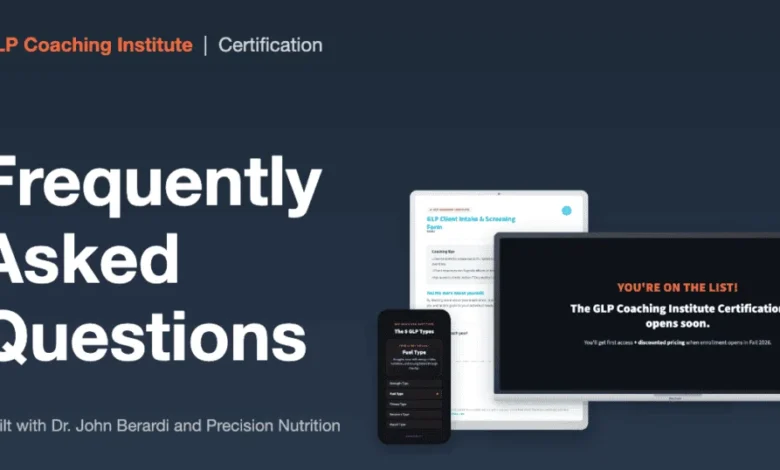
The rapid ascent of glucagon-like peptide-1 (GLP-1) receptor agonists, such as semaglutide and tirzepatide, has fundamentally altered the landscape of weight management and metabolic health. As millions of patients navigate these pharmacological interventions, a critical service gap has emerged: the disconnect between medical prescription and long-term behavioral maintenance. To address this, the GLP Coaching Institute, in collaboration with industry leader Precision Nutrition, has announced a comprehensive professional education program designed to equip health, fitness, and nutrition coaches with the specialized skills required to support this evolving demographic.
The certification, which launches in January 2027, represents a strategic alignment between Dr. John Berardi—a luminary in nutritional biochemistry and exercise physiology—and the vast coaching framework of Precision Nutrition. By formalizing the role of the non-clinical coach in a medicalized weight-loss environment, the program aims to standardize care, promote patient safety, and improve long-term outcomes for individuals using GLP-1 medications.
The Evolution of the Coaching Paradigm
The shift toward pharmacological weight management has been swift. Data from a 2026 industry survey of 2,490 health and fitness professionals indicates a dramatic surge in the prevalence of GLP-1 users in private practice settings. While only 45.8% of surveyed professionals reported working with GLP-1 clients in 2024, that figure climbed to 65.1% by 2026. This trend suggests that the presence of these medications in the lives of the average fitness client is no longer an anomaly, but a standard operational reality.
Despite this, most existing coaching certifications were designed for a pre-GLP-1 world. Traditional methods emphasizing calorie-in-calorie-out modeling or high-intensity training often fail to account for the unique physiological realities of GLP-1 users, who frequently experience rapid satiety, significant appetite suppression, and, in some cases, substantial lean muscle mass loss. The GLP Coaching Institute Certification arrives as a direct response to this mismatch, providing a structured, evidence-based curriculum that addresses the intersection of pharmacology and behavior change.
Curricular Framework: The Five GLP Types
Central to the program’s pedagogical approach is the "Five GLP Types" framework, a proprietary diagnostic and prioritization tool developed by Dr. John Berardi. This framework is designed to help coaches move beyond a "one-size-fits-all" advice model, allowing them to segment client needs based on five specific pillars:
- Strength: Prioritizing the maintenance of skeletal muscle and physical function during periods of rapid weight loss.
- Fuel: Optimizing nutrient density and protein intake to counteract severely diminished appetites.
- Fitness: Modifying training intensity and volume to match the fluctuating energy availability and recovery capacity of the client.
- Recovery: Addressing secondary systemic issues, including sleep architecture disruption, chronic fatigue, and hydration management.
- Results: Managing the psychological and physical plateaus that occur as a client approaches their weight-loss goals or transitions into long-term maintenance.
By categorizing clients into these types, coaches can implement targeted interventions that respect the limitations of the medication while maximizing the client’s health trajectory.
Operational Structure and Professional Standards
The certification is an intensive, 80-hour online program divided into four units and 30 chapters. Eschewing the industry trend toward short-form, superficial training, the program requires a rigorous assessment process. Each of the 30 chapters includes a dedicated exam, culminating in a final, practical case study project that requires candidates to demonstrate their ability to synthesize medical context with coaching strategy.
Upon successful completion, graduates receive the designation of Certified GLP Coaching Specialist (CGCS). The credential requires periodic recertification every two years to ensure that practitioners remain updated on the latest clinical research and evolving best practices regarding GLP-1 therapeutics.

For many professionals, the primary appeal of the program lies in its defined scope of practice. The curriculum emphasizes the boundary between medical oversight—which remains the sole domain of physicians and prescribing clinicians—and lifestyle coaching. Coaches are explicitly taught when to refer a client back to their medical team, ensuring that they operate as a complement to, rather than a replacement for, clinical care.
Broader Implications for the Fitness Industry
The introduction of this certification signals a maturation of the fitness industry. As medical weight loss becomes more integrated into daily life, the "coach" role is evolving into a vital link in the continuum of care. Medical professionals often lack the bandwidth to provide the daily nutritional, exercise, and behavioral guidance necessary to ensure that weight loss does not come at the expense of metabolic health or muscle integrity.
The GLP Coaching Institute’s model provides a pathway for gyms, independent trainers, and nutritionists to become formal partners in a client’s medical journey. This collaboration has the potential to significantly improve the sustainability of results. By ensuring that a client on a GLP-1 medication is consuming sufficient protein, maintaining strength through appropriate resistance training, and managing the psychological aspects of changing eating behaviors, coaches may help mitigate the common issue of weight regain following the cessation of medication.
Industry Reception and Future Outlook
The anticipation surrounding the 2027 launch is reflective of a wider trend: the "medicalization" of fitness. As the lines between healthcare and personal wellness blur, the demand for specialized education that can navigate both worlds is at an all-time high.
Industry analysts suggest that the CGCS credential could soon become a prerequisite for coaches working in weight-loss clinics, medical spas, and high-end fitness facilities. Furthermore, the emphasis on evidence-based practices—such as the commitment to referencing current literature on obesity and pharmacological metabolic regulation—sets a high bar for future certifications.
"We are moving into an era where the coach’s role is more complex than ever," notes an industry observer familiar with the curriculum development. "You cannot simply give a client a meal plan anymore. You have to understand how their chemistry is being manipulated by these drugs, and how to work within that new biological reality to keep them healthy, strong, and active."
Conclusion: A Professionalized Future
The GLP Coaching Institute Certification provides more than just technical knowledge; it provides a framework for professional accountability. By standardizing the way fitness professionals approach clients on GLP-1 medications, the Institute is establishing a new tier of competence in the industry.
For the professional, the certification offers a way to distinguish their services in an increasingly crowded market, while providing the practical skills to handle complex, real-world cases. For the client, it represents a safer, more integrated approach to health, where the expertise of the doctor and the support of the coach work in tandem. As the program prepares to open for enrollment in January 2027, it stands as a testament to the fact that the most successful practitioners of the future will be those who can seamlessly blend cutting-edge medical context with the art and science of human coaching.
With a 45-day money-back guarantee and a commitment to continuous updates in response to the rapidly shifting clinical landscape, the GLP Coaching Institute is positioning itself as a cornerstone of the next decade of health and wellness education. Whether for the seasoned professional or the emerging coach, this program addresses a critical need at a pivotal moment in the history of weight management.