For centuries, human beings relied exclusively on internal sensory feedback to gauge physical exertion, health status, and nutritional needs. We listened to the rhythm of our breathing, the ache of our muscles, and the subtle cues of hunger and satiety to navigate our environments. In the modern era, this internal dialogue has been increasingly supplanted by the quantified self—a paradigm shift where sleek, wrist-worn devices and smartphone applications translate biological processes into cold, hard data. Today, consumers can monitor heart rate variability (HRV), sleep architecture, step counts, and caloric expenditure with unprecedented ease. While this technology offers a vital bridge between subjective feelings and objective reality, it has also introduced a complex paradox: as our access to information increases, our ability to interpret that information effectively remains a significant challenge.
The Evolution of Personal Health Monitoring
The rise of wearable technology is a relatively recent phenomenon in the history of human health. The transition began in earnest with the popularization of simple pedometers in the late 20th century, followed by the breakthrough of GPS-enabled heart rate monitors for endurance athletes in the early 2000s. By the 2010s, the integration of accelerometers, photoplethysmography (PPG) sensors for heart rate detection, and sophisticated sleep-tracking algorithms turned consumer electronics into personal clinical diagnostic tools.
This technological evolution reached a critical juncture around 2015, as major technology conglomerates began embedding health-tracking features into standard consumer hardware. What was once the domain of professional athletes and medical researchers became a commodity available to the general public. However, this democratization of data brought with it a significant discrepancy in accuracy. While medical-grade wearables are calibrated against rigorous clinical standards, many consumer-grade fitness trackers operate on proprietary algorithms that vary wildly in precision.
The Accuracy Gap: What Can We Really Measure?
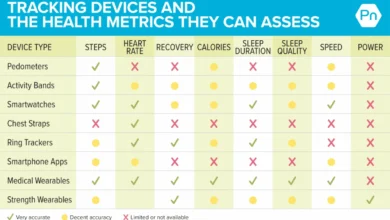
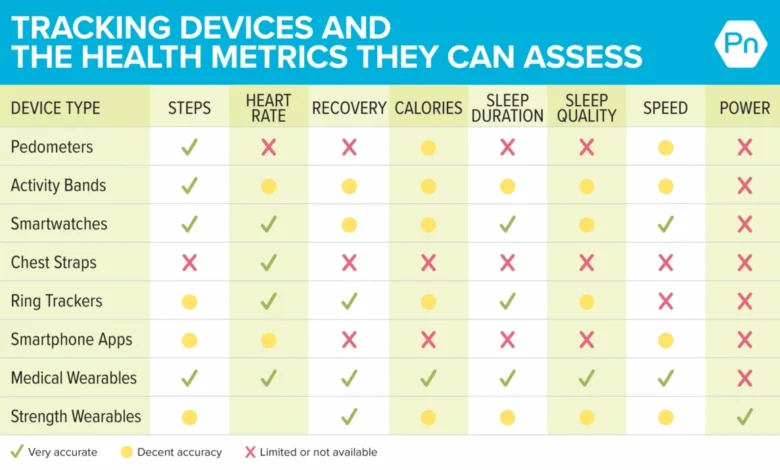
A fundamental challenge in the digital health landscape is the distinction between reliable data and estimates. According to a 2023 meta-analysis on wearable device accuracy, metrics such as step counts and resting heart rate show high correlation with clinical instruments. Conversely, secondary metrics—specifically energy expenditure (calories burned) and sleep quality—often demonstrate substantial margins of error.
For instance, heart rate monitors using PPG technology can be significantly affected by skin tone, the tightness of the wristband, and the intensity of movement, leading to "noise" in the data stream. Furthermore, the calculation of caloric burn remains an estimation based on population-wide averages rather than individual metabolic testing. This discrepancy is crucial for users who rely on these devices to dictate their dietary intake. As seen in anecdotal reports, a user might trust a device’s "active calories" readout to justify an additional meal, only to find that the device overestimated their burn by as much as 20 to 30 percent, leading to unintended weight gain.

The Paradox of Information Overload
The central tension in the current fitness technology climate is the "U-shaped" curve of decision-making. As articulated by computer scientist Samantha Kleinberg, there is an optimal "sweet spot" for information. Too little data leaves an individual guessing, but an overabundance of data—often referred to as "analysis paralysis"—can cloud judgment.
This phenomenon is evident in the behavior of recreational athletes. When presented with granular metrics like vertical oscillation, ground contact time, and real-time power output, many users find themselves preoccupied with optimizing these variables rather than focusing on the consistency of training. When data collection becomes the primary goal, the underlying objective—improving fitness or health—is often undermined. This shift from "training for health" to "training for the device" can lead to a phenomenon known as "data-driven burnout," where the user becomes psychologically dependent on the device to validate their physical effort.
Chronology of Behavioral Shifts
The trajectory of wearable adoption generally follows three distinct phases:
- The Discovery Phase: The user adopts a device and experiences a "novelty effect," characterized by high engagement and increased activity levels as they attempt to hit daily goals.
- The Calibration Phase: The user begins to compare their physical sensations—such as fatigue or muscle soreness—against the data provided by the device. This is the stage where the most effective integration of technology occurs, as the user learns to trust their internal feedback loop while using the device for secondary verification.
- The Dependency Phase: In some cases, the user loses the ability to perform basic health assessments without digital confirmation. This is the stage where "nomophobia"—the fear of being without one’s mobile phone or device—manifests, and the user feels "adrift" when the technology is unavailable or the battery dies.
When Tracking Serves as a Tool for Empowerment
Despite the risks of over-reliance, fitness trackers remain powerful instruments for those who understand how to use them. The most successful users employ trackers as a "calibration tool" rather than a source of truth.
Consider the case of a high-intensity athlete who perceives their recovery to be adequate, but whose heart rate variability data suggests otherwise. In this instance, the technology acts as a check against the athlete’s cognitive bias—the tendency to push through fatigue. By providing an objective look at the autonomic nervous system’s status, the tracker can prevent overtraining. Similarly, for individuals looking to improve sleep hygiene, trackers that identify a correlation between evening alcohol consumption and reduced REM sleep provide the "nudge" necessary to adjust behavioral habits. In these cases, the data is not the master; it is an advisor.
The Re-emergence of Human Intuition
The final frontier in the quantified self movement is the deliberate integration of sensory perception. Rather than allowing data to dictate behavior, sophisticated users are returning to the practice of "interoception"—the ability to perceive the internal state of the body.

This involves a three-step protocol for anyone utilizing wearable technology:
- The Predictive Check: Before reviewing the day’s metrics, the individual should estimate their own performance. "How hard did I work today on a scale of one to ten?" "How recovered do I feel?"
- The Verification Loop: Compare the subjective prediction with the objective data. If the device reports a high intensity score but the user feels energized, the user must ask why the discrepancy exists. Is the device misreading the data, or is the user underestimating their capacity?
- The Sensory Calibration: Use the technology to validate the feeling. If the device confirms the user’s perception, it reinforces the internal sensory feedback loop, effectively "training" the brain to be more accurate in future self-assessments.
Broader Implications for Health Policy
The prevalence of these devices has broader implications for public health. As more data becomes available, the healthcare industry is beginning to grapple with the "worried well"—a demographic of individuals who use wearables to monitor their health so closely that it induces unnecessary anxiety. Clinical studies have suggested that in the absence of symptoms, constant monitoring of heart rhythm or blood oxygen levels can lead to medical over-utilization and false positives.
Looking forward, the integration of artificial intelligence into wearable ecosystems aims to move beyond simple data reporting toward actionable insight. Future devices will likely focus less on the sheer volume of data and more on context-aware summaries that help users make informed decisions without the clutter of extraneous metrics.
Conclusion
Technology is a formidable servant but a poor master. The most significant benefit of the modern fitness tracker is not the data itself, but the opportunity it provides to learn about one’s own body. By treating wearables as a secondary source of information—a "mirror" for our physical state—we can sharpen our internal senses. The goal is to reach a state of equilibrium where the user is informed by the latest in sensor technology but remains ultimately guided by their own intuition, experience, and awareness. In the final analysis, the most sophisticated tool in your fitness arsenal is not the one on your wrist; it is the one you were born with.