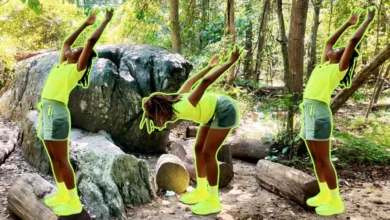
Roots of Balance: The Ancient Mythology, Ascetic History, and Cultural Evolution of Vrksasana (Tree Pose)


The practice of modern yoga is frequently categorized by its physical postures, yet scholars and historians emphasize that nearly every foundational asana carries deep mythological, spiritual, and historical significance. Among these, Vrksasana, commonly known as Tree Pose, stands out not merely as a test of physical equilibrium, but as an ancient emblem of asceticism, fertility, and cosmic alignment. Originally published in the January-February 1989 issue of Yoga Journal and preserved as part of the publication’s historical archives series dating back to 1975, foundational texts trace the evolution of Tree Pose from ancient Indus Valley iconography to a timeless allegory for the spiritual journey.
Main Facts and Archaeological Origins
According to cultural historian and mythologist Joseph Campbell, the symbolism of the tree in Indian tradition extends deep into the pre-Aryan civilization of the Indus Valley, a complex urban culture that flourished around 2000 B.C. Archaeological excavations from this era provide tangible evidence of the tree’s sacred status in early South Asian societies.
Notably, an iconographic seal recovered from the ruins of the ancient city of Harappa depicts a nude female figure—a goddess—standing sheltered within the branches of a sacred pipal tree. She is surrounded by female attendants and supplicants engaged in what anthropologists interpret as a fertility ritual or ritual sacrifice. This early motif established a visual and spiritual vocabulary linking the divine feminine, sacred flora, and ritual devotion.
Over the subsequent millennia, the motif of the tree-goddess persevered across diverse religious traditions in India, appearing prominently in Buddhist, Hindu, and Jain art and architecture. The historical Buddha achieved enlightenment beneath a pipal tree, which subsequently became known as the bodhi tree, or the Tree of Wisdom. Early Buddhists shared with earlier agrarian fertility cults the widespread conviction that trees are divine entities imbued with magical properties and spiritual intelligence. Consequently, at the early Buddhist architectural monuments known as stupas—most notably at Sanchi—ornamental gateways feature prominent stone carvings of female tree guardians, or yakshas, serving as protectors and symbols of abundance.
Chronology of a Sacred Practice: From Indus Valley to Epic Literature
The physical posture associated with Tree Pose—specifically balancing on one leg—is similarly rooted in antiquity. According to religious scholar Georg Feuerstein, the practice of standing on one leg, historically referred to as Eka Pada Sthana, has been documented in India for at least two millennia.
The longevity of this ascetic discipline is confirmed by its inclusion in foundational Sanskrit epics:
- Circa 2000 B.C. – 1500 B.C.: The emergence of tree-goddess iconography and fertility rituals in the Indus Valley civilization, as evidenced by Harappan seals.
- First Millennium B.C.: The codification of ascetic practices, with Eka Pada Sthana becoming a recognized method of severe physical austerity (tapas) aimed at propitiating deities and acquiring spiritual power.
- Epic Period (Mahabharata and Manusmriti): References to standing on one leg appear frequently in classical literature. In the Mahabharata (1.123), the character Pandu stands on one leg throughout the day to honor the god Indra. Similarly, in the ancient legal and philosophical text Manusmriti (III.187), the primordial figure Manu performs the same posture for a thousand years.
- 7th Century A.D.: The creation of the monumental rock-cut relief at Mamallapuram near modern-day Chennai, depicting the legendary ascetic Bhagiratha performing Eka Pada Sthana to draw the Ganges River from heaven to earth.
- Modern Era (20th Century): The documentation of wandering saints like Swami Nityananda, whose forest and tree-based austerities mirrored ancient traditions, bridging classical asceticism with contemporary spiritual discourse.
Supporting Data and Architectural Evidence
The most striking and monumental artistic representation of Eka Pada Sthana is preserved at Mamallapuram (Mahabalipuram) on the southeastern coast of India. Dating from the seventh century A.D. under the Pallava dynasty, this massive outdoor rock relief measures approximately 90 feet long and 43 feet high.
Art historian Heinrich Zimmer described the installation as a prodigious masterpiece carved directly into a vertical cliff face, teeming with figures of gods, celestial beings, serpent princes, humans, and animals. All elements converge toward a natural central cleft in the rock, which symbolizes the descent of the sacred river Ganges from the heavens to the earth.
According to Shaivite mythology, the sage Bhagiratha performed intense austerities, standing on one leg for a millennium to convince the gods to release the celestial river. His unwavering focus ultimately compelled Lord Shiva to intervene, catching the torrential weight of the falling water on his matted locks to prevent cataclysmic damage to the earth. At Mamallapuram, Bhagiratha is immortalized as a stoic ascetic standing on one leg with his arms raised overhead in supplication, capturing the precise moment of divine grace and cosmic celebration.
Cultural Continuity and Living Traditions
The belief in the spiritual potency of trees and ascetics practicing tree-related austerities persists in rural India into the modern era. Accounts from the life of the twentieth-century Indian saint Swami Nityananda illustrate the enduring cultural resonance of these ancient archetypes.
Biographer M.U. Hatengdi documented Nityananda’s ascetic lifestyle, noting that he frequently lived without conventional shelter, residing in natural environments such as forests, caves, and occasionally perching atop trees in a rigid, stationary posture. Crowds from diverse castes and creeds would gather beneath the tree where the master stood. According to historical accounts, Nityananda would periodically shower gathered devotees with leaves that were subsequently revered for their medicinal and spiritual properties.
Such historical anecdotes underscore how ancient ascetic motifs—standing motionless, drawing energy from arboreal environments, and functioning as a conduit between the terrestrial and the divine—remained active components of India’s spiritual landscape well into the modern industrial age.
Broader Impact and Psychological Implications
Beyond its physical utility as a foundational balance posture designed to improve neuromuscular coordination, core stability, and mental focus, Vrksasana serves as a rich psychological and philosophical allegory.
In the context of modern wellness and traditional philosophy, the posture reflects the dual necessity of stability and fluidity. The practitioner roots one foot firmly into the earth, establishing an unyielding foundation comparable to a tree’s root system or the immovable rock of Mamallapuram. Yet, to maintain balance, the practitioner must remain adaptable, responding subtly to micro-movements and environmental shifts rather than resisting them rigidly.
Furthermore, the mythological narrative surrounding Eka Pada Sthana offers a framework for examining ambition, power, and surrender. Just as Bhagiratha’s single-minded dedication summoned a force as immense as the Ganges, modern practitioners harness focused intention (dharana). However, the underlying philosophy cautions against the hubris of personal ego. The immense psychic or physical energy generated through disciplined practice must be channeled constructively and surrendered to a higher purpose—symbolized by Shiva receiving the river—rather than consumed by self-aggrandizement.
Through this lens, the transition into Tree Pose transcends simple physical exercise. It becomes an intentional practice of entering inner stillness, emptying the mind of external distractions, and rediscovering the fundamental equilibrium required to navigate the complexities of daily life.