Bringing Mindfulness to the Asphalt: How Cincinnati’s Mobile Yoga Movement is Redefining Urban Wellness

The modern wellness industry, a multi-billion-dollar global juggernaut largely defined by sterile suburban studios, luxury wellness retreats, and inaccessible pricing models, has long struggled with a fundamental equity problem. For many marginalized urban communities, traditional yoga spaces can feel culturally alienating, economically prohibitive, and physically distant. In Cincinnati, Ohio, however, a grassroots movement is actively dismantling these barriers one street corner at a time. Through an innovative outreach initiative known as "Pull Up n’ Yoga," local instructor Blu Cauthen is redefining where and how mindfulness is practiced, bringing the mat directly to the asphalt.
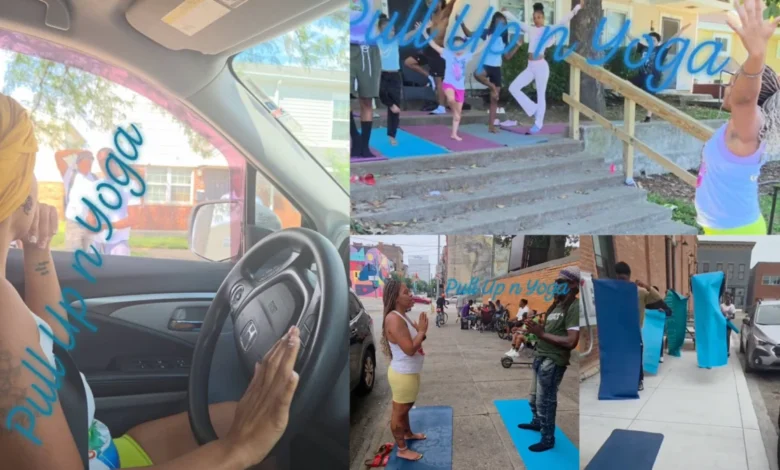
Operating out of the driver’s seat of her SUV, Cauthen navigates Cincinnati neighborhoods searching for groups of people lingering outside corner stores, congregating on front porches, or lounging in front of apartment complexes. Her approach is disarmingly casual yet intentional. Pulling up to the curb, she rolls down her window and extends an immediate, low-stakes invitation: a quick yoga session, a moment of guided breathwork, or simply a brief pause from the relentless pace of urban life. By bypassing traditional studio doors entirely, Cauthen is bridging a vital accessibility gap in community health, proving that mental and physical decompression is a universal human need rather than a commercial luxury.
The Anatomy of an Impromptu Street-Corner Session
The mechanics of "Pull Up n’ Yoga" are as straightforward as they are effective. Operating on a completely free, no-strings-attached basis, Cauthen relies on infectious enthusiasm and persuasive charm to convert skeptics into participants. Her target demographic is remarkably diverse, encompassing teenagers hanging out on sidewalks, elderly residents, families with small children, and young men navigating what Cauthen describes as "their street business."
Sessions typically last anywhere from five to ten minutes, taking place on borrowed mats rolled out directly onto sidewalks, local parks, or front lawns. Recognizing that traditional wellness terminology can alienate newcomers, Cauthen deliberately avoids Sanskrit vocabulary and complex physical alignment cues. Instead, she meets participants precisely where they are. If a group of reluctant teenagers hesitates to join, she lowers the barrier to entry even further, occasionally suggesting they simply take three deep collective breaths or remain seated on the mat without participating physically.
Despite initial hesitation from strangers who "don’t know me from a can of paint," participation rates are surprisingly high. The programming frequently incorporates basic stretches, accessible breathwork, mini-meditations, and even sound baths generated from a small gong kept in her truck. The transformation during these abbreviated sessions is often palpable. Ambient urban noise, the social pressures of the street, and interpersonal tensions temporarily dissolve. Cauthen recounts instances where groups on the verge of verbal or physical conflict prior to her arrival have finished a session walking away cooperatively. Far from claiming ownership of their tranquility, Cauthen maintains a humble perspective on her role, noting, "I don’t bring people peace. I show them how to find peace within themselves."
From Personal Stress to Community Calling: A Chronology
To understand the genesis of "Pull Up n’ Yoga," one must examine the timeline of Cauthen’s personal and professional evolution, which mirrors the systemic inequities she ultimately set out to challenge.
Long before launching her mobile initiative, Cauthen was navigating a high-stress lifestyle while preparing for a career as a firefighter. Juggling paramedic school, employment, and the responsibilities of motherhood, she found herself searching for accessible mechanisms to manage acute chronic stress. Turning to digital resources, she began practicing alongside YouTube yoga instructors and participating in digital wellness challenges on Instagram. Recognizing the profound physical and mental benefits of the practice, she eventually enrolled in formal yoga teacher training (YTT), initially intending the education solely for personal enrichment rather than professional instruction.
A pivotal turning point arrived during her certification graduation ceremony. Inviting her family to attend, Cauthen observed their visible discomfort in an environment where they were the sole Black individuals present. This isolation was not an isolated incident; Cauthen noted a stark lack of racial and socioeconomic diversity across the commercial yoga studios she frequented throughout Cincinnati. The industry standard was overwhelmingly homogeneous, creating an invisible wall that kept marginalized communities from accessing tools designed to improve physical and mental well-being.
Determined to ensure her community—specifically "my black and brown melanated loved ones"—had unhindered access to these resources, Cauthen pivoted her trajectory toward community-centric instruction. In 2019, she took a monumental step by establishing what she identifies as Cincinnati’s first Black-owned yoga studio. Serving as a multifaceted community hub, the space offered traditional yoga programming alongside African dance and specialized children’s events, establishing a physical anchor for neighborhood wellness.
The operational model evolved further in 2023 with the birth of "Pull Up n’ Yoga." Recognizing that even a neighborhood-based brick-and-mortar studio required intentional travel and could still feel intimidating to individuals grappling with socioeconomic hurdles or cultural alienation, Cauthen decided to eliminate the commute entirely. By taking the practice directly to the streets, she bypassed institutional gatekeeping.
Quantifying the Urban Wellness Gap and Public Health Implications
The imperative for mobile, culturally competent wellness initiatives like Cauthen’s is underscored by a substantial body of public health research regarding stress, urban environments, and health disparities. Chronic stress—frequently exacerbated by socioeconomic instability, environmental factors, and systemic inequities—disproportionately affects low-income urban neighborhoods. Prolonged exposure to elevated stress hormones contributes directly to chronic physical conditions, including hypertension, cardiovascular disease, musculoskeletal issues such as chronic back pain, and compromised immune function.
Traditional Western wellness paradigms have historically failed to penetrate these areas equitably. According to data from the Centers for Disease Control and Prevention (CDC) and various public health analyses, minority populations face significant structural barriers to accessing preventative mental and physical health services. High studio membership costs, geographic distribution of wellness centers in affluent zip codes, and cultural disconnect within standard studio environments create a multi-layered barrier to entry.
By bringing low-impact physical movement and mindfulness directly to urban neighborhoods, grassroots programs address multiple facets of public health concurrently:
- Musculoskeletal Relief: Participants frequently report immediate physical relief from chronic physical ailments, such as tight hips and lower back pain stemming from labor-intensive jobs, sedentary lifestyles, or prolonged periods standing.
- Nervous System Regulation: Breathwork and guided meditation activate the parasympathetic nervous system, temporarily reducing acute cortisol levels and mitigating the physiological impacts of chronic stress.
- Conflict De-escalation: Providing structured, neutral focal points in public spaces has demonstrated anecdotal efficacy in diffusing immediate social tensions and fostering community cohesion.
Public health analysts increasingly recognize that community-led, culturally resonant interventions often achieve higher engagement rates in underserved populations than top-down institutional health campaigns. By operating in familiar environments where participants do not feel the need to "code-switch," initiatives like "Pull Up n’ Yoga" foster psychological safety, a critical prerequisite for effective health and wellness engagement.
Safety, Community Dynamics, and the Myth of the Dangerous Neighborhood
In documenting her work across social media platforms, Cauthen frequently encounters questions and expressions of concern from external observers regarding her personal safety while conducting impromptu sessions on urban street corners. The inquiries often reflect broader, media-perpetuated stereotypes regarding crime and danger in historically under-resourced urban cores.
Cauthen consistently rejects these anxieties, offering a stark refutation based on lived experience. "I feel safer in the hood than doing it in the suburbs," she asserts. Emphasizing the deep cultural connection she shares with the neighborhoods she serves, she notes that operating in her home environment eliminates the exhausting social labor of code-switching. "I love being surrounded by my people. I love getting to see us in our environment… We all get to be who we are together."
This perspective highlights a critical disconnect between outsider perceptions of urban neighborhoods and the internal reality of community trust, mutual respect, and shared identity. Rather than intruding as an outsider, Cauthen operates as an accepted community member offering a valued service, insulating her outreach efforts through established rapport and authentic cultural alignment.
Future Horizons: Scaling Access Beyond the Sidewalk
As "Pull Up n’ Yoga" continues to gain traction locally and viral attention online, the initiative’s long-term trajectory points toward structural expansion. While Cauthen currently prioritizes maximizing her physical footprint by visiting as many diverse neighborhoods as possible, the demand for repeat sessions is steadily increasing among her impromptu students.
Her ultimate vision extends far beyond sporadic street-corner sessions. Cauthen’s strategic roadmap includes acquiring and outfitting a dedicated mobile wellness bus. Designed to serve as a fully functional, traveling sanctuary, the specialized vehicle could be deployed directly to community festivals, corporate environments, and designated neighborhoods lacking physical fitness infrastructure.
The core philosophy of the planned mobile unit remains anchored in the foundational ethos that inspired the first curbside session in 2019: creating an unpretentious, accessible haven where individuals can step away from systemic pressures, decompress, and reclaim agency over their personal well-being.
Broader Impact and Societal Takeaways
The success of Cincinnati’s mobile yoga movement offers a compelling blueprint for the future of community health and wellness advocacy. By challenging the commercialization and spatial segregation of the wellness industry, initiatives like "Pull Up n’ Yoga" demonstrate that mindfulness is not a commodity to be acquired behind studio doors, but an essential public health tool that must be made universally accessible.
As public health officials and community leaders grapple with the widening disparities in mental health support and preventative care, Cauthen’s work illustrates the profound efficacy of meeting people where they are—both literally and figuratively. Through a single yoga mat, a portable gong, and an unwavering commitment to her community, she is proving that systemic barriers to peace can be dismantled one breath, and one street corner, at a time.