New Research Reveals Political Conversations More Productive Than Anticipated, Reducing Polarization

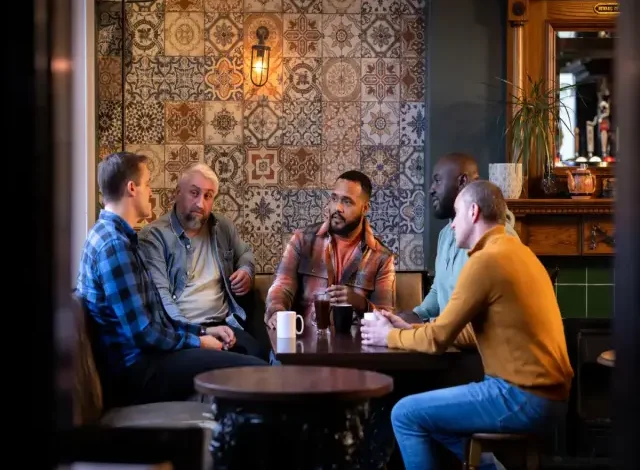
Many individuals instinctively recoil from engaging in political discussions with those holding opposing viewpoints. The prevailing wisdom often dictates that such dialogues are futile, unlikely to sway entrenched beliefs, and potentially detrimental to personal relationships. Yet, groundbreaking new research challenges this widespread assumption, suggesting that our ingrained pessimism regarding these interactions is largely unfounded and that the act of engaging can, in fact, diminish societal polarization.
Challenging Assumptions: The Kardas Study Unpacked
A recent study led by Michael Kardas of the University of Wisconsin, Madison, and his colleagues, offers compelling evidence that people consistently overestimate the negative outcomes of cross-political conversations while simultaneously underestimating the potential for shifts in perspective—both in themselves and their interlocutors. The research, soon to be published, posits that simply entering into a conversation can provide a broader understanding of complex issues, ultimately leading to a reduction in polarization.
The study involved diverse groups of adults from the United States and, in some instances, Britain, who were tasked with discussing contentious issues. These ranged from a non-political subject, such as whether dogs or cats make better pets, to deeply divisive sociopolitical topics like the merits of "cancel culture" or the performance of a specific political figure, such as Joe Biden. Prior to these 10-minute structured conversations, participants meticulously documented the strength of their existing views, the underlying rationale for their beliefs, and their expectations for the impending discussion. Crucially, they predicted how much their own views, or those of their conversation partner, might shift towards a more moderate or convergent stance.
The researchers provided specific prompts designed to guide the conversations, encouraging participants to articulate their reasoning and inquire about their partner’s perspectives. Following the dialogue, participants once again rated the strength of their views. The subsequent analysis by Kardas and his team revealed a consistent and surprising pattern: in every experimental condition, participants’ views, and those of their partners, shifted more significantly than initially predicted. Contrary to the widespread expectation of stagnation or increased entrenchment, the conversations invariably led to a measurable degree of depolarization.
Kardas articulated his astonishment at these findings, stating, "People went into the conversations anticipating that no one was going to change their mind. But it turned out that even on a conversation about a topic related to personal preferences, like cats versus dogs, people became less extreme in their views to a greater extent than they themselves expected." This effect was not merely fleeting. A follow-up survey conducted a week later indicated that the shifts in opinion, though slightly attenuated, remained less polarized than their initial positions. Intriguingly, individuals whose attitudes had undergone the most significant change immediately after the conversation were also the most likely to maintain those altered perspectives over time. This suggests that these dialogues offer "a somewhat durable route to informing people about issues that carries forward into their later attitudes," as Kardas noted.
The Roots of Division: Understanding Modern Polarization
The backdrop against which this research emerges is one of escalating political polarization across many democratic societies, particularly pronounced in the United States. Over the past few decades, partisan divides have deepened, not just on policy issues but also in terms of social identity and emotional distance. This phenomenon, often termed "affective polarization," describes a growing dislike and distrust between supporters of different political parties, extending beyond mere policy disagreements to encompass negative stereotypes and animosity.
Several factors contribute to this entrenched division. The rise of partisan media, both traditional and digital, has created echo chambers where individuals are primarily exposed to information that confirms their existing biases. Social media algorithms exacerbate this, tailoring content to maximize engagement, which often means reinforcing existing viewpoints and limiting exposure to dissenting opinions. Geographic sorting, where people increasingly live among those who share similar political ideologies, further diminishes opportunities for incidental cross-partisan interaction. The fragmentation of news sources and the decline of shared civic spaces have also played a role, eroding common ground and fostering a sense of "us versus them."
The societal costs of this polarization are profound. It leads to political gridlock, making it difficult to address pressing national and global challenges. It erodes trust in institutions, undermines social cohesion, and can even contribute to increased levels of anxiety and stress among citizens. In such an environment, the avoidance of political discussion with those who disagree becomes a self-fulfilling prophecy, perpetuating the very divisions it seeks to circumvent.
A Deeper Look: Why Conversations Bridge Divides
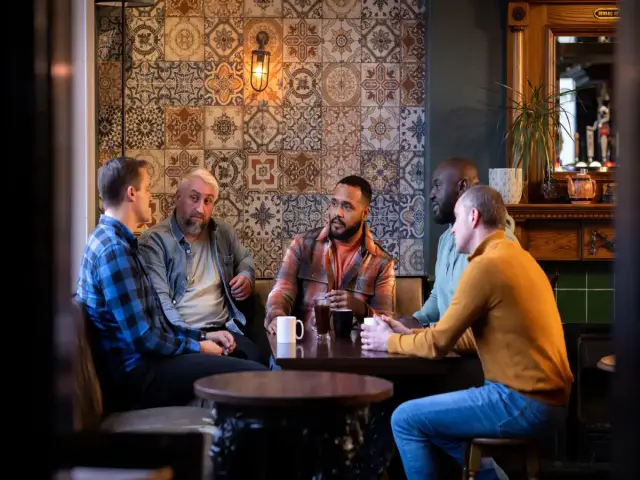
To unravel the mechanisms behind this depolarizing effect, Kardas and his team conducted several sub-experiments and analyses. Their key discovery points to a broadening of perspective that occurs when individuals engage in cross-group conversations. By understanding the informational basis upon which others have formed their opinions, participants gain a more nuanced and comprehensive grasp of the issue at hand.
Kardas illustrated this with the example of "cancel culture." An individual who views cancel culture positively might predominantly recall cases like Harvey Weinstein, where accountability was enforced for egregious misconduct. Conversely, someone who perceives cancel culture negatively might focus on instances such as Colin Kaepernick, where actions deemed provocative, rather than criminal, led to professional repercussions and public condemnation. By sharing these differing foundational examples and the reasoning behind their perspectives, participants recognize that their attitudes, and those of their partners, are often "drawing on different facets of a multifaceted issue."
This realization is crucial. People frequently formulate their attitudes based on a limited "sliver of information" that comes readily to mind. Direct conversation, however, compels individuals to confront the complexity of an issue, moving beyond simplistic narratives or isolated examples. It fosters an understanding that disagreements might stem not from malicious intent or ignorance, but from different lived experiences, priorities, or interpretations of facts. This expanded perspective naturally leads to a softening of one’s own stance, as the rigid boundaries of black-and-white thinking begin to blur. Without such engagement, individuals remain ensnared in their echo chambers, drawing information solely from sources that affirm their existing beliefs, thereby perpetuating shared fears and misperceptions about those on the other side.
The Ripple Effect: Broader Academic Context and Supporting Evidence
The findings from Kardas’s research are not isolated but resonate with and build upon a rich tradition of social psychological inquiry into intergroup relations and conflict resolution. The bedrock of this field is Gordon Allport’s "Intergroup Contact Theory," proposed in 1954, which posited that under certain optimal conditions—such as equal status, common goals, intergroup cooperation, and support from authorities—contact between members of different groups can reduce prejudice and improve intergroup relations. While Allport’s theory primarily focused on ethnic and racial prejudice, its principles have been broadly applied to various forms of intergroup conflict, including political divisions. Kardas’s work provides a modern empirical application of these principles in the context of political discourse, demonstrating how structured, short-term contact can yield positive outcomes.
More recent academic trends have also underscored the importance of addressing "misperceptions of polarization." Studies have repeatedly shown that people tend to overestimate how extreme and hostile those in opposing political parties are. For instance, research indicates that partisans often believe the other side dislikes them far more intensely than is actually the case. Correcting these misperceptions has been shown to reduce affective polarization, making individuals more willing to engage and even attribute more positive qualities to their political opponents. This aligns perfectly with Kardas’s observation that people’s negative predictions about cross-group conversations are often overblown.
Kardas himself referenced a 2019 study which found that individuals overestimated the emotional discomfort they would experience when listening to speeches from opposing politicians. When informed that their fears about engaging with differing viewpoints were exaggerated, participants showed a significant increase (24-34%) in their engagement with diverse information sources. This suggests a direct link between tempering negative expectations and fostering open-mindedness. Similarly, other research has demonstrated that when people are given more accurate information about how members of an opposing political party view their own party (often less negatively than anticipated), it can lead to a more charitable assessment of political adversaries. These collective findings underscore a consistent theme: our anxieties about intergroup engagement are often disproportionate to the actual experience.
Empowering Engagement: The Role of Awareness
A critical question arising from this research is whether simply knowing these findings can alter behavior. Will people, armed with this knowledge, become more willing to step out of their comfort zones and engage in difficult conversations? Kardas and his team directly addressed this through another experiment. One group of participants was provided with explicit information derived from their research: that cross-difference conversations tend to reduce polarization by moderating views on both sides. A control group received no such information. Subsequently, both groups were assessed on their willingness to engage in a conversation about a polarizing issue, specifically regarding Joe Biden’s presidential performance. The results were clear: those who were informed about the depolarizing potential of dialogue were significantly more willing to discuss the contentious issue than those who were not.
This finding carries substantial implications. It suggests that public awareness campaigns or educational initiatives that disseminate this research could play a vital role in encouraging more constructive intergroup dialogue. If people understand that such conversations are not necessarily confrontational dead ends but rather opportunities for mutual understanding and even attitude shifts, they may be more inclined to participate. This is especially pertinent given that many individuals already harbor exaggerated fears about general conversations with strangers, let alone with those holding diametrically opposed political views. The expectation of hostility or anger based on differing opinions often acts as a significant barrier to engagement.
Kardas emphasized that "the same tendency for conversations to reveal unexpected areas of agreement… also [seems to] produce a less hostile and more congenial conversation than people expect." This powerful insight offers a practical pathway to fostering greater civility and understanding in an increasingly fragmented world.
Voices from the Front Lines: Organizational Perspectives

The findings of Kardas’s research offer significant validation and encouragement to a growing ecosystem of organizations dedicated to bridging political divides and fostering constructive dialogue. Groups like Braver Angels, Essential Partners, Living Room Conversations, and The Village Square, among many others, have long operated on the premise that direct, facilitated conversations across ideological lines can reduce animosity, build trust, and identify common ground.
Braver Angels, for instance, explicitly aims to "depolarize America" by bringing together "reds" (conservatives) and "blues" (liberals) for workshops and debates designed to promote understanding rather than agreement. Their methodology often involves structured listening, personal storytelling, and identifying shared values. Essential Partners specializes in teaching communication skills and designing forums for communities grappling with intractable conflicts, emphasizing careful listening and speaking from personal experience. Living Room Conversations provides a simple, accessible model for small-group discussions on challenging topics, offering conversation guides and a framework for respectful exchange.
For these organizations, Kardas’s research provides robust empirical backing for their missions. It confirms their intuitive understanding that while reaching full consensus on every issue may not be the primary goal, the process of dialogue itself is inherently valuable. It can transform individuals’ perceptions of their political adversaries from caricatures into complex human beings, capable of thoughtful reasoning, even if that reasoning stems from different premises. The research reinforces that the "warmth and shared knowledge" Kardas speaks of are not just anecdotal outcomes but measurable effects that can pave the way for future cooperation on social problems. Leaders within these organizations can now point to academic evidence that directly supports the efficacy of their efforts, potentially aiding in fundraising, participant recruitment, and broader public acceptance of their work.
Beyond the Echo Chamber: Implications for Society and Governance
The broader implications of this research extend across various facets of society and governance. At the individual level, it empowers citizens to reconsider their reluctance to engage, encouraging them to initiate or participate in conversations that they might otherwise avoid. This personal agency is crucial for rebuilding social fabric from the ground up.
At the community level, these findings can inform the design of local initiatives aimed at fostering civic participation and addressing local issues. By creating spaces and opportunities for diverse community members to discuss challenges, local leaders can leverage the depolarizing power of dialogue to build consensus and collective action. Imagine town halls or community forums where participants are explicitly reminded of the research, thereby entering with more open minds and lower expectations of conflict.
For the political sphere, the research offers a glimmer of hope in an era marked by legislative paralysis and hyper-partisanship. While direct political negotiations often involve high stakes and entrenched positions, understanding that even brief, structured dialogues can shift perspectives might encourage policymakers to seek more opportunities for genuine cross-party engagement outside of formal legislative battles. It could also influence media organizations to reconsider their role in shaping public discourse, moving away from sensationalized conflict towards more nuanced presentations that highlight different facets of issues and model constructive dialogue.
In educational settings, these findings could inform curriculum development, emphasizing critical thinking, media literacy, and the skills of civil discourse from an early age. Teaching students how to listen actively, articulate their reasoning respectfully, and engage with diverse viewpoints is essential for cultivating future citizens who are equipped to navigate a complex and pluralistic democracy.
However, it is also important to acknowledge potential limitations. The study’s controlled environment and short conversation durations may not fully capture the dynamics of more prolonged or emotionally charged real-world political debates, particularly those involving deeply held moral convictions or issues of identity. The research does not suggest that all disagreements will vanish, nor does it imply that engaging with bad-faith actors or those committed to malicious disinformation will be productive. Yet, for the vast majority of citizens who find themselves caught in the current of polarization, these findings offer a powerful antidote to despair.
Cultivating Connection: A Path Forward
In conclusion, the research by Michael Kardas and his team provides a timely and compelling argument for the transformative potential of civil political discourse. By empirically demonstrating that our fears of unproductive and damaging conversations are often exaggerated, and that genuine shifts in perspective are possible, the study offers a crucial pathway toward a more understanding and less polarized society.
The ultimate goal, as Kardas articulates, is not necessarily to force uniform agreement, but to enable citizens to acquire a "complete understanding of an issue," leading them to "what they themselves believe is the appropriate attitude." This process, he suggests, fosters better-informed citizens capable of engaging constructively with the socially and politically important issues of our time. By embracing the power of dialogue, fueled by curiosity, empathy, and an awareness of its proven benefits, individuals and communities can begin to dismantle the walls of division and cultivate the connections necessary for a healthier, more functional democracy. The conversation, it turns out, is not the problem; it is a vital part of the solution.