Unlocking the Power of Warrior I: How a Foundational Yoga Pose Combats Modern Sedentary Back Pain

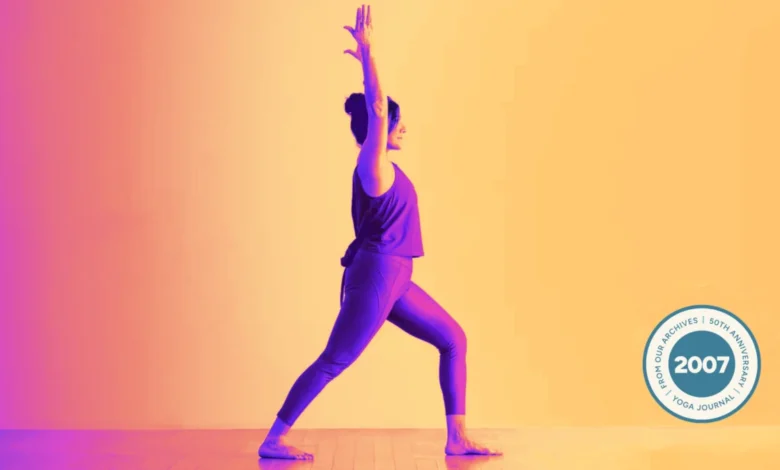
In the contemporary landscape of Western society, chronic lower back pain has emerged as a pervasive public health issue, frequently linked to prolonged periods of sedentary behavior. Millions of individuals spend their days seated at office desks, driving long commutes, or resting in fetal positions during sleep. Over time, these modern lifestyle habits induce structural adaptations in human musculature, specifically the shortening and tightening of the hip flexors. While conventional medical interventions often focus on core strengthening or passive rest, physical therapists and yoga practitioners increasingly point to active movement therapies as a viable corrective strategy. Among these, the traditional yoga asana Virabhadrasana I, commonly known as Warrior I, has gained significant attention in physical therapy and movement science for its anatomical capacity to stretch the hip flexors, realign the pelvis, and alleviate lumbar spinal compression.
Anatomical Foundations and the Mechanism of Hip Flexion
To understand the therapeutic efficacy of Warrior I, health and movement professionals look closely at the primary muscle group responsible for hip flexion: the iliopsoas. This complex consists of the iliacus and the psoas major, two of the body’s strongest and most influential hip flexors. Originating along the lumbar spine and the inner surface of the pelvis, these robust muscles traverse the front of the hip joint to attach to the upper thighbone, or femur.
Because each psoas muscle possesses a considerable diameter—roughly comparable to the thickness of an adult wrist—and operates with exceptional biomechanical leverage, it exerts substantial control over pelvic alignment. When the iliopsoas becomes structurally shortened due to chronic sitting, it pulls the pelvis into an anterior, or forward, tilt. In an anterior tilt, the anterior superior iliac spines (the bony prominences at the front of the pelvis) drop downward toward the thighs, while the tailbone lifts upward. This mechanical shift forces the lumbar spine into hyperextension, commonly referred to as a swayback posture.
Such hyperextension alters the distribution of mechanical forces across the vertebral column. Instead of resting evenly upon the solid vertebral bodies and intervertebral discs, a greater percentage of upper body weight is transferred onto the smaller facet joints at the posterior of the vertebrae. Over time, this abnormal loading pattern generates muscle fatigue, joint inflammation, and persistent lower back discomfort.
The Biomechanics of Warrior I as a Corrective Intervention
Introduced widely into Western yoga curricula over the decades, Virabhadrasana I serves as a dynamic postural tool designed to counteract the forward pull of tight hip flexors. However, anatomical specialists emphasize that the pose must be executed with precise biomechanical alignment to achieve its therapeutic objectives. If performed without intentional pelvic control, a tight iliopsoas will simply reinforce lumbar hyperextension, exacerbating lower back stress rather than relieving it.
To maximize the therapeutic benefits of Warrior I, practitioners are instructed to cultivate a posterior pelvic tilt during the execution of the posture. A posterior tilt involves lifting the frontal hip points away from the thighs, directing the tailbone downward, and flattening the curve of the lower back. Clinical kinesiology studies suggest that integrating this specific pelvic orientation while stepping one leg back stretches the iliopsoas across the anterior hip joint of the trailing leg, gradually restoring the muscle fibers to their optimal physiological length.
Historical Context and Evolution Within Therapeutic Yoga
The integration of ancient physical disciplines like yoga with modern physical therapy has evolved significantly since the mid-1970s. As yoga transitioned from a niche spiritual practice into a widely studied modality of physical culture and rehabilitation, educators began examining traditional postures through the lens of Western anatomy. By the early 2000s, clinical observations published in specialized fitness and health literature—including foundational instructional analyses in publications like Yoga Journal—highlighted the necessity of adapting classical asanas to address contemporary postural deformities induced by sedentary lifestyles.
Physical therapists utilizing these methodologies have noted a direct correlation between improved hip mobility and reduced reliance on pharmacological pain management for chronic back sufferers. By systematically addressing the root cause of anterior pelvic tilt rather than merely treating the symptom of lumbar soreness, practitioners of therapeutic yoga provide a sustainable, self-administered method for musculoskeletal maintenance.
Execution and Alignment Strategies for Clinical Application
Applying this biomechanical understanding to a home practice requires specific preparatory steps. Movement specialists frequently recommend wall-supported drills to help individuals distinguish between anterior and posterior pelvic tilts before attempting them in a dynamic standing posture.
By standing a short distance from a wall with knees slightly bent, a practitioner can practice shifting the pelvis from a swayback position to a posteriorly tilted alignment, bringing the lower back toward contact with the vertical surface. Once this neuromuscular pattern is established, it can be transferred to Warrior I.
In a clinical or home practice setting, this involves setting up Warrior I with the back foot anchored and utilizing tactile feedback—such as a resistance strap placed across the crease of the front hip—to monitor and correct pelvic positioning. Furthermore, minimizing excessive external rotation of the trailing leg by angling the back foot approximately 60 degrees helps square the pelvis toward the front of the mat. This internal adjustment not only deepens the stretch across the iliopsoas but also protects the knee joint from undesirable rotational torque.
Broader Implications for Public Health and Injury Prevention
The implications of incorporating targeted hip flexor stretching into daily routines extend far beyond immediate pain relief. Healthcare analysts note that preventative movement practices play a critical role in reducing the incidence of degenerative spinal conditions, such as lumbar facet arthritis and chronic disc compression, which frequently stem from prolonged postural malalignment.
Moreover, fitness and rehabilitation experts emphasize the importance of maintaining adequate hip flexibility prior to engaging in activities that require spinal extension, such as backbends (e.g., Bridge Pose, Camel Pose, and Upward Bow Pose). Without flexible hip flexors and a neutral pelvis, these advanced movements intensify lower back compression, heightening the risk of acute injury.
By systematically integrating foundational postures like Warrior I into daily regimens, individuals can counteract the physiological toll of a sedentary lifestyle. Through consistent practice emphasizing posterior pelvic alignment and iliopsoas elongation, practitioners establish a resilient musculoskeletal foundation designed to support long-term spinal health and functional mobility.