U.S. Department of Health and Human Services Opens Public Inquiry into Radiofrequency Radiation and Wireless Health Effects

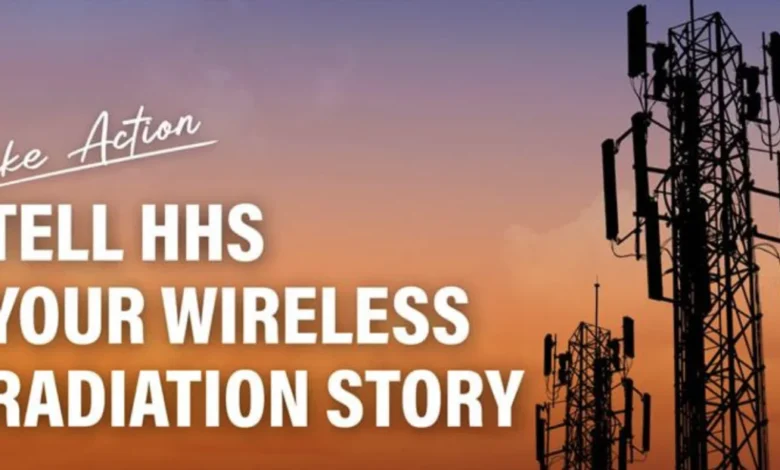
The United States Department of Health and Human Services (HHS), under the leadership of Secretary Robert F. Kennedy Jr., has officially opened a formal public comment period seeking comprehensive input regarding the potential adverse health and environmental effects associated with radiofrequency (RF) radiation and electromagnetic fields (EMFs). This regulatory move marks a notable shift in federal oversight, moving inquiries concerning biological safety and public health away from traditional telecommunications authorities and into the domain of national health agencies. The public comment window is scheduled to close on October 21, 2026, drawing intense focus from clinicians, environmental scientists, public advocacy groups, and technology sector representatives alike.
Background Context and Jurisdictional Shifts
For decades, the regulation of wireless technology, spectrum allocation, and associated human exposure thresholds has been primarily managed by the Federal Communications Commission (FCC). Established under the Communications Act of 1934, the FCC’s core mandate has historically centered on licensing spectrum, fostering telecommunications infrastructure, and ensuring efficient commercial communication networks. However, public health organizations, independent researchers, and affected individuals have long argued that the FCC lacks the institutional expertise, medical background, and biological research infrastructure necessary to adequately evaluate the long-term human health impacts of chronic, low-level RF exposure.
Critics and public health advocates have consistently pointed out that current federal exposure guidelines—set by the FCC in 1996—were designed primarily to protect the human body from acute thermal injury (heating of tissue) rather than non-thermal biological impacts, cellular stress, neurological effects, or long-term carcinogenic risks. By inviting public and scientific submissions through the HHS Office of the Assistant Secretary for Health (OASH), the federal government is signaling a potential paradigm shift. This initiative aims to integrate modern epidemiological data, clinical observations, and toxicological studies into the federal health framework, aligning wireless safety policy with traditional public health standards used for pharmaceuticals, environmental toxins, and consumer product safety.
The Public Consultation Framework and Timeline
The open call for information invites contributions from a diverse spectrum of stakeholders. HHS has explicitly stated that input is welcomed not only from individuals who believe they have experienced physiological symptoms linked to cell towers, smart meters, Wi-Fi networks, and mobile devices, but also from rigorous academic researchers, toxicologists, epidemiologists, pediatricians, and occupational health physicians.
Furthermore, the agency has emphasized that direct personal health affliction is not a prerequisite for participation. Family members, caregivers, community organizers, and legal experts are encouraged to submit testimonies detailing the socioeconomic, environmental, and community-level impacts of proliferating wireless infrastructure.
The chronology of this regulatory action underscores a compressed timeline for public engagement:
- Publication of Request for Information (RFI): Late 2026.
- Active Public Comment Period: Spanning several weeks leading up to the absolute deadline.
- Submission Deadline: October 21, 2026.
- Post-Collection Phase: Review and synthesis of submitted data by HHS health experts and designated scientific advisory panels.
Broader Coalition Mobilization and Grassroots Initiatives
The opening of the HHS inquiry has mobilized a broad coalition of more than 100 environmental, legal, and public health advocacy organizations across the United States. Prominent among these is the "704 No More" initiative—a nationwide grassroots and legal effort designed to challenge federal preemption laws and restore local municipal control over the placement, zoning, and deployment of cellular antennas, small-cell base stations, and transmission towers.
Under current federal law, specifically Section 704 of the Telecommunications Act of 1996, local zoning boards and municipal governments are legally prohibited from denying wireless facility siting applications based strictly on the environmental or health effects of RF radiation, provided that the facility complies with FCC emission guidelines. Advocates and local municipal leaders have argued that this preemption strips communities of their fundamental right to protect local environmental quality and public welfare. The convergence of these legal challenges with the new HHS inquiry has created a unified platform for communities demanding legislative and regulatory modernization.

Scientific Debate and Conflicting Evidence
The debate surrounding radiofrequency radiation is characterized by a deep division between telecommunications industry standards and independent academic findings.
On one side, organizations such as the World Health Organization (WHO), the International Commission on Non-Ionizing Radiation Protection (ICNIRP), and the FCC maintain that the overwhelming body of peer-reviewed scientific evidence demonstrates no adverse health effects below the established thermal exposure thresholds. Industry representatives emphasize that wireless technologies undergo rigorous safety testing and that modern infrastructure is essential for economic growth, digital equity, and national security.
Conversely, a substantial body of independent research—including studies highlighted by health educators and researchers such as Camilla Rees, MBA, and various international consortia—points to potential biological risks associated with chronic, non-thermal exposures. These studies frequently cite concerns regarding:
- Oxidative Stress: The generation of reactive oxygen species (ROS) within human cells, potentially leading to DNA damage and cellular dysfunction.
- Neurological Impacts: Self-reported symptoms often categorized as electromagnetic hypersensitivity (EHS), including chronic fatigue, sleep disturbances, cognitive impairment, headaches, and tinnitus.
- Oncological Concerns: Epidemiological studies suggesting potential correlations between heavy, long-term mobile phone usage and increased risks of specific central nervous system tumors, such as acoustic neuromas and gliomas.
- Vulnerable Populations: Heightened physiological susceptibility among infants, children, and pregnant women due to thinner skulls, developing nervous systems, and higher tissue conductivity.
Implications of the HHS Inquiry
The outcome of this HHS Request for Information could carry profound implications for multiple sectors, including telecommunications, real estate, municipal planning, and federal health policy.
If HHS determines that existing federal guidelines are insufficient or that gaps exist in current research, the agency could recommend sweeping policy adjustments. Potential outcomes include:
- Inter-Agency Collaboration: Formal partnerships between HHS, the National Institutes of Health (NIH), the Centers for Disease Control and Prevention (CDC), and the FCC to draft modernized, health-centric exposure limits.
- Prioritization of Federal Research Funding: Allocation of dedicated grants for long-term, independent, double-blind toxicological studies examining chronic low-level RF exposure, particularly concerning cumulative multi-frequency exposures from 5G networks, IoT (Internet of Things) devices, and wearable technology.
- Legislative Reform: Providing empirical justification for Congress to revisit the Telecommunications Act of 1996, potentially restoring local zoning autonomy to state and municipal governments regarding telecommunications infrastructure siting.
- Clinical Guidelines for Healthcare Providers: Development of formal diagnostic and treatment frameworks for primary care physicians encountering patients presenting with complex, multi-system symptoms correlated with environmental exposures.
How to Participate and Submit Comments
With the October 21, 2026 deadline approaching, individuals and organizations wishing to contribute to the official public record must submit their comments directly through the federal rulemaking portal at Regulations.gov (Docket: HHS-OASH-2026-0397).
Public health advocates recommend that submissions combine personal testimonies or professional observations with empirical references. Suggested comment structures provided by advocacy groups encourage respondents to identify their specific stakeholder perspective—whether as a patient, parent, physician, research scientist, or community advocate—and detail the exact nature of their observations, exposure timelines, and policy recommendations.
As the federal government weighs public testimony against established industrial standards, the HHS inquiry stands as a watershed moment for environmental health policy in the United States, bringing the intersection of modern connectivity and human biology squarely into the national spotlight.