Trump boasts about U.S. oil giants cashing in on the Iran War — all while Americans suffer higher gas prices

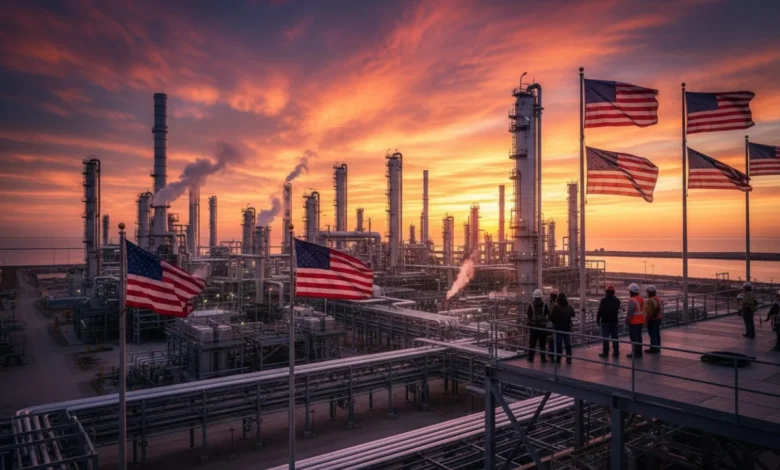
In a candid and controversial admission that has sparked a national debate over economic policy and wartime ethics, President Trump recently addressed supporters in Georgia, openly celebrating the massive financial windfalls currently being enjoyed by the American energy sector. While geopolitical tensions in the Middle East have pushed gasoline prices to punishing levels for the average American household, the president characterized the situation as a net positive for the national interest, citing the surging revenues of U.S.-based oil and gas corporations as evidence of American economic strength. This proclamation has brought the stark disconnect between corporate windfall profits and the rising cost of living into sharp relief, forcing a public examination of who truly bears the burden of international conflict.
The president’s remarks at the Georgia rally serve as a definitive, if blunt, acknowledgement of the "rockets and feathers" pricing model that economists have long observed in the energy sector. As conflict in the Middle East intensifies, particularly around the volatile Strait of Hormuz, global crude oil prices have experienced sustained upward pressure. While this volatility causes immediate and painful increases at gas stations across the United States, it simultaneously creates an environment of extreme profitability for domestic producers who are filling the supply gap left by regional instability.
A Chronology of Escalation and Market Impact
The current energy market crisis is rooted in the escalating military tensions between the United States, its regional allies, and the Islamic Republic of Iran. The timeline of this instability provides the necessary context for the current price spikes:
- Early 2026: Diplomatic channels between Washington and Tehran begin to fray significantly following a series of maritime incidents in the Persian Gulf.
- April 2026: Renewed concerns over the safety of the Strait of Hormuz—the world’s most critical maritime oil chokepoint—begin to drive Brent crude futures toward the $90 per barrel threshold.
- July 2026: Military engagements escalate. The disruption of shipping lanes leads to a rapid tightening of global supply, pushing Brent crude above $100 per barrel.
- October 2026: The president’s public comments in Georgia confirm that the administration is prioritizing the expansion of U.S. oil exports as a strategic response to the conflict, even as domestic inflation concerns mount.
The Strait of Hormuz is not merely a geographic location; it is the jugular vein of the global energy economy. Approximately 20% of the world’s total petroleum consumption passes through this narrow waterway daily. Any credible threat of conflict in this region creates an immediate risk premium that is priced into every barrel of oil sold globally, regardless of whether that oil originates from the Permian Basin in Texas or the fields of the Middle East.
The Anatomy of the Windfall
The financial data released in recent quarterly reports confirms the president’s assessment that the industry is experiencing a historic surge in profitability. ExxonMobil reported a second-quarter profit of $14.7 billion, a 105% increase compared to the same period in 2025. Similarly, Chevron saw its quarterly earnings reach $12 billion, marking a staggering 400% surge. When aggregated, the five largest Western oil producers earned a combined $65.5 billion in the first half of 2026 alone—a 65% increase over the previous year.
This surge has been driven by the dual advantage of high global prices and the increased demand for U.S. energy exports from international buyers seeking to mitigate their reliance on more volatile or sanctioned sources. While these earnings provide a significant boost to the balance sheets of energy giants and the retirement portfolios of millions of Americans invested in these stocks, the immediate retail impact is a severe contraction in disposable income for the American working class.
Official Reactions and Political Ramifications
The president’s dismissal of his staff’s advice—that he should avoid mentioning the record profits to avoid alienating consumers—highlights a significant shift in political messaging. By choosing to frame the energy windfall as a sign of American strength, the administration is betting that the electorate will prioritize national economic dominance over the immediate pain of high fuel costs.
However, political analysts remain divided on whether this strategy will hold up as the November 3 midterm elections approach. Opposition leaders have seized on the comments, arguing that the government is essentially subsidizing a transfer of wealth. They point out that the U.S. taxpayer is ultimately responsible for the naval and military presence required to keep global shipping lanes secure. Critics argue that if the public is funding the security of the oil trade through tax dollars, they are entitled to some form of protection against the resulting price gouging at the pump.
Implications of a Potential Windfall Tax
The debate over a potential windfall profit tax has moved from the fringes of economic theory to the center of legislative discourse. Historically, the United States has experimented with such measures, most notably the Crude Oil Windfall Profit Tax Act of 1980, which remained in effect until 1988.
Proponents of a new tax argue that the current market conditions are not the result of increased innovation or operational efficiency, but are rather a direct byproduct of a war-induced scarcity that has little to do with traditional supply and demand mechanics. They suggest a model similar to those adopted in the United Kingdom and across the European Union in 2022, where excess profits are taxed at a higher rate and the proceeds are redistributed to lower-income households to offset energy costs.
Conversely, industry advocates and conservative economists warn that such policies would be counterproductive. They argue that:
- Capital Reinvestment: Profits are necessary for capital expenditure, which is required to increase domestic production and eventually lower prices through supply saturation.
- Market Distortion: Arbitrary taxes on profits can discourage exploration and drilling, leading to long-term supply shortages that are even more damaging to the economy.
- Pension Impact: Large segments of the American middle class rely on the dividends and stock performance of these energy majors for their retirement security. A tax on corporate earnings is, in effect, a tax on the retirement savings of millions of citizens.
Broader Economic and Global Impact
The president’s rhetoric also has implications for U.S. foreign policy. By openly bragging that the U.S. is "making a fortune" from the conflict, the administration risks damaging its diplomatic credibility. Such statements provide ammunition to international critics who argue that the U.S. presence in the Middle East is driven by commercial interests rather than regional stability or human rights.
Furthermore, the "rockets and feathers" phenomenon ensures that the pain of the conflict will persist long after any potential military de-escalation. Because domestic retailers are quick to raise prices when crude costs rise but slow to lower them when the market cools, the American consumer is essentially locked into a cycle of high costs that may outlast the war itself.
As the administration continues to weigh the possibility of further military actions, the intersection of energy policy and national security remains the most contentious issue for the American voter. The president’s insistence that the country is getting "stronger and stronger" because of these profits serves as a clear indicator that the current administration views energy dominance as the primary instrument of national power. Whether this strategy will lead to long-term stability or merely deepen the divide between corporate success and household hardship remains to be seen.
Ultimately, the situation underscores a fundamental conflict in modern economic policy: when a nation’s strategic interests are inextricably linked to a global commodity market, how does the state ensure that the costs of that strategy are not borne solely by the most vulnerable members of society? As the midterms approach, the "fortune" mentioned by the president will continue to be a focal point for voters who are measuring their personal financial health against the abstract success of the national energy sector. The coming months will likely see increased pressure on Congress to define a framework that balances the need for industrial strength with the necessity of domestic economic relief.
Related posts: