Unlocking Spinal Health: Why the Mid Back is the Missing Link in Strength Training and How Yoga Can Fix It

The contemporary discourse surrounding physical fitness and spinal integrity is overwhelmingly dominated by two focal points: mitigating the chronic impact of lower back strain and correcting the postural deformities associated with modern technology use, colloquially known as "tech neck." However, fitness professionals, physical therapists, and movement specialists point to a significant blind spot in mainstream training regimens: the targeted strengthening and endurance conditioning of the mid back.
As remote work environments expand and sedentary lifestyles become increasingly prevalent, the anatomy of the thoracic spine and its surrounding musculature has emerged as a critical frontier in preventative health. Amber Sayer, a certified personal trainer and specialized yoga instructor who divides her professional focus between desk-bound professionals and competitive athletes, emphasizes that the neglect of the mid back is a systemic flaw in standard exercise programming.
According to anatomical and biomechanical studies, the human back does not function as a series of isolated segments, but rather as an interdependent kinetic chain. When the muscles of the mid back—including the middle and lower trapezius, rhomboids, latissimus dorsi, erector spinae, and serratus posterior—are underutilized or underdeveloped, they fail to pull their weight. This mechanical deficit inevitably forces adjacent muscle groups, particularly the lumbar spine (lower back) and the cervical spine (neck), to overcompensate. Over time, this chronic compensation pattern precipitates fatigue, muscular imbalances, pain, and heightened susceptibility to injury.
The anatomy of the thoracic spine inherently favors mobility over stability, making the surrounding musculature vital for maintaining posture and distributing loads evenly across the skeletal system. When individuals slump over desks, view mobile devices, or engage in repetitive forward-facing tasks, the mid-back muscles lengthen and weaken, a state known as postural inhibition. Rebuilding endurance in this overlooked region does more than simply improve posture; it restores structural equilibrium, minimizes the risk of debilitating lower back strains, and optimizes overall functional movement.
The Evolution of Spinal Health and Ergonomics
To understand the current crisis of mid-back degradation, one must examine the rapid evolution of occupational environments over the past three decades. The shift from physical labor and dynamic office settings to static, screen-based desk work has fundamentally altered daily human biomechanics. Public health data consistently indicate that sedentary adults spend upwards of nine hours a day seated, predominantly in positions that promote thoracic kyphosis—an excessive outward curvature of the spine.
Historically, physical conditioning programs prioritized the aesthetic and functional aspects of the anterior chain (chest and abdominals) or addressed the posterior chain purely through heavy compound movements like deadlifts, which predominantly load the lower back and hamstrings. Insufficient emphasis was placed on isolated endurance and low-load, high-control activation of the thoracic stabilizers.
Medical researchers note that back pain remains one of the leading causes of global disability and lost workplace productivity. Epidemiological studies published in physiological journals highlight that interventions focusing solely on lumbar stabilization often yield limited long-term success if the thoracic spine remains rigid and its supporting musculature dormant. Consequently, fitness methodologies have begun pivoting toward holistic spinal integration, incorporating modalities like specialized yoga to bridge the gap between strength training and mobility.
Physiological Implications and Expert Analysis
From a kinesiological perspective, the integration of yoga into standard strength regimens offers a unique mechanism for addressing mid-back weakness. Unlike traditional weightlifting exercises that rely on external resistance—such as dumbbells or resistance bands—yoga utilizes body weight, gravity, and isometric contractions to challenge the neuromuscular system.
When executed with precision, specific yoga postures recruit the deep stabilizing muscles attached to the thoracic spine without imposing excessive shear stress on the lumbar vertebrae. This controlled engagement enhances proprioception—the body’s ability to sense its position in space—enabling individuals to consciously correct postural misalignments during daily activities.
Physical therapists and ergonomic specialists have increasingly advocated for "movement snacks"—short, targeted bouts of physical activity interspersed throughout the workday. Integrating specific back-strengthening yoga poses for even a few minutes can counteract the deleterious effects of prolonged sitting, stimulate blood flow to ischemic tissues, and reset neuromuscular pathways responsible for postural control.
Targeted Yoga Interventions for Mid-Back Endurance
Rather than requiring an exhaustive, uninterrupted practice session, experts recommend weaving specific postures into daily routines or utilizing them as acute countermeasures against screen fatigue. Below are five foundational yoga poses adapted to target the mid-back musculature effectively, complete with execution guidelines.
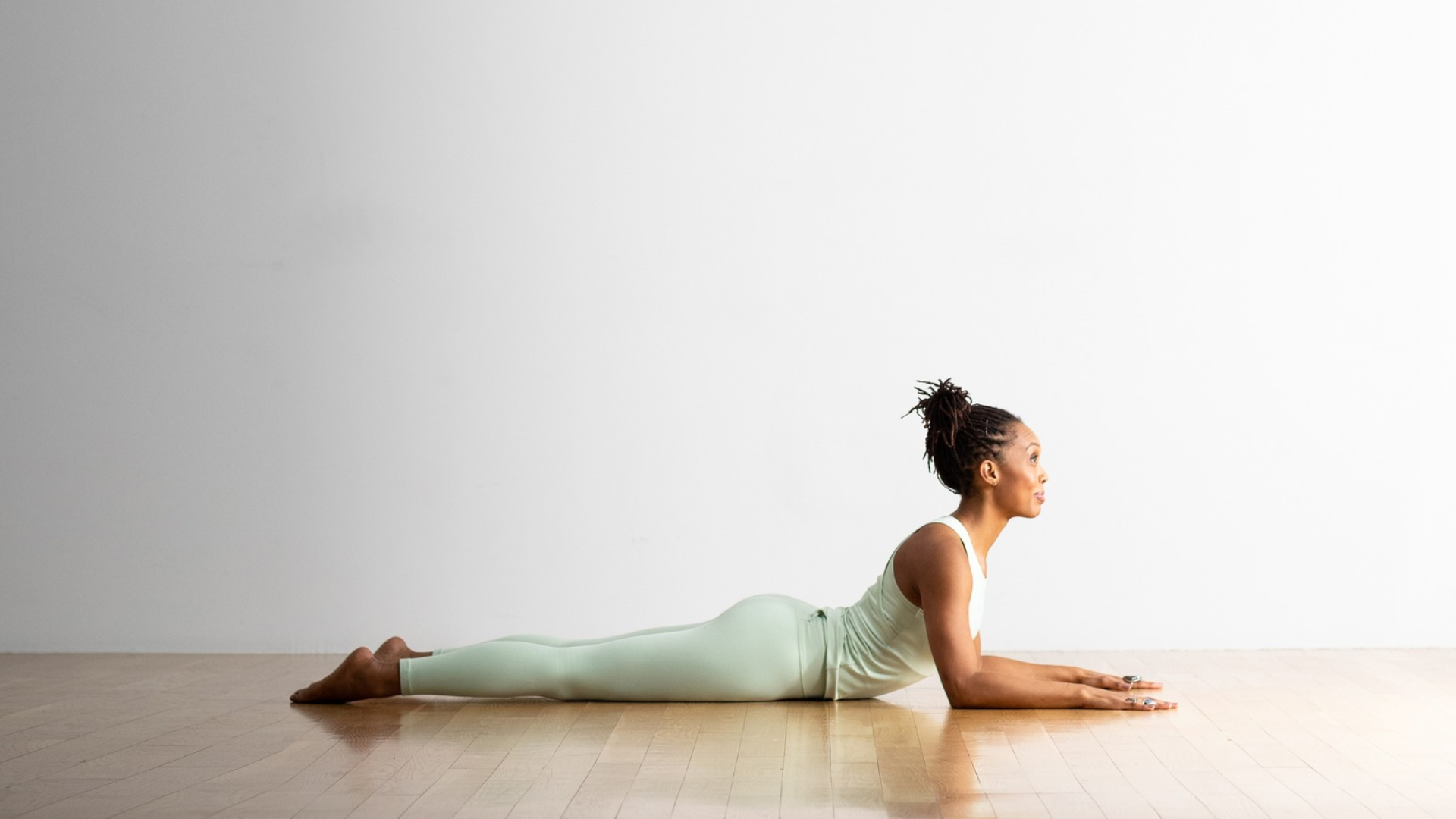
1. Sphinx Pose (Salamba Bhujangasana)
Serving as an accessible entry point for individuals learning to engage their mid back, Sphinx Pose places practitioners on their forearms in a mild backbend. While the posture can be performed passively, intentional micro-movements activate the targeted musculature.
- Execution: Lie prone on the mat with the forehead resting down, legs extended straight behind hip-distance apart, and the tops of the feet flat. Place the forearms on the floor with elbows aligned directly beneath or slightly anterior to the shoulders. Actively press the forearms downward to elevate the chest. Draw the shoulder blades down the back, away from the ears, and toward the spinal midline. To engage the mid back, maintain the physical position of the forearms while mentally or energetically pulling the elbows backward toward the hips. Hold this isometric engagement for several controlled breaths. If the lumbar extension feels excessive, slide the elbows further forward to reduce the height of the chest lift.
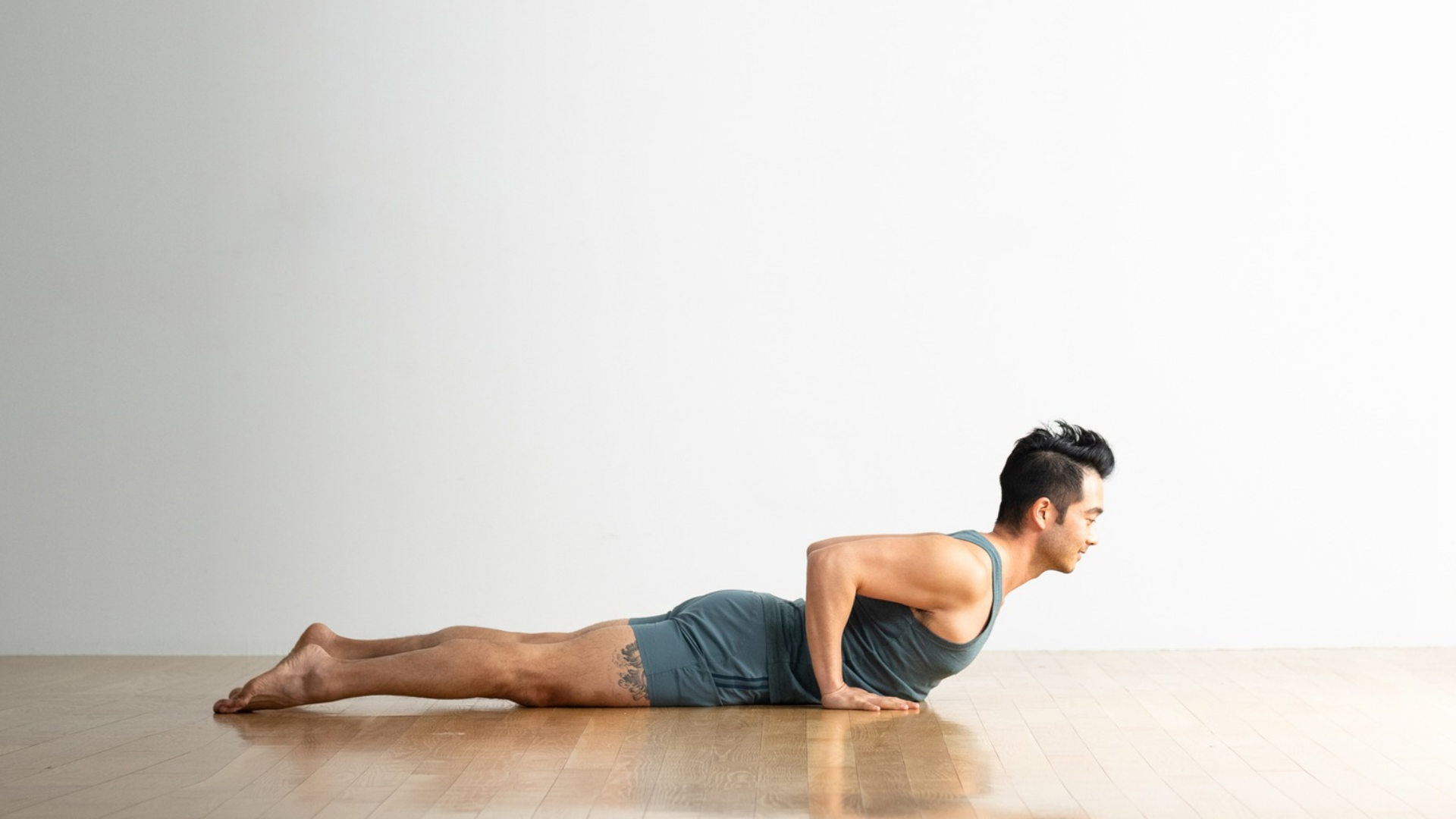
2. Cobra Pose (Bhujangasana)
Cobra Pose elevates the chest through active spinal extension rather than passive propping, demanding direct engagement from the mid-back and core complexes.
- Execution: Begin in a prone position with palms planted flat on the mat directly beneath the shoulders. Press the tops of the feet into the floor and engage the mid-back muscles to lift the chest. To isolate the back muscles and minimize reliance on arm push, hover the palms an inch or two above the mat. Advanced variations include extending the arms laterally into a "T" shape and rotating the thumbs toward the ceiling to maximize recruitment of the trapezius and rhomboids.
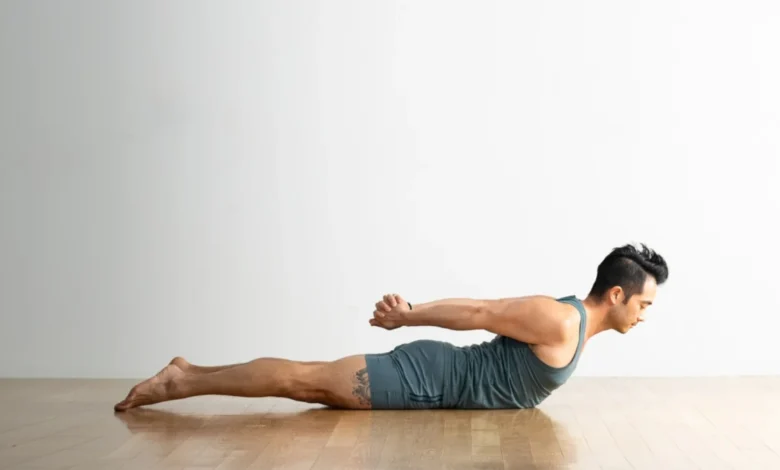
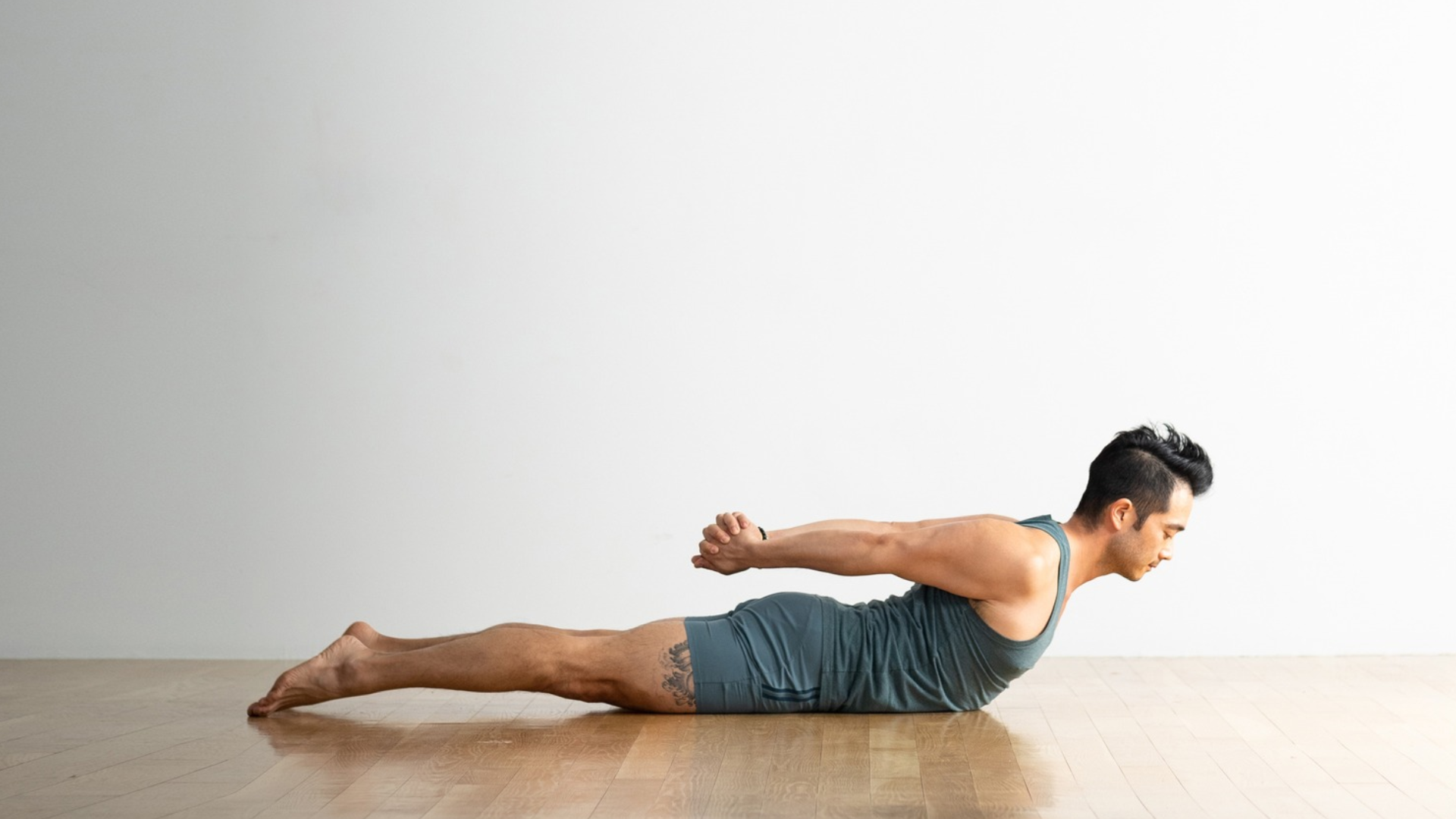
3. Locust Pose (Salabhasana)
Widely regarded as one of the most comprehensive posterior-chain strengthening postures, Locust Pose combats gravity by simultaneously elevating the upper and lower extremities.
- Execution: Lie face down with arms extended alongside the body, palms oriented downward. Press the front of the pelvis into the mat while simultaneously lifting the chest, head, arms, and straight legs away from the floor. Draw the shoulder blades together to engage the thoracic stabilizers. For enhanced thoracic activation, interlace the fingers behind the lower back and reach the knuckles toward the rear wall, expanding the chest cavity.
4. Chair Pose (Utkatasana)
While conventionally classified as a lower-body exercise targeting the quadriceps and glutes, Chair Pose—when executed with specific upper-body variations—places significant demand on the lower trapezius and erector spinae.
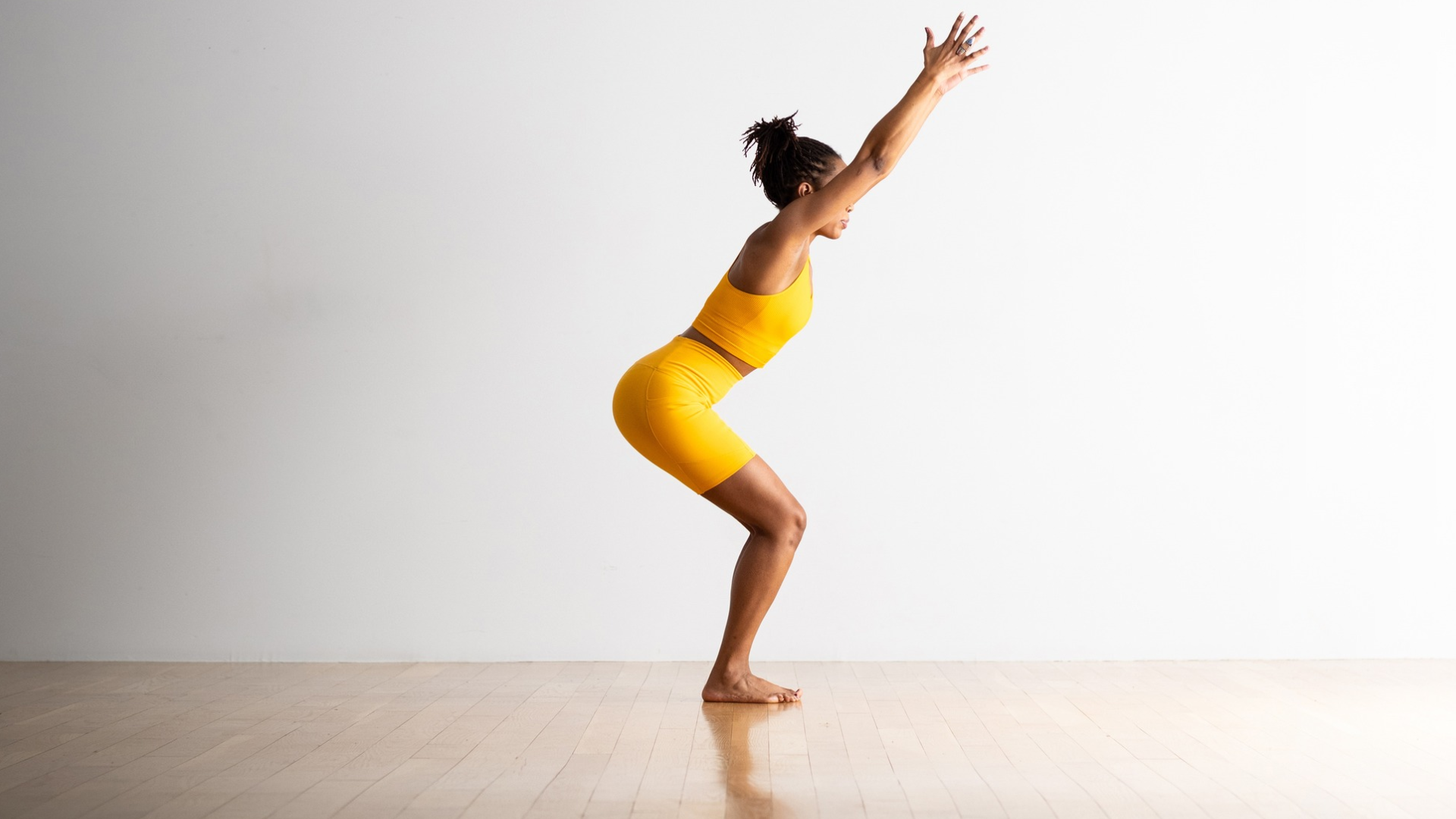
- Execution: From a standing position, bend the knees and drop the hips back as if sitting into an imaginary chair. Hinge the torso slightly forward while reaching the arms overhead, ensuring the shoulders remain drawn away from the ears. To isolate the mid back, practitioners can experiment with arm variations: widening the arms into a "V" shape while squeezing the shoulder blades together, bending the elbows to 90 degrees in a "cactus" configuration (taking care not to hyperextend the lower back), or sweeping the arms alongside the torso with palms facing downward.
5. Warrior 3 (Virabhadrasana III)
Warrior 3 is a dynamic balance posture that challenges nearly every muscle group in the body, utilizing the upper extremities as a lever to tax the thoracic spine.
- Execution: Stand tall, shift body weight onto one foot, and slowly hinge forward at the hip while extending the opposite leg directly backward to form a horizontal line with the torso. Extend both arms straight forward alongside the ears, or position them in "airplane" wings alongside the torso. Actively reach through the fingertips and lift the arms toward the ceiling to demand sustained endurance from the mid-back muscles.
Broader Implications for Occupational Wellness and Long-Term Mobility
The growing emphasis on mid-back conditioning reflects a broader cultural and medical shift toward proactive, functional longevity. As healthcare systems globally grapple with the economic burden of musculoskeletal disorders, preventative ergonomics and targeted physical literacy are moving to the forefront of corporate wellness and personal fitness paradigms.
Integrating mid-back strengthening protocols into daily life offers compounding benefits. Beyond the immediate relief of postural fatigue, enhanced thoracic stability improves respiratory mechanics—as the thoracic cage houses the lungs and allows for optimal expansion—and enhances athletic performance across a multitude of disciplines that require rotational power and upper-body stability.
Ultimately, addressing the neglected mid back requires a departure from reactive pain management toward intentional, daily movement habits. By recognizing the spine as an integrated system where every segment plays a vital role, individuals can safeguard their physical well-being against the sedentary demands of modern life.