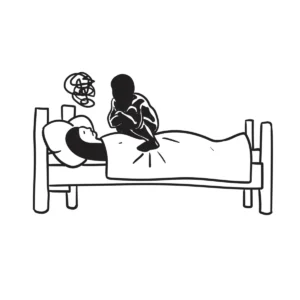
A consistent daily routine may offer profound and far-reaching benefits for both physical and mental health, serving as a powerful, non-pharmacological tool to enhance overall well-being, according to groundbreaking new research conducted at the University of Missouri. The comprehensive study investigated the intricate relationships between behavioral habits, sleep disruptions, and health outcomes among older populations. Researchers discovered that older adults who diligently followed regular, predictable daily schedules reported significantly lower levels of physical pain and fewer symptoms of depression. Crucially, this protective effect held true even for participants who struggled with chronic sleep difficulties such as insomnia, suggesting that the rhythm of our waking hours is just as vital to human health as the restorative hours spent asleep.
The findings, published in the esteemed Journal of Behavioral Medicine under the title Behavioral-social rhythms and insomnia symptoms: associations with pain, body mass index, and depressive symptoms among older adults, underscore a fundamental shift in how medical professionals and researchers view holistic health. Rather than isolating nighttime sleep as the sole determinant of nocturnal recovery and daytime vitality, the study champions a 24-hour perspective. By examining how ordinary, recurring patterns—such as waking, eating, working, socializing, and retiring to bed at similar times—interact with human biology, the research highlights a remarkably accessible pathway toward healthier aging.
Insomnia, Physical Pain, and Depressive Symptoms: A Complex Interplay
Age-related sleep disturbances represent a pervasive public health challenge. According to comprehensive data from the National Council on Aging, approximately half of all adults aged 60 and older experience persistent symptoms of insomnia, ranging from difficulty falling asleep to frequent nocturnal awakenings and early-morning arousal. These chronic sleep deficits rarely exist in a vacuum; they are frequently entangled with heightened sensitivities to physical pain and elevated risks of clinical depression, creating a debilitating feedback loop that severely diminishes an individual’s quality of life.
To dissect how these sleep difficulties correlate with broader health markers, Eunjin Tracy, an assistant professor in the College of Education and Human Development at the University of Missouri and lead author of the study, spearheaded an investigation utilizing detailed survey responses from a cohort of 67 older adults. Within this carefully evaluated group, 37 participants suffered from clinically significant insomnia symptoms.
As hypothesized by the research team, the participants wrestling with insomnia generally reported heightened levels of physical pain and stronger, more persistent symptoms of depression compared to their better-sleeping peers. However, as Tracy and her colleagues analyzed the broader dataset, a striking and hopeful pattern emerged that cut across sleep quality boundaries. Participants who maintained highly regular daily routines tended to experience markedly less pain and depression, regardless of whether they reported getting a good night’s rest.
"Regardless of sleep quality, those who reported having a regular daily routine had lower levels of physical pain and less depression compared to those without a daily routine," Tracy elaborated. "If we are consistent with when we wake up, eat, work or study, interact with others and go to bed, those time cues help synchronize our internal body clocks. Over the long term, that seems to be linked with improved health outcomes."
The Biological Mechanisms: How Daily Routines Anchor the Circadian Rhythm
To fully appreciate the implications of the University of Missouri study, one must understand the intricate mechanics of the human circadian rhythm. The circadian rhythm functions as the body’s internal 24-hour master clock, housed primarily within the suprachiasmatic nucleus of the hypothalamus in the brain. This biological pacemaker orchestrates a vast symphony of physiological processes, including hormone secretion, core body temperature fluctuations, metabolic rates, immune responses, and the sleep-wake cycle.
Regular daily activities act as powerful behavioral synchronizers, or zeitgebers (time-givers), which signal to the master clock what time of day it is. When an individual engages in habitual behaviors at predictable intervals, these behavioral cues reinforce the internal clock, keeping the body’s peripheral clocks—found in organs, muscles, and tissues—aligned with the central pacemaker.
"When we regulate our circadian rhythm well, our bodies function well, but if it gets too distracted, our bodies don’t function as well," Tracy explained.
Conversely, when daily schedules fluctuate wildly—such as sleeping in late on weekends, eating meals at erratic hours, or shifting work and social commitments unpredictably—the circadian system experiences chronic confusion. This internal dissonance can impair cellular repair, elevate systemic inflammation, disrupt metabolic efficiency, and compromise neurological health, manifesting physically as heightened pain perception and mentally as depressive symptoms.
The Hidden Toll of Social Jet Lag
In modern society, erratic schedules have become the norm rather than the exception. One of the most insidious contributors to circadian disruption is a phenomenon known in chronobiology as "social jet lag." Coined to describe the mismatch between an individual’s biological circadian clock and their socially mandated sleep schedule, social jet lag most commonly occurs when people shift their sleep-wake timings significantly between weekdays and weekends.
For instance, an older adult or retiree who maintains an early, structured rising time Monday through Friday to attend community events or care for family members, but sleeps in two to three hours later on Saturday and Sunday, subjects their body to the physiological equivalent of traveling across multiple time zones every single weekend. While social jet lag is frequently discussed in the context of adolescents and shift-working professionals, its impacts on older adults are profound, subtly eroding metabolic and psychological resilience over time.
Tracy emphasizes that adopting a consistent routine across the entire seven-day week can effectively neutralize social jet lag, protecting the circadian system from the cumulative micro-shocks of weekend schedule shifts.
"As someone who wakes up and goes to bed at the same time every day, I think a daily routine can be helpful for people of all ages across their lifespan," Tracy noted. "There is growing awareness about the concept of social jet lag—waking up and going to bed at different times on weekends compared to weekdays—and the disruptions it causes to our circadian rhythm, so hopefully this research helps more people consider the health benefits of a daily routine. Since one-third of our lives will be spent sleeping, I think health and well-being research should be looked at holistically from a 24-hour perspective and not just focus on when we are awake."
Broader Implications for Geriatric Care and Public Health
The publication of this research arrives at a critical juncture for global healthcare systems, which are grappling with rapidly aging populations. As life expectancies rise, the medical community faces an urgent imperative to discover scalable, low-cost, and side-effect-free interventions that can enhance healthspan—the period of life spent in good health—rather than merely extending lifespan.
Traditional medical approaches to managing insomnia, chronic pain, and late-life depression in older adults have heavily relied on pharmaceutical interventions, including analgesics, hypnotics, and antidepressants. While these medications play an essential role in acute care, they frequently carry significant risks of adverse side effects, dependency, cognitive dulling, and dangerous drug interactions in geriatric patients.
In this context, behavioral prescriptions such as routine-building represent an invaluable paradigm shift. Establishing a predictable daily rhythm requires no prescription, incurs no financial cost, and empowers patients to take an active, autonomous role in managing their own health. Public health advocates suggest that integrating routine-focused counseling into primary care visits for older adults could yield substantial improvements in psychological and physical resilience.
Furthermore, the implications of this study extend beyond individual health management into institutional and community settings. Assisted living facilities, nursing homes, and senior day centers could leverage these insights by structuring daily programming—such as meal times, recreational activities, exercise classes, and lights-out schedules—to foster robust, group-wide behavioral rhythms that naturally reinforce residents’ internal clocks.
Future Directions in Chronobiological Research
While the findings from the University of Missouri study provide compelling evidence of the protective power of routines, researchers emphasize that this is merely a stepping stone toward a more comprehensive understanding of human chronobiology. The study’s sample size of 67 participants, while carefully controlled and deeply evaluated, points to the necessity for larger, longitudinal, and more diverse clinical trials.
Future research avenues are expected to explore several critical questions:
- How do specific components of a daily routine—such as the exact timing of morning light exposure versus meal scheduling—individually impact pain pathways and mood regulation?
- Can wearable technology, such as actigraphy monitors and smartwatches, be effectively utilized to track adherence to daily behavioral rhythms and provide real-time feedback to patients?
- To what extent can structured behavioral routines mitigate the progression of neurodegenerative conditions where circadian disruption is an early and prominent feature?
As investigators continue to untangle the complex threads connecting behavior, biology, and health, the core message of Tracy’s work remains clear and actionable. In a world increasingly dominated by flexible schedules, round-the-clock digital connectivity, and modern lifestyle disruptions, returning to the ancient wisdom of predictable daily rhythms may hold the key to unlocking a healthier, less painful, and more emotionally balanced life.