Why The Internet’s Favorite Yoga Pose Failed Millions—And How a Simple Household Hack Finally Fixed It

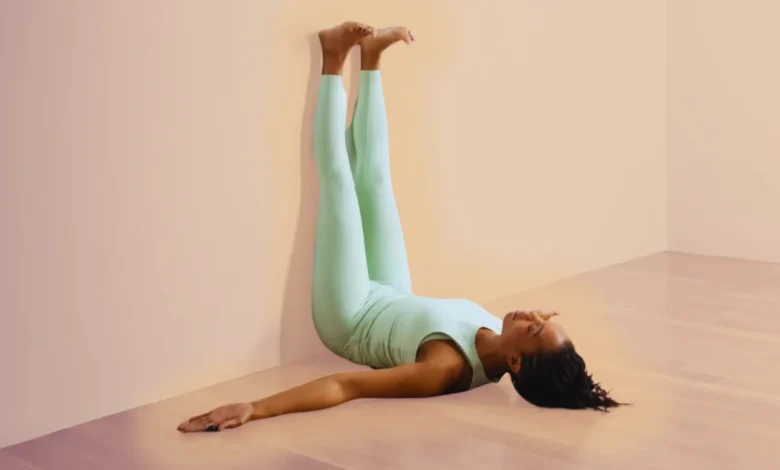
The pursuit of daily relaxation has long driven wellness enthusiasts toward accessible, low-impact restorative practices. Among the most widely recommended postures in modern yoga is Viparita Karani, commonly known as Legs Up the Wall pose. Promoted extensively across digital wellness platforms, physical therapy clinics, and yoga studios, the posture is frequently prescribed as a cure-all for physical fatigue, venous circulation issues, and psychological stress. Yet, a significant contingent of practitioners has historically reported frustration rather than rejuvenation when attempting the movement. Recent discussions within wellness editorial circles have highlighted a structural flaw in how the posture is commonly taught, shedding light on anatomical variations that prevent many individuals from reaping its physiological benefits without modification.
Main Facts and the Anatomy of the Problem
Viparita Karani is categorized as a restorative inversion. Practitioners lie on their backs on the floor with their buttocks positioned as close to a vertical wall as possible, extending their legs straight up vertically against the surface. Proponents of the practice highlight several physiological advantages associated with the position. By elevating the lower extremities above the level of the heart, gravity assists in venous return, facilitating the flow of blood and lymphatic fluid back toward the core. This mechanism can reduce lower leg edema, alleviate pressure on the lower back, and stimulate the parasympathetic nervous system, shifting the body out of a "fight-or-flight" stress response.
Despite these established benefits, a subset of practitioners encounters persistent mechanical difficulties. Rather than remaining static, the human legs naturally tend to abduct—falling outward due to gravity and the external rotation of the hip joints. For individuals with specific pelvic structures, tight hip adductors, or generalized flexibility constraints, keeping the legs parallel and vertical requires continuous muscular engagement. Instead of resting, the practitioner must actively work to keep the limbs from sliding into a wide V-shape. This hidden exertion transforms a restorative posture into an isometric exercise, spiking muscular tension and entirely counteracting the intended neurological relaxation.
Chronology of a Wellness Grievance
The tension surrounding static yoga postures often goes unspoken as practitioners internalize their perceived inability to perform basic movements. For over a decade, wellness editor and long-time yoga practitioner Laura Harold attempted to integrate Legs Up the Wall into her evening recovery routine. Despite experimenting with various props—such as sliding hips closer to or farther from the vertical surface, and placing folded blankets beneath the lumbar spine—the fundamental mechanical issue persisted. The legs invariably drifted outward, rendering true rest elusive.
The turning point occurred during an internal editorial meeting at Yoga Journal. While venting frustrations regarding the universally praised posture to colleagues, Harold received targeted feedback from Editor-in-Chief Renee Marie Schettler. Noting that human anatomy varies significantly across populations, Schettler pointed out that sliding limbs are a widespread, predictable biomechanical reaction rather than an individual failure of technique. Schettler proposed a rudimentary modification: securing the lower legs together using a piece of clothing, specifically a standard sweatshirt, to eliminate the need for active muscular stabilization.
Upon implementing this adjustment during a subsequent evening session, the mechanical failure ceased. By tying a soft garment loosely around the calves and adjusting the distance of the hips from the vertical surface, gravity was finally permitted to act on the lower extremities without interference. The physical constraint removed the cognitive and muscular burden of stabilization, allowing the autonomic nervous system to transition into deep rest.
Supporting Data and Physiological Context
The intersection of biomechanics and restorative yoga reveals why props are frequently necessary to achieve true somatic relaxation. According to orthopedic and kinesiological studies, passive stretching and restorative yoga rely heavily on the reduction of muscle spindle activity. When a muscle is forced to resist gravity—such as preventing legs from sliding apart—gamma motor neurons signal the muscle fibers to contract, maintaining muscle tone and preventing deep neurological relaxation.
In clinical settings, physical therapists frequently utilize external binding or strapping techniques, such as yoga straps or resistance bands, during rehabilitative stretching to ensure patients remain passive. Applying this principle to Viparita Karani bridges the gap between clinical physical therapy and home restorative practices. Data from wellness and fitness consumer surveys indicate that up to 35 percent of casual yoga practitioners abandon restorative poses due to discomfort or perceived physical inadequacy, often because standard instruction fails to account for individual skeletal variances in hip socket depth and pelvic width.
Expert Perspectives and Industry Implications
The discourse surrounding modified Viparita Karani highlights a broader pedagogical shift within the wellness industry. For decades, instructional media in yoga and fitness has emphasized a standardized aesthetic over functional anatomical adaptation. Instructors and publishers are increasingly shifting toward "inclusive alignment," recognizing that bodies are structurally asymmetrical and diverse.
"Everyone’s anatomy is different," notes Renee Marie Schettler, emphasizing that teaching methodologies must evolve to validate practitioners who experience physical friction with foundational poses. When digital platforms and wellness publications promote exercises as universally effortless without acknowledging necessary modifications, users often internalize frustration, abandoning beneficial practices altogether.
Industry analysts suggest that the popularization of low-cost, household modifications—such as using a sweatshirt, belt, or household strap—democratizes wellness. It challenges the commercialized narrative that effective self-care requires specialized, branded equipment. By normalizing structural adjustments, the wellness sector encourages higher adherence rates to stress-reduction protocols.
Broader Impact and Future Outlook
The cultural conversation sparked by the recalibration of a single yoga posture extends far beyond the studio floor. In an era marked by rising chronic stress levels and digital burnout, the accessibility of recovery practices is a matter of public health. Ensuring that restorative movements like Legs Up the Wall are truly accessible to individuals with varying degrees of flexibility, joint mobility, and anatomical differences removes barriers to entry for stress management.
Furthermore, the narrative underscores the value of peer communication and collaborative problem-solving within professional and personal networks. By voicing persistent frustrations rather than quietly abandoning health routines, practitioners open the door to simple, elegant solutions that have long existed under their noses.
As the wellness industry continues to mature through 2026 and beyond, the emphasis is expected to shift further away from rigid aesthetic perfection and toward functional, adaptable self-care. Whether through a high-end yoga strap or a humble, repurposed sweatshirt, the ultimate metric of any relaxation practice remains unchanged: its ability to deliver genuine, unforced physical and mental restoration.