Revisiting Decades of Mind-Body Wellness: The Enduring Anatomical and Therapeutic Legacy of Locust Pose in Hatha Yoga

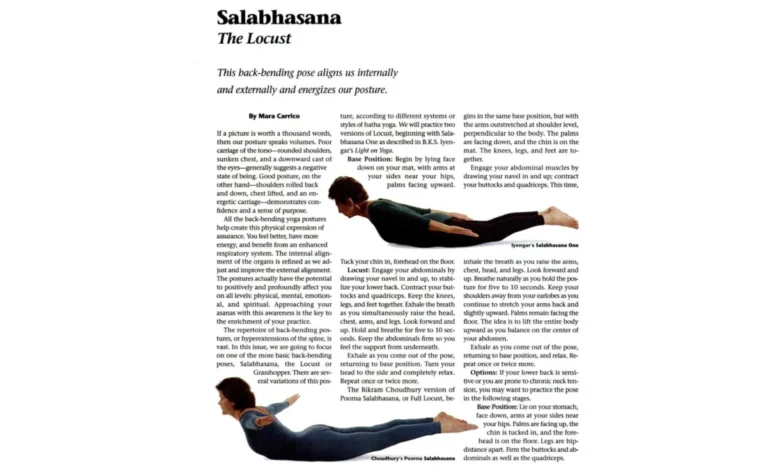
The contemporary discourse surrounding physical health, ergonomics, and somatic awareness frequently returns to a fundamental premise: structural alignment dictates physiological function. In an era dominated by sedentary desk work, prolonged screen time, and habitual postural collapse—characterized by rounded shoulders, a compressed thoracic cavity, and forward head carriage—the physical manifestations of modern stress are unmistakable. Within the historical archives of somatic disciplines, traditional hatha yoga has long offered targeted biomechanical interventions designed to counteract these gravitational habits. Among the foundational repertory of spinal hyperextensions, Salabhasana, commonly known as Locust Pose or Grasshopper Pose, occupies a critical position. Originally documented for modern practitioners in foundational texts such as B.K.S. Iyengar’s 1966 seminal work Light on Yoga and subsequently analyzed in specialized wellness literature through the decades, Locust Pose remains a cornerstone movement for posterior chain strengthening, spinal health, and the amelioration of postural deformities such as upper-back kyphosis.
Historical Evolution and Archival Context
The systematic classification and dissemination of asanas in the Western world underwent a profound transformation during the mid-to-late 20th century. As hatha yoga transitioned from an esoteric ascetic practice into a mainstream therapeutic modality, publication archives—such as those maintained by Yoga Journal since its inception in 1975—chronicle the gradual refinement of instructional methodology. By the mid-1990s, the focus of postural instruction had shifted from purely ascetic endurance to a sophisticated synthesis of anatomical precision, neuromuscular engagement, and holistic well-being.
The inclusion of Locust Pose in historical curricula was driven by a growing recognition among physical therapists and movement educators that modern humans suffer from chronic muscular imbalances. Specifically, the hyper-flexion of the cervical and thoracic spine caused by continuous forward-reaching tasks leads to overstretched and weakened erector spinae muscles, concurrently tight pectoral muscles, and diminished respiratory capacity. Salabhasana was singled out in archival instructional guides as an essential counter-pose to this modern flexion syndrome. By demanding a coordinated, simultaneous contraction of the entire posterior muscle group against gravity, the pose serves as an active antidote to the physical degradation associated with sedentary lifestyles.
Anatomical Mechanics and Physiological Implications
From a kinesiological perspective, Locust Pose is a prone backbend that requires minimal external equipment while imposing significant muscular demands. The execution of the posture engages the superficial and deep layers of the posterior kinetic chain, including the erector spinae, gluteus maximus, hamstrings, and the scapular retractors, notably the rhomboids and middle trapezius.
Simultaneously, the execution requires robust isometric stability from the anterior core musculature. Drawing the navel inward and upward creates intra-abdominal pressure that protects the lumbar spine from excessive compression during hyperextension. According to contemporary physical therapists and kinesiologists analyzing spinal health, strengthening the posterior chain while engaging the core prevents the common pitfall of dumping body weight exclusively into the lower lumbar vertebrae, ensuring that the backbend is distributed evenly along the thoracic and lumbar segments.
Furthermore, the physiological implications of Salabhasana extend beyond musculoskeletal conditioning. By lifting the chest and broadening the collarbones, the posture expands the thoracic cavity, facilitating deeper diaphragmatic respiration. Enhanced respiratory efficiency optimizes oxygen exchange and stimulates the parasympathetic nervous system when paired with controlled, rhythmic breathing. Additionally, the mild compression applied to the abdominal viscera during the prone setup and execution is historically noted in traditional texts for stimulating digestive fire (agni) and promoting peristalsis, offering functional benefits to the gastrointestinal tract.
Step-by-Step Execution Protocols
To maximize therapeutic efficacy and minimize the risk of strain, classical methodologies outline precise protocols for executing both foundational and full variations of Locust Pose, along with systematic modifications for practitioners with specific physical limitations.
Standard Salabhasana One
The practice begins in a prone position, with the practitioner lying face down on a supportive mat. The arms rest extended alongside the torso with the palms facing upward, encouraging external rotation of the shoulder joints. The chin is tucked slightly, and the forehead rests lightly on the floor to maintain a neutral cervical spine initially.
To prepare the body, the practitioner engages the core by drawing the navel inward and upward, actively contracting the quadriceps and firming the buttocks to stabilize the pelvis. Keeping the legs, knees, and feet firmly pressed together, the practitioner exhales while simultaneously lifting the head, chest, arms, and lower limbs away from the floor. The gaze is directed forward and slightly upward without hyperextending the neck. The position is maintained for five to ten seconds while breathing rhythmically, relying on the underlying support of active abdominal muscles. Exhalation marks the return to the prone starting position, where the practitioner turns the head to one side to release muscular tension entirely before repeating the cycle.
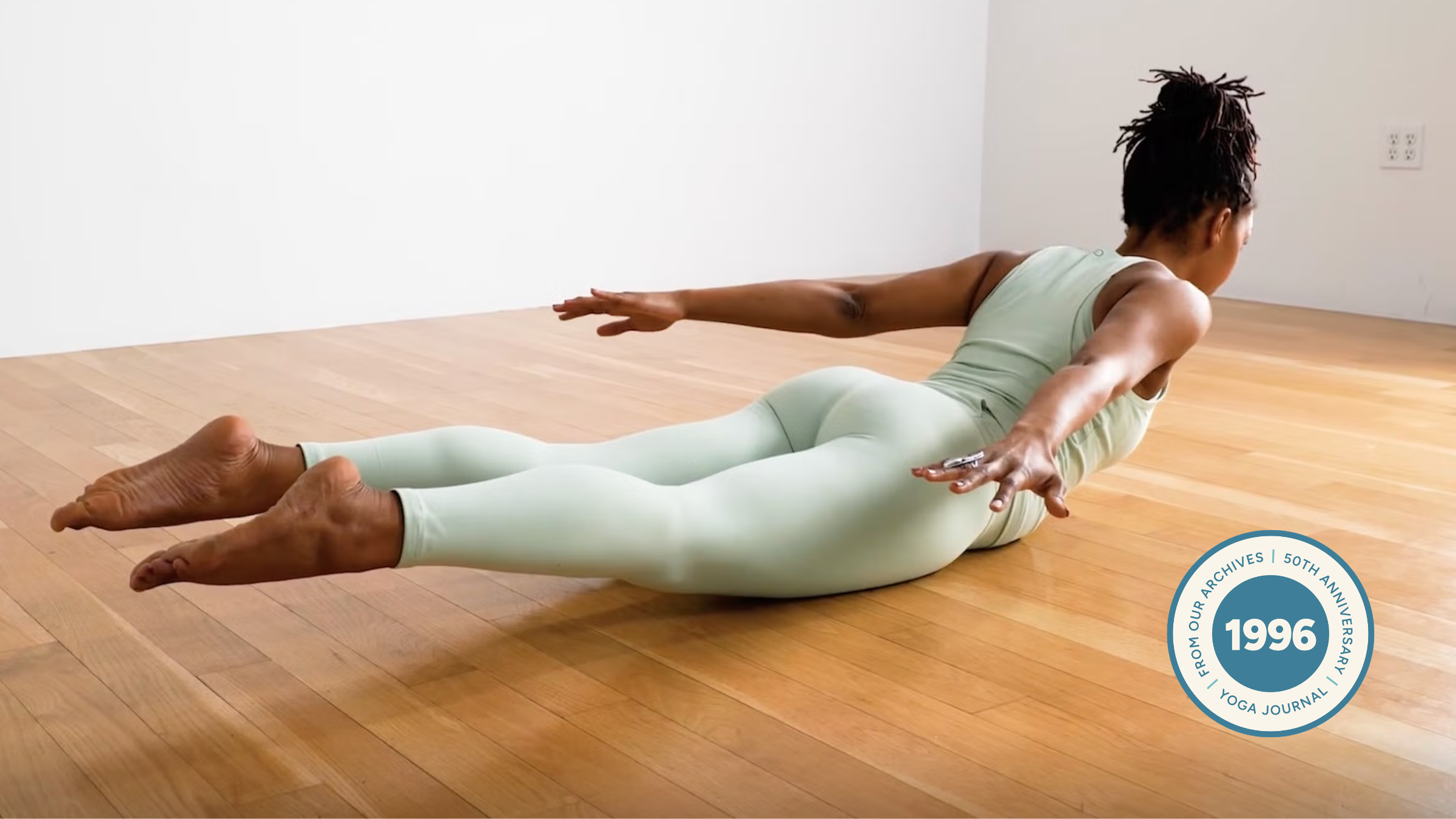
Full Locust Variation
Full Locust begins from the same foundational prone alignment, with the crucial modification of arm placement. Instead of resting alongside the hips, the arms are extended outward at shoulder level, perpendicular to the torso, with the palms facing downward.
Following the same preparatory engagement—drawing the navel in, firming the quadriceps, and contracting the gluteus muscles—the practitioner inhales and lifts the arms, chest, head, and legs simultaneously. The action requires the shoulders to be drawn down away from the earlobes while the arms reach back and upward, balancing the entire body weight centrally on the abdomen. Maintaining this posture for five to ten seconds builds exceptional endurance throughout the entire posterior muscular network. An exhalation signals a controlled descent back to the mat for recovery.
Graduated Modifications for Special Populations
Recognizing that practitioners frequently present with varying degrees of spinal mobility, lower back sensitivity, or chronic neck tension, instructional frameworks include staged modifications. These allow individuals to build strength incrementally without compromising joint health.
In the modified approach, the practitioner begins prone with arms at the sides and legs positioned hip-distance apart rather than zipped together. The first stage involves an exhalation that raises solely the arms to hip level while the head remains grounded, lengthening the cervical spine and drawing the shoulder blades together.
The second stage incorporates the lifting of the chest and head while intentionally keeping the gaze directed toward the floor, ensuring the neck remains long and extended rather than pinched. The final stage integrates the lifting of the legs. By breaking the posture down into discrete components—arms, then chest, then legs—practitioners with vulnerable lumbar or cervical regions can safely condition the musculature required for the full expression of the pose.
Integration of Counter-Poses and Somatic Recovery
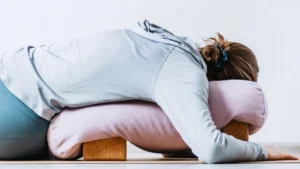
Because spinal hyperextension contracts the posterior musculature intensely, transitioning immediately to a counter-pose is standard physiological protocol. Archival and modern pedagogical consensus strongly recommends moving into Balasana, or Child’s Pose, following the final repetition of Locust.
By kneeling back onto the heels, folding the torso over the thighs, and resting the forehead on the mat with the arms relaxed alongside the body, the practitioner reverses the spinal curve into a gentle flexion. This action stretches the overburdened erector spinae muscles, decompresses the lumbar vertebrae, and signals the nervous system to transition from an active, sympathetic state to a restorative, parasympathetic state. For individuals whose heads do not comfortably reach the floor, folding the arms to create a support cushion ensures that the cervical spine remains free of unnecessary compression.
Broader Impact and Implications for Modern Wellness
The enduring relevance of postures like Locust Pose highlights a broader shift in contemporary health paradigms toward preventative, somatic conditioning. As modern occupational hazards continue to impose static, flexed postures upon millions of office workers, the integration of targeted hyperextension exercises into daily routines offers an accessible, non-pharmacological intervention for musculoskeletal health.
Analyzing the multi-level impact of asana practice—spanning physical alignment, mental resilience, and emotional poise—health professionals increasingly advocate for the inclusion of foundational movements like Salabhasana in corporate wellness, physical rehabilitation, and general fitness regimens. By bridging historical instructional archives with modern anatomical science, practitioners maintain a continuous line of wisdom that transforms external physical alignment into an internal state of balance, confidence, and enduring vitality.