New Research from the University of Bergen Challenges the Link Between Obstructive Sleep Apnea and Parasomnias


A comprehensive study conducted by researchers at the University of Bergen in Norway has provided significant new insights into the relationship between obstructive sleep apnea (OSA) and various unusual sleep behaviors known as parasomnias. For decades, the medical community has operated under the assumption that the sleep fragmentation caused by OSA—a condition characterized by repeated interruptions in breathing during the night—was a primary trigger for parasomnias such as sleepwalking, night terrors, and sleep paralysis. However, the findings from this large-scale investigation, published in the journal Frontiers in Psychology, suggest that the connection between these two categories of sleep disorders is far less direct than previously theorized.
By analyzing a substantial cohort of over 4,000 patients, the Norwegian research team sought to determine whether individuals diagnosed with OSA were more prone to parasomnias than those who did not suffer from the condition. The results of the study indicate that while both conditions are prevalent among patients referred for sleep evaluations, the presence of OSA does not necessarily increase the likelihood of experiencing parasomnias. This revelation has the potential to shift how clinicians approach the diagnosis and treatment of patients presenting with complex sleep-related symptoms.
Understanding the Scope of the Study and Methodology
The University of Bergen study was notable for its scale and the clinical environment in which it was conducted. Researchers examined data from 4,372 patients who had been referred to a specialized Norwegian hospital for suspected sleep apnea. The patient demographic was predominantly male, accounting for approximately 70% of the participants, with an average age of 49 years. This demographic profile is consistent with the typical clinical presentation of OSA, which is more frequently diagnosed in middle-aged men.
To gather accurate data, the researchers employed a two-pronged approach. First, each participant underwent an objective sleep assessment using a portable sleep monitor. These devices are designed to be used in the patient’s home environment, providing a more realistic snapshot of their natural sleep patterns than a controlled laboratory setting might offer. The monitors tracked essential physiological markers, including oxygen saturation levels and respiratory effort, to confirm the presence and severity of obstructive sleep apnea.
In addition to the objective monitoring, patients were required to complete detailed questionnaires regarding their experiences with parasomnias over the preceding three months. This allowed the researchers to cross-reference the presence of breathing disorders with subjective reports of unusual nighttime behaviors. By combining objective respiratory data with self-reported behavioral data, the team was able to conduct a nuanced analysis of how these conditions interact—or, as the results showed, how they may exist independently of one another.
Defining the Conditions: OSA and Parasomnias
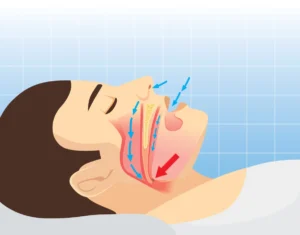
To appreciate the significance of the Bergen study, it is essential to understand the nature of the disorders being investigated. Obstructive Sleep Apnea is a chronic condition where the muscles in the throat relax excessively during sleep, causing the airway to narrow or close entirely. This leads to periods of apnea (a total cessation of breathing) or hypopnea (a partial reduction in airflow), resulting in decreased oxygen levels in the blood and frequent "micro-arousals" as the brain forces the body to wake up briefly to resume breathing.
Parasomnias, on the other hand, represent a broad category of sleep disorders that involve abnormal movements, emotions, perceptions, and dreams. These behaviors can occur while falling asleep, during sleep, or during the transition between sleep and wakefulness. Parasomnias are generally divided into two categories: those occurring during non-rapid eye movement (NREM) sleep, such as sleepwalking or confusional arousals, and those occurring during rapid eye movement (REM) sleep, such as nightmares or REM sleep behavior disorder (RBD).
Commonly reported parasomnias in the study included:
- Nightmares: Vivid and frightening dreams that wake the sleeper.
- Sleepwalking (Somnambulism): Walking or performing complex tasks while remaining asleep.
- Sleep Talking (Somniloquy): Vocalizations during sleep ranging from mumbles to full sentences.
- Confusional Arousals: Waking up in a state of disorientation or acting in a strange, confused manner.
- Sleep Paralysis: The temporary inability to move or speak while falling asleep or waking up.
- Night Terrors: Sudden episodes of intense fear, screaming, or flailing while asleep.
Statistical Findings and Prevalence Rates
The data collected from the 4,372 participants revealed a high prevalence of various sleep behaviors across the entire group, regardless of their sleep apnea status. The study found that:
- Sleep talking was the most common behavior, reported by 48.5% of the participants.
- Nightmares were experienced by 24.3% of the cohort.
- Confusional arousals were reported by 18.5% of the patients.
- Sleepwalking occurred in 7.1% of the group.
- Sleep paralysis was reported by 6.1% of participants.
- Night terrors were the least common, affecting 4.5% of the study population.
While these percentages indicate that parasomnias are relatively common among people with sleep complaints, the critical discovery occurred when the researchers compared the frequency of these behaviors between patients with OSA and those without it. The analysis revealed that patients diagnosed with OSA did not report a higher frequency of most parasomnias. In fact, for certain behaviors, there was no statistically significant difference at all.
Even more surprising was the finding regarding nightmares. The researchers discovered that patients with OSA actually reported fewer nightmares than those without the condition. This contradicts the common assumption that the physiological stress of gasping for air would manifest as distressing or frightening dreams.
Re-evaluating the "Arousal" Hypothesis
The traditional medical hypothesis suggested that the respiratory events associated with OSA act as a "trigger" for parasomnias. The logic was that since OSA causes frequent, sudden awakenings from deep sleep, it creates the perfect conditions for "sleep state instability." In this state, the brain is caught between being awake and being asleep, which is precisely when behaviors like sleepwalking or confusional arousals are most likely to occur.
However, the University of Bergen study suggests that the relationship is not so linear. While a respiratory event can trigger an arousal, it does not necessarily trigger a parasomnia event in the majority of patients. This suggests that the underlying mechanisms for parasomnias—likely rooted in neurological or genetic predispositions—are distinct from the mechanical and physiological causes of obstructive sleep apnea.
The study’s findings imply that even if a patient’s sleep apnea is successfully treated (for example, with Continuous Positive Airway Pressure, or CPAP therapy), their parasomnias may persist. This has significant implications for clinical management, as it suggests that treating the breathing disorder may not be a "silver bullet" for resolving unusual nighttime behaviors.
Clinical Implications for Patients and Physicians
For patients who suffer from both loud snoring and sleepwalking or nightmares, this research provides a clearer picture of their health. The primary takeaway is that while these issues may co-exist, they are likely separate problems requiring separate diagnostic and treatment approaches.
From a diagnostic perspective, the study highlights the importance of thorough patient histories. If a patient reports both OSA symptoms (daytime sleepiness, morning headaches, snoring) and parasomnia symptoms, physicians should not assume that one is causing the other. Instead, they should evaluate the severity of each independently.
Furthermore, the finding that nightmares are less common in OSA patients may be linked to the way OSA affects REM sleep. Since OSA often interrupts REM sleep or reduces the time spent in that stage, patients may have fewer opportunities to experience or remember nightmares. This adds a layer of complexity to how doctors interpret a patient’s dream history during a sleep consultation.
Historical Context and the Evolution of Sleep Medicine
The field of sleep medicine is relatively young, with major breakthroughs in understanding the architecture of sleep only occurring in the mid-20th century. Historically, sleep disorders were often lumped together or dismissed as psychological issues. It was not until the 1970s and 1980s that obstructive sleep apnea was recognized as a major public health concern, and parasomnias began to be classified according to the sleep stages in which they occur.
Previous smaller studies had occasionally suggested a link between OSA and parasomnias, often based on case reports where treating apnea seemed to cure sleepwalking. These anecdotes formed the basis of the prevailing medical opinion. However, the University of Bergen study represents a shift toward "Big Data" in sleep research. By using a sample size of over 4,000, the Norwegian researchers have provided a much more robust statistical foundation than previous, smaller investigations.
This study reflects a broader trend in modern medicine: the movement away from generalized assumptions toward data-driven, individualized care. It acknowledges that the human brain’s sleep-wake cycle is incredibly complex and that two different disorders can inhabit the same night without being causally linked.
Future Research and Global Impact
The implications of this study extend beyond the borders of Norway. As obesity rates—a major risk factor for OSA—continue to rise globally, understanding the full spectrum of sleep health is more critical than ever. The University of Bergen’s findings suggest that researchers need to look elsewhere to find the root causes of parasomnias in adults. Potential areas for future study include the role of stress, medication side effects, and genetic markers that might predispose certain individuals to sleep state dissociation.
Moreover, this research encourages a more holistic view of sleep health. It reminds clinicians that a patient is more than just their "Apnea-Hypopnea Index" (AHI) score. A patient may have mild OSA but severe, debilitating nightmares, or vice versa. Addressing the "whole sleeper" means recognizing that multiple, independent sleep disorders can occur simultaneously.
In conclusion, the University of Bergen study serves as a vital course correction in the field of somnology. By debunking the presumed strong link between obstructive sleep apnea and parasomnias, it paves the way for more accurate diagnoses and more effective, targeted treatments. For the millions of people worldwide struggling with disrupted nights, this research offers a path toward a better understanding of the complexities of the sleeping mind and body. While the two conditions may share the same darkness of night, their origins and solutions appear to be worlds apart.