Night-to-night sleep apnea variability linked to increased risk of uncontrolled hypertension and cardiovascular complications


Poorly managed obstructive sleep apnea (OSA) is increasingly recognized as a silent driver of cardiovascular morbidity, yet new research suggests that current clinical diagnostic standards may be fundamentally flawed. A comprehensive study conducted by researchers at Flinders University in Adelaide, Australia, has identified a critical disconnect between standard single-night sleep assessments and the actual health risks faced by patients. According to the findings, the degree of fluctuation in sleep apnea severity from one night to the next—a phenomenon largely ignored in traditional clinical settings—is a significant predictor of uncontrolled hypertension and a range of life-threatening cardiovascular conditions.
The Limitations of Single-Night Diagnostics
For decades, the gold standard for diagnosing OSA has been polysomnography, a complex, labor-intensive, and often costly procedure performed over a single night in a specialized sleep laboratory. While effective at identifying severe, persistent cases, this diagnostic model operates under the assumption that a patient’s breathing patterns remain relatively static. However, the Flinders University study challenges this assumption, revealing that OSA is a dynamic condition with high night-to-night variability.
When a patient is assessed during a single night, clinicians capture only a snapshot of their condition. If that particular night happens to be a "good" night for the patient, their OSA severity may be severely underestimated or, in some cases, entirely missed. This diagnostic gap leaves a vast population of individuals with untreated or under-treated sleep disorders, unknowingly exposing them to the cumulative physiological stress of chronic intermittent hypoxia and sleep fragmentation.
Methodology and Technological Innovation
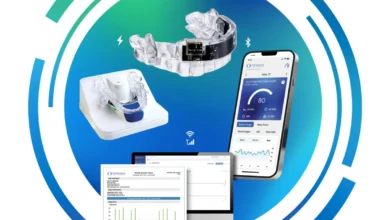
The breakthrough in this research was facilitated by the use of unobtrusive, under-mattress sensor technology. By utilizing the Withings Sleep Analyzer, researchers were able to conduct long-term, non-invasive monitoring of 12,287 participants. This technological shift from laboratory-bound equipment to home-based, multi-night monitoring provided an unprecedented longitudinal view of sleep health.
Over the course of approximately 180 nights per participant, the research team gathered extensive data on the Apnea-Hypopnea Index (AHI), which serves as the primary metric for measuring the frequency of breathing interruptions during sleep. By tracking the standard deviation of AHI across these 180 nights, the researchers were able to quantify the "variability" of the condition for each subject. Simultaneously, the team cross-referenced this data with approximately 30 repeat blood pressure measurements per participant. Uncontrolled hypertension was defined in this study as a mean systolic blood pressure of 140 mmHg or higher, or a diastolic reading of 90 mmHg or higher.
Quantitative Findings: The 50% to 70% Risk Threshold
The results of the analysis are stark. Lead author Dr. Bastien Lechat noted that regardless of an individual’s average AHI score, those who exhibited high night-to-night variability in their sleep apnea severity faced a 50% to 70% increased likelihood of suffering from uncontrolled hypertension.
This variability is not merely a statistical anomaly; it is a clinical red flag. Patients with highly variable OSA patterns often experience fluctuating blood pressure levels throughout the day and night. This "dipping" and "spiking" of blood pressure is a recognized precursor to vascular organ damage. The implications extend well beyond simple hypertension, as this cardiovascular instability is strongly correlated with a higher incidence of atrial fibrillation, stroke, heart disease, and cognitive decline, including dementia.
Chronology of Sleep Medicine Evolution
The evolution of sleep apnea management has seen three distinct eras:
- The Pre-Lab Era: Before the 1980s, sleep-disordered breathing was often categorized simply as "pickwickian syndrome" and was largely managed through weight loss and basic lifestyle interventions.
- The Polysomnography Era: From the 1980s to the 2010s, the rise of the sleep lab created a standardized, controlled environment for diagnosis. While this increased the accuracy of identifying severe cases, it created a bottleneck in healthcare access and introduced the "single-night bias."
- The Longitudinal Monitoring Era: Beginning in the late 2010s and accelerating into the present, the integration of wearable and contactless sensors has allowed for home-based, multi-week data collection. The Flinders University study represents the maturation of this third era, proving that long-term data collection is necessary to accurately gauge systemic cardiovascular risk.
Expert Perspectives and Future Implications
Dr. Danny Eckert, a professor and prominent voice in sleep research at Flinders University, emphasized the necessity of shifting away from traditional diagnostic silos. "Our study suggests that high night-to-night variability in OSA severity may also be an important contributor to cardiovascular disease," Dr. Eckert stated. He argued that the current reliance on costly, one-off diagnostic tests is no longer sustainable or sufficient for the complex nature of modern sleep medicine.
The integration of simplified, home-based monitoring could prove transformative for public health. By enabling long-term observation, clinicians can better identify patients at risk of cardiovascular events who would have otherwise been dismissed as "low risk" based on a single-night test. This move toward longitudinal tracking would also allow for more personalized treatment protocols, such as adjusting Continuous Positive Airway Pressure (CPAP) therapy or other interventions based on a patient’s actual nightly needs rather than a generalized average.
Broader Public Health Implications
The socioeconomic impact of undiagnosed or poorly managed OSA is immense. Cardiovascular disease remains the leading cause of death globally, and the connection between sleep quality and heart health is now undeniable. If health systems continue to rely on single-night snapshots, they risk failing to address the underlying physiological volatility that leads to chronic hypertension.
Furthermore, the study sheds light on the dangers of "misdirected management." When a patient is misdiagnosed due to a quiet night in the lab, they are often sent home without appropriate therapeutic intervention, allowing their cardiovascular risk factors to compound over years. This leads to increased emergency room visits, long-term pharmaceutical reliance for blood pressure management, and an overall decrease in life expectancy.
Path Toward Implementation
For the medical community, the path forward involves the validation and integration of sensor data into Electronic Health Records (EHR). While the technology exists, the challenge lies in standardizing the interpretation of longitudinal data. Medical guidelines are historically slow to change, but the robustness of the Flinders University data—drawn from a sample size of over 12,000—provides a compelling argument for a paradigm shift.
As healthcare providers look to integrate these findings, the focus will likely shift toward "precision sleep medicine." Instead of viewing OSA as a binary diagnosis (present or absent), clinicians will begin to categorize patients based on their "variability profile." A patient with low variability may require a different treatment intensity than one whose breathing fluctuates wildly throughout the week.
In conclusion, the research underscores a critical truth: the human body does not function in snapshots. By acknowledging that sleep apnea is a condition that fluctuates, and by leveraging modern technology to monitor that fluctuation, the medical community has the potential to significantly reduce the incidence of uncontrolled hypertension and its associated, often devastating, cardiovascular complications. The transition from the "single-night test" to "longitudinal monitoring" is not merely an upgrade in technology; it is a vital step toward a more accurate, preventative, and patient-centered model of healthcare.