Chimpanzee friendship dynamics reveal complex moral expectations and reduced antisocial behavior in groundbreaking study

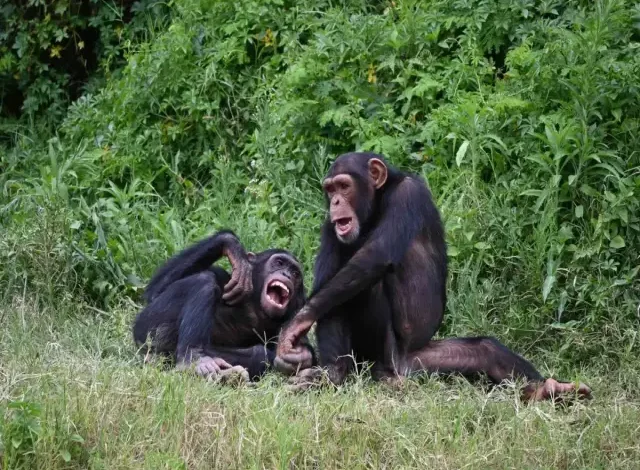
The intricate social tapestry of chimpanzees has long fascinated primatologists, but recent research from the University of California, Berkeley, suggests that the bonds formed between these great apes are far more sophisticated than previously understood. By observing interactions at the Ngamba Island Chimpanzee Sanctuary in Uganda, scientists have uncovered evidence that chimpanzees not only exhibit clear preferences for certain peers—evidenced by consistent grooming and food-sharing behaviors—but also maintain distinct social expectations that influence their tendency to commit antisocial acts.
This study, published in the September 2026 issue of the journal Evolution and Human Behavior, marks a significant departure in our understanding of animal cognition. It provides the first empirical evidence that chimpanzees are capable of moderating their own antisocial behavior specifically toward their friends, suggesting that the roots of human morality and social norms may be deeply embedded in our evolutionary history.
The Methodology of Observation
To reach these findings, the research team, led by Oded Ritov of the Social Origins Lab at UC Berkeley, conducted an exhaustive observational study. Over a period of time, researchers logged more than 800 hours of interactions among 26 chimpanzees residing at the Ngamba Island Chimpanzee Sanctuary. This rigorous observational phase was crucial to establishing a baseline of "friendship" within the group.
Researchers categorized these bonds by tracking proximity—specifically whether individuals were within arm’s reach of one another—alongside the frequency and quality of grooming sessions and daily cooperative exchanges. By identifying which pairs were "closely bonded," the team established a framework to test how these relationships would hold up under the pressure of competition.
The experimental setup was designed to create a clear choice for the subjects: the opportunity to steal food or to refrain from doing so. Researchers utilized two connected rooms. In the first room, a "victim" chimpanzee was presented with three trays of pineapple. A rope was attached to these trays, extending into an adjacent room where a second, "thief" chimpanzee resided. The thief was given the agency to either leave the rope undisturbed or to pull it, effectively stealing the pineapple from their companion.
Data Analysis: The Cost of Theft
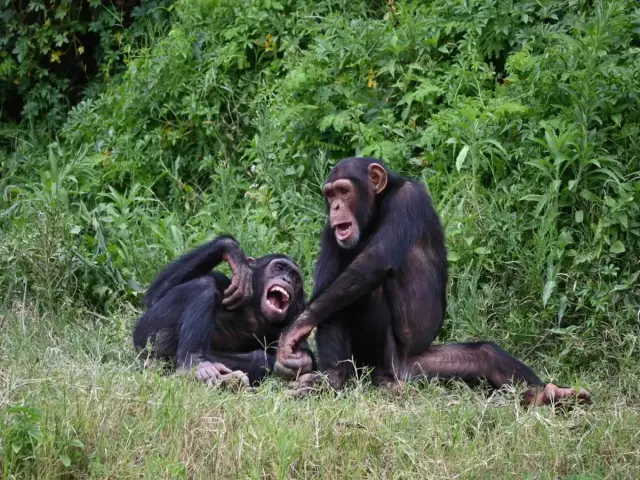
The statistical results of the experiment were striking. In trials involving non-friends, chimpanzees opted to steal the pineapple in 70% of the instances. However, when the victim was a closely bonded peer, the rate of theft dropped to 61%. While a nine-percentage-point difference might appear modest to a layperson, the study’s methodology—which required each chimpanzee to participate in both "friend" and "non-friend" conditions—provides a high level of statistical confidence that the behavior was not a product of random chance.
Beyond the frequency of the thefts, the researchers analyzed the emotional fallout of the interactions. By monitoring behavioral markers such as fist-pounding, stomping, and loud screeching, the team assessed the emotional state of the victimized chimpanzees. The findings revealed that while victims were initially more agitated when a friend stole from them—perhaps signaling a sense of betrayal or violated expectation—they were significantly quicker to calm down afterward compared to when they were robbed by a non-friend.
Conversely, the thieves exhibited a distinct emotional trajectory. Those stealing from non-friends displayed signs of negative emotion for a longer duration, suggesting that these interactions were perceived as more hostile and less socially acceptable. When stealing from a friend, however, the thief’s aggressive or anxious signaling subsided more rapidly, pointing to a mutual understanding of the social dynamic at play.
Evolutionary Implications and Scholarly Context
The implications of this study extend far beyond the observation of chimpanzee behavior; they provide a potential roadmap for the evolution of human moral principles. Jan Engelmann, an associate professor of psychology at UC Berkeley and senior author of the paper, emphasizes that human friendship is defined by a set of robust expectations. "We expect more of our friends," Engelmann noted. "These findings really deepen our understanding of the evolutionary roots of friendships. This is, to my knowledge, the first evidence showing that also chimpanzees expect and maybe demand special treatment from their friends."
This research builds upon a growing body of work regarding the "prosocial" nature of nonhuman primates. For years, scientists have debated the extent to which animal relationships mirror human concepts of friendship. Critics have historically argued that attributing human-like cognitive and emotional complexity to chimpanzees is a form of anthropomorphism. However, the data from the Social Origins Lab suggests that the cognitive mechanisms required for navigating friendship—such as the ability to inhibit impulses and recognize social roles—are not unique to the human species.
Oded Ritov, the paper’s first author, posits that these "expectations" may be the fundamental building blocks of large-scale cooperation. "Collaborative relationships are important for our well-being, health, and survival," Ritov stated. "Increasingly, we’re understanding that this isn’t something that’s unique to us, but that other animals have friends, as well."
Chronology of Human-Primate Social Research
The journey to these findings has been a gradual accumulation of data over the last decade.
- Early 2020s: Research into primate intelligence shifted from basic tool use to complex social cognition, with studies emerging that suggested chimps could distinguish between intentional and accidental harm.
- 2024: Studies conducted at the Social Origins Lab began to explore the presence of jealousy and fairness among nonhuman animals, finding that their emotional responses were far more nuanced than previously suspected.
- 2026 (September): The formal publication of the pineapple-theft study in Evolution and Human Behavior provided a definitive link between friendship status and the suppression of antisocial behavior.
- November 2026: The study is slated for inclusion in the print edition of the journal, marking a milestone in the academic discourse on primate social evolution.
Broader Impact and Future Directions
The study by the UC Berkeley team provides a necessary bridge between the fields of biology and psychology. By analyzing the "emotional underpinnings" of social interactions, the researchers have demonstrated that morality may not be a late-stage evolutionary development unique to humans, but rather an ancient adaptation that allowed our ancestors to thrive in complex, cooperative societies.
The distinction between "special intentions" and "social expectations" is the next frontier for this research. While previous studies have shown that primates can act with intention toward others, the expectation of reciprocal treatment—the idea that "if I don’t steal from you, you shouldn’t steal from me"—represents a higher order of social cognition.
As the scientific community continues to explore the origins of fairness and cooperation, the role of the chimpanzee as a model for human behavior becomes increasingly central. The findings from Ngamba Island suggest that our moral compass, our sense of duty to our peers, and our capacity for social restraint are, in part, a legacy of the deep-seated friendships that have existed in our primate cousins for millennia.
Future studies are expected to expand upon these findings by testing whether these expectations hold up in larger group settings or under different resource-scarcity conditions. If chimpanzees can indeed maintain moral standards despite the presence of high-value rewards like pineapple, it may indicate that the "social contract" is a far more pervasive feature of the animal kingdom than previously dared to be imagined. This ongoing research continues to challenge the boundaries between species, reminding us that the foundations of our own society are mirrored in the very creatures we have long studied to understand ourselves.