Neuroscience Uncovers Revenge as an Addiction, Forgiveness as a Powerful Path to Healing

Cutting-edge neuroscience is shedding new light on the primal human urge for revenge, revealing it to be a powerful, often destructive habit that can manifest with the characteristics of an addiction. Simultaneously, this research highlights forgiveness not merely as a moral or spiritual virtue, but as a potent neurobiological process capable of breaking this cycle, alleviating emotional pain, and enhancing self-control. This transformative understanding is largely championed by James Kimmel Jr., an assistant clinical professor at the Yale School of Medicine and co-founder of the Yale Collaborative for Motive Control Studies, whose work is reshaping perspectives on human conflict and healing.
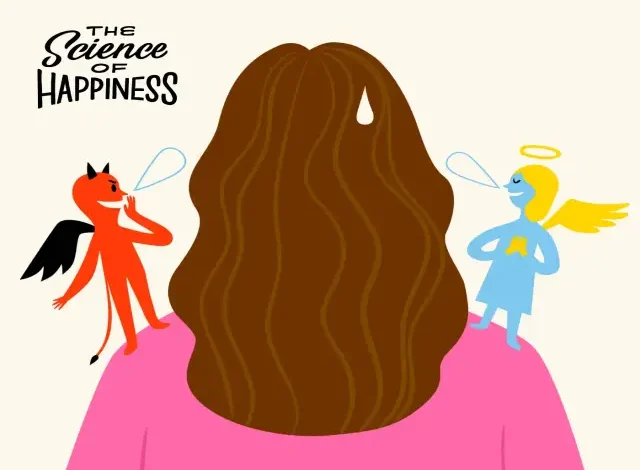
The insights from Kimmel Jr.’s research, extensively discussed on "The Science of Happiness" podcast hosted by Dacher Keltner, stem from a deeply personal journey. After enduring years of intense bullying that culminated in a near-violent act, Kimmel dedicated his career to understanding the compelling nature of revenge and how forgiveness can effectively interrupt its destructive grip.
A Traumatic Genesis: The Roots of a Personal Quest
James Kimmel Jr.’s profound inquiry into the mechanisms of revenge and forgiveness began not in a laboratory, but in the harrowing crucible of his own youth. Growing up on a farm in Central Pennsylvania, he experienced relentless bullying that escalated from verbal taunts to severe physical assaults, including kicking, punching, and constant menacing. The perpetrators were neighboring farm kids, making escape from the torment nearly impossible.
The situation reached a critical point when Kimmel was 16 or 17 years old. One night, his family was awakened by a gunshot. Peering out the window, he saw a pickup truck, known to belong to one of his tormentors, speeding away. The following morning, a tragic discovery awaited him: his beloved beagle hunting dog, Paula, lay dead in her pen, killed by a bullet wound to the head. Despite reporting the incident, the police declined to pursue the matter, leaving Kimmel and his family with a profound sense of injustice and helplessness.
Weeks later, while home alone, Kimmel heard a vehicle stop outside his house, followed by a flash and a deafening explosion. His family’s mailbox had been blown up. This act of escalating violence, he recounts, shattered what little self-control he had left. In a surge of uncontrollable rage, he retrieved his father’s loaded handgun, jumped into his mother’s car, and sped off in pursuit of his tormentors. He eventually cornered them on their farm, pinning their truck against a barn. As they emerged, unarmed and squinting into his high beams, Kimmel faced a stark choice. He had the "perfect setup to get the perfect payback" he had fantasized about for years. However, in that pivotal moment, a sudden flash of insight revealed the devastating future consequences: at minimum, imprisonment, and the irreversible destruction of his identity. This realization—that the cost of his desired revenge far outweighed any perceived benefit—was just enough to make him pull back, retreat, and drive home, narrowly averting a life-altering tragedy.
From Litigation to Laboratory: The "Professional Revenge Business"
Kimmel’s initial response to his trauma wasn’t forgiveness; it was a desperate search for a "discounted" form of revenge. This quest led him to the legal profession, a path he now describes as the "professional revenge business." As a litigator, he observed how the legal system, often under the guise of "justice," effectively facilitated a sanitized form of retaliation. Lawyers, he notes, find individuals with grievances and help them inflict pain or bend opponents to their will, often for financial gain. While this "legalized revenge" is undeniably preferable to street violence, Kimmel recognized it as fundamentally the same process.
He vividly describes experiencing "momentary bursts of pleasure" with every small victory in his cases, every instance where he could make a "bad day" for the opposing side. His clients, living vicariously through these reports, reveled in their adversaries’ suffering. Crucially, Kimmel observed this satisfaction seeping into his personal life. He found himself "looking for grievances and reasons to feel aggravated or angry or hurt or offended" at home, seeking opportunities to retaliate and "self-medicate." This pattern eventually led him to a chilling realization: he was hooked. He questioned, "Am I an addict?" The intense feelings of pleasure derived from these acts, coupled with his inability to resist the urge despite negative consequences, pushed him to the brink, culminating in suicidal thoughts and a desperate need to escape the cycle.
This personal crisis served as a powerful impetus for a radical career shift. Kimmel transitioned from the courtroom to the laboratory, leveraging a series of fortuitous circumstances to join the Yale School of Medicine’s Department of Psychiatry. His goal was to scientifically investigate the brain’s role in revenge and forgiveness, a field that was just beginning to emerge with the first neuroscience studies on the topic.
The Neurological Roots of Vengeance: A Brain on "Drugs"
Kimmel’s research, conducted in collaboration with neuroscientists, unveiled a profound connection between revenge and addiction. "Your brain on revenge looks like your brain on drugs," he states, emphasizing that this is not merely a metaphor. Studies utilizing fMRI and PET scanners have provided compelling evidence. When individuals are presented with a grievance (a reason to feel victimized) and then an opportunity to retaliate, specific areas of the brain associated with addiction are activated.
Specifically, the nucleus accumbens and the dorsal striatum – key components of the brain’s "go circuitry" responsible for motivation, craving, and pleasure – show heightened activity. This activation is initially cued by the brain’s pain network, the anterior insula, which registers the emotional pain of the grievance. The desire for revenge then emerges within the reward circuitry. Compounding this, the prefrontal cortex, which normally functions as the brain’s "stop circuitry" and is crucial for cost-benefit analysis, decision-making, and impulse control, appears to be significantly suppressed during revenge-seeking. This neurological configuration effectively creates a state of "compulsive revenge seeking," where the urge to retaliate overrides rational assessment of consequences, much like a substance addiction.
This scientific understanding aligns with the clinical definition of addiction: the inability to resist an urge or desire to engage in a behavior (like taking a drug or gambling) despite knowing its negative consequences. Kimmel argues that revenge perfectly fits this definition, inflicting harm on oneself and others. Criminological and behavioral science studies further underscore the pervasive role of revenge, identifying it as the primary motivation behind a vast spectrum of violence, from intimate partner and youth violence to gang conflicts, violent extremism, police brutality, and even genocide and warfare. Kimmel’s assertion that revenge is "the world’s deadliest addiction" gains significant weight when considering its documented role in such widespread human suffering and societal destabilization. For example, reports from organizations like the UN and various conflict studies consistently link unresolved grievances and cycles of retaliation to the perpetuation of violent conflicts globally, incurring immense human and economic costs.
Forgiveness: A Self-Manufactured Antidote
In stark contrast to the destructive neurological patterns of revenge, neuroscience is revealing forgiveness as a powerful "detox" for the brain. Kimmel’s research, building on early studies, demonstrates that engaging in forgiveness neurobiologically reverses the very circuitry activated by a grievance.
When individuals in fMRI scanners are given an opportunity to forgive instead of retaliate, several critical changes occur:
- Pain Cessation: The brain’s pain network, the anterior insula, which registers the initial grievance, effectively shuts down. Forgiveness, therefore, acts as a potent pain reliever.
- Reward Circuitry Deactivation: The "go circuitry" of addiction—the pleasure and reward centers associated with revenge fantasies and rumination—is quieted.
- Enhanced Self-Control: The prefrontal cortex, the decision-making and self-control hub, is reactivated or strengthened. This restores executive function and allows for more rational, consequence-aware thought processes.
These three neurobiological benefits lead Kimmel to describe forgiveness as a "human superpower" or a "wonder drug." It’s a readily accessible, free, and self-manufactured pharmaceutical, available 24/7, with profound effects on mental and emotional well-being. This perspective challenges the traditional view of forgiveness as merely a "soft spiritual practice," elevating it to a critical tool for personal and societal health.
Decisional Forgiveness: A Practical Path to Healing
A crucial aspect of Kimmel’s work is the emphasis on "decisional forgiveness," a concept that distinguishes neurobiological forgiveness from its often-misunderstood counterparts. Decisional forgiveness does not require reconciliation with the wrongdoer, nor does it imply pardoning their actions or becoming a "forever victim." Instead, it is an internal, self-directed decision to release the grievance as a means of personal healing. This internal act, not necessarily shared with the person who caused the harm, is sufficient to trigger the neurobiological benefits.
The immediacy and power of this internal decision are striking. Kimmel demonstrates that even imagining what forgiveness would feel like can produce instantaneous relief. As Dacher Keltner experienced during their discussion, simply contemplating forgiveness for a past grievance can cause tension to dissipate and a sense of relief to emerge. From a neuroscience perspective, this imaginative exercise momentarily stops the pain, quiets revenge fantasies, and activates the prefrontal cortex, offering immediate physiological and psychological benefits.
This makes forgiveness an invaluable strategy for individuals trapped in cycles of rumination and pain. By choosing to forgive, one actively disengages from the past, preventing old wounds from contaminating the present and future. It allows individuals to reclaim their productivity, joy, and overall well-being by letting go of what can no longer be changed.
Broader Implications: Towards a Less Violent World
The implications of Kimmel’s research extend far beyond individual healing. Understanding revenge as an addiction with identifiable neurological underpinnings offers a paradigm shift in how societies approach crime, conflict resolution, and justice systems. The punitive models prevalent in many countries, particularly the United States with its high incarceration rates, could be re-evaluated. If revenge is indeed an addiction, then simply punishing offenders without addressing the underlying addictive cycle may be insufficient to prevent recidivism, as Keltner points out.
The growing movement towards restorative justice and mediation, which focuses on healing harm rather than just punishment, finds strong scientific validation in Kimmel’s findings. By fostering environments where individuals can process grievances and choose forgiveness, communities can potentially interrupt cycles of violence that often span generations.
The work of James Kimmel Jr. is supported by institutions like the Yale School of Medicine and the Yale Collaborative for Motive Control Studies, with funding from organizations such as the Templeton World Charity Foundation through the Greater Good Science Center’s project "Putting the Science of Forgiveness into Practice." This collaborative effort underscores a broader academic and philanthropic commitment to applying scientific understanding to promote human flourishing and reduce suffering.
Ultimately, the research on the neuroscience of revenge and forgiveness presents a compelling vision: a world where individuals and societies are empowered to break free from destructive cycles. By recognizing the addictive nature of vengeance and harnessing the inherent, self-healing power of forgiveness, humanity has a clear, scientifically validated path towards greater peace, self-control, and well-being. The challenge lies in translating these profound scientific discoveries into widespread practice, encouraging individuals to cultivate this "wonder drug" within themselves, daily, for a more fulfilling present and a less violent future.