The Resurgence of Matriarchal Wisdom: Christina Rivera’s MY OCEANS and the Call for a Care-Based Future

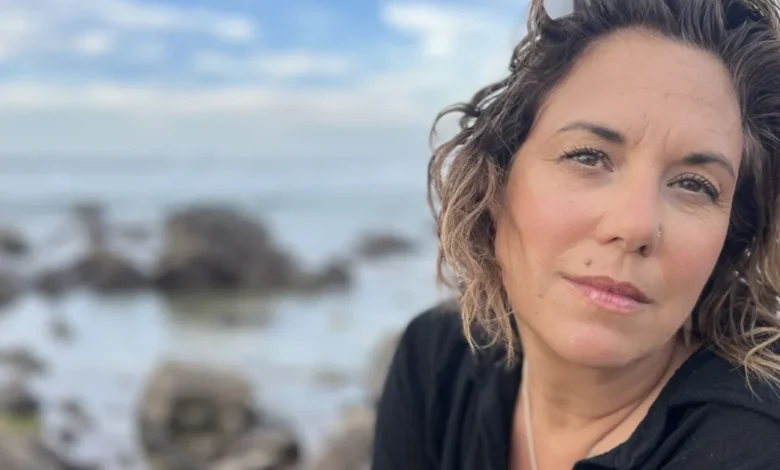
The launch of Mothering Nature, an initiative founded by biologist and science writer Rachel Clark, was profoundly inspired by the intricate social structures of killer whales, Orcinus orca. This inspiration, coupled with Clark’s extensive background and experiences within predominantly patriarchal human systems, has fueled a critical examination of societal norms, particularly when contrasted with the deep historical roots of matriarchal societies that characterized much of human existence. This perspective forms the bedrock for exploring Christina Rivera’s evocative new book, MY OCEANS, a collection of lyric essays poised to become a vital anthem for contemporary living, delving into themes of eco-grief, interbeing, and the urgent necessity of a care-based civilization.
The Genesis of MY OCEANS and the Power of Personal Witness
Christina Rivera’s journey to writing MY OCEANS was catalyzed by a profoundly personal and harrowing encounter on the Pacific coastline of Costa Rica. She describes happening upon a beached porpoise, a moment where she placed her hands on the dying creature and felt its life ebb away beneath her palms. This visceral experience, which Rivera admits still brings tears to her eyes, became a crucial portal. Instead of recoiling from the immense grief and helplessness, she chose to confront it, to "stare into it" and "write through it." This act of witness became a conduit for a flood of repressed emotions, encompassing profound eco-grief and an intensified sense of interbeing with the natural world.
The initial raw outpouring from this encounter took the form of a poem, despite Rivera not identifying as a poet. This spontaneous creative act laid the foundation for what would become MY OCEANS seven years later—a meticulously crafted series of wave-like lyric essays. The prolonged gestation period underscores the depth of emotion and complexity of thought Rivera invested, transforming a singular moment of loss into a comprehensive exploration of humanity’s relationship with the oceans and the broader environment. Her process highlights the therapeutic and transformative power of writing, offering a testament to how art can process overwhelming realities and provide a pathway to understanding and resilience.
Orca Matriarchy: A Blueprint for Human Society?
A central tenet driving both Clark’s Mothering Nature and resonating deeply within Rivera’s work is the observation of orca matriarchy. These intelligent marine mammals exhibit a highly sophisticated social structure led by elder females. Orcas are one of the few mammalian species, alongside humans and short-finned pilot whales, known to undergo menopause. This biological characteristic allows elder female orcas, or grandmothers, to dedicate decades of their lives to guiding and supporting their pods without the demands of further reproduction. Their accumulated knowledge, experience, and leadership are not merely beneficial but are considered life-or-death essential for the survival and flourishing of their families. They play crucial roles in foraging, navigating complex social dynamics, and passing down vital cultural knowledge across generations.
This natural model provides a stark contrast to the prevailing patriarchal systems in human societies today. Anthropological and historical research suggests that while patriarchy has dominated recorded history, many early human societies, particularly hunter-gatherer and early agrarian communities, exhibited strong matriarchal or matrilocal tendencies. These societies often prioritized collective well-being, cooperation, and a deep reverence for nature, drawing parallels to the inherent care-based principles observed in orca communities. The examination of orca matriarchy, therefore, serves not as a romanticized ideal but as a living example of a highly successful, resilient social order centered on intergenerational support and female leadership, prompting reflection on potential alternative pathways for human societal evolution.
Eco-Grief and the Abyss: Finding Voice Amidst Environmental Crisis
Rivera’s book confronts the difficult, often overwhelming, emotions associated with the current ecological crisis—a phenomenon increasingly recognized as "eco-grief." This form of grief stems from the loss of ecosystems, biodiversity, and the growing anxiety about the future of the planet. Scientific data consistently paints a grim picture: the Intergovernmental Panel on Climate Change (IPCC) reports highlight accelerating global warming, biodiversity loss at unprecedented rates (with an estimated 1 million species threatened with extinction), and widespread pollution, particularly in marine environments. The Great Pacific Garbage Patch, for instance, is estimated to be over 1.6 million square kilometers, containing 79,000 metric tons of ocean plastic. These realities contribute to a collective sense of despair and anger.
For Rivera, writing MY OCEANS became an indispensable act of catharsis, a means to "scream into what feels like an abyss." She articulates the frustration of feeling that there is "no place for my anger at the indignities I see in the world today." In a healthy ecosystem, she posits, such a scream would be cushioned and echoed, a part of a larger, responsive environment. However, in the perceived "abyss" of ecological breakdown, this anger often feels unheard and isolated. Her book, therefore, functions as a sanctuary, providing a structured space to explore anger, then grief, and ultimately, love. This pilgrimage through intense emotions offers readers a similar permission to confront their own feelings, fostering a shared resonance that can lighten the burden of individual suffering. The act of giving voice to these emotions, rather than suppressing them, is presented as a crucial step toward healing and collective action.
From Anguish to Action: The Call for "Eco-Piracy"
The intensity of Rivera’s eco-grief manifests in a profound, almost primal, desire expressed in her title essay, "My Oceans": "More than anything in the world, I want to ram whaling ships!" This powerful statement underscores the deep-seated anger and urgency many feel regarding environmental destruction. While Rivera acknowledges that practices such as Thich Nhat Hanh’s Engaged Buddhism have helped her release some of this anger, the environmental urgencies remain omnipresent and overwhelming. Engaged Buddhism emphasizes compassionate action in response to suffering, providing a framework for channeling intense emotions into constructive, mindful engagement.
The concept of "eco-pirates" fascinates Rivera, representing a form of direct, assertive intervention against environmental exploitation. Organizations like the Sea Shepherd Conservation Society exemplify this spirit, employing direct-action tactics on the high seas to protect marine wildlife and habitats, often confronting whaling vessels and illegal fishing operations. Their methods, while sometimes controversial, embody the radical urgency Rivera expresses. Rivera’s burgeoning interest in writing another book on eco-pirates and her plans for "experiential research" indicate a continued drive to understand and perhaps participate in more direct forms of environmental advocacy. This exploration highlights a spectrum of environmental activism, from contemplative practices to more confrontational approaches, all driven by a shared urgency to protect the planet. The urgency is particularly acute for oceans, which face threats from overfishing, plastic pollution, habitat destruction, and acidification, impacting global climate regulation and biodiversity.
The Ancestral Connection: Humans and Whales
Rivera speaks of her love for whales as feeling "ancestral," a deep-seated connection that suggests whales are "in my bloodline, or my past lives." While the concept of past lives is speculative, the idea of a shared lineage with whales is scientifically grounded. Humans share approximately 85% of their DNA with whales, a testament to a common evolutionary ancestry. The striking anatomical similarities, such as the basic bone structure of whale flippers mirroring human hands, and the presence of vestigial pelvic bones in whales, are powerful reminders of this shared evolutionary journey. These "relics" serve as profound biological markers, indicating that whales are indeed more ancestor than not, bridging the gap between land and sea mammals.
This deep connection extends beyond mere biology into cultural and spiritual realms. Across various Indigenous cultures worldwide, whales and other cetaceans are revered as sacred beings, holding significant roles in creation myths, spiritual practices, and as symbols of wisdom, power, and community. This ancestral reverence underscores a profound interspecies bond, suggesting that humanity’s current disregard for marine life represents a severing of an ancient, vital connection—one that Rivera intuitively feels and seeks to restore through her writing.
Redefining Masculinity: Support for Creative Independence
In a book infused with feminist themes and a critique of patriarchal systems, Rivera offers a nuanced perspective on her husband’s role, highlighting the potential for what she terms "the divine masculine." She describes him as embodying traditionally "tough" masculine qualities—hunting, shooting, fixing, excelling at sports. Yet, crucially, he demonstrates a profound confidence in "holding the space" for her independence and creativity. This involves not only emotional support but also practical competence in "holding the family together in my absence."
Rivera emphasizes that creative work, especially the deep listening and introspective silence required for writing MY OCEANS, necessitates periods of stepping away from the immediate demands of a young family. Her husband’s ability to competently manage family responsibilities during these periods is presented as an essential enabler of her creative output. This dynamic challenges rigid gender roles, suggesting that true masculine strength can be expressed not just through traditional forms of provision and protection, but equally through supportive partnership, enabling the creative and intellectual flourishing of others. This "holding space for creativity" is a significant concept, pointing towards a more balanced and equitable societal structure where individuals, regardless of gender, can pursue their callings supported by competent and caring partners. It’s a conversation Rivera intends to further explore in her future work, indicating its broader implications for reimagining societal roles.
Imagining Parallel Worlds: A Vision for a Care-Based Matriarchy
Rivera connects mystical inspiration with the capacity for global healing, articulating a powerful vision rooted in the concept of parallel worlds. She imagines our current reality as just one possibility in a vast cosmic experiment, where patriarchy has unfortunately failed. This perspective offers a unique form of solace, allowing her to believe that the sacrifices and struggles endured in this "sad reality" could still contribute to the manifestation of a better world—a "glorious matriarchal reality."
In this envisioned world, the migrations of birds, whales, and butterflies transcend mere biological phenomena to become "religions," signifying a profound reverence for the natural world’s inherent rhythms and interconnectedness. Principles of care and respect for biodiversity would thrive, forming the bedrock of society. This isn’t merely wishful thinking; Rivera considers it her "work to help imagine this one-in-a-billion world," recognizing that societal transformation begins with collective dreaming. To manifest such a world, it must first be conceived and passionately articulated.
Her vision aligns with the ethos of movements like "All We Can Save," an anthology and community dedicated to empowering women climate leaders and fostering a regenerative, equitable, and feminist approach to climate solutions. This initiative emphasizes the power of diverse voices and collaborative action in creating a future rooted in care. Rivera identifies herself as part of this collective "team of all the artists and creators"—those who paint, write, dream, plant, and manifest a care-based existence into being. This collaborative, imaginative effort is presented as an "epic force" essential for holding sacred "all we can save," underscoring the vital role of creative vision and collective action in the face of ecological and social crises.
Broader Implications and the Role of Art in Activism
Christina Rivera’s MY OCEANS transcends the realm of personal narrative to become a significant contribution to contemporary environmental discourse and the broader movement towards a more equitable, sustainable world. By transforming an intensely personal experience of eco-grief into a resonant work of art, Rivera demonstrates the profound capacity of literature to articulate complex emotions that many experience but struggle to name. This act of naming and exploring shared grief fosters empathy, validates individual struggles, and can galvanize collective action.
The book’s emphasis on orca matriarchy and historical human matriarchies challenges prevailing assumptions about societal structures, inviting readers to reconsider alternative models based on cooperation, intergenerational wisdom, and care rather than hierarchy and dominance. This re-evaluation is particularly pertinent in an era grappling with the consequences of unsustainable growth and patriarchal systems that have often prioritized exploitation over stewardship.
Furthermore, MY OCEANS highlights the critical intersection of art, science, and activism. Scientific data provides the factual basis for understanding environmental crises, but art, through storytelling and emotional resonance, translates these facts into felt experiences, inspiring deeper engagement and commitment. Rivera’s journey from witnessing a dying porpoise to advocating for "eco-piracy" and envisioning a matriarchal future exemplifies how personal experience can ignite a powerful drive for change. Her work, alongside initiatives like Mothering Nature and All We Can Save, underscores that while policy and technology are vital, the transformation of human consciousness and values—driven by stories, dreams, and a renewed connection to the natural world—is equally essential for manifesting a truly sustainable and compassionate future. The collective dreaming and manifesting, as Rivera suggests, are not merely passive acts but active forms of creation, shaping the very fabric of the world we aspire to inhabit.